
Key Overview
Disciplining a Child With Autism
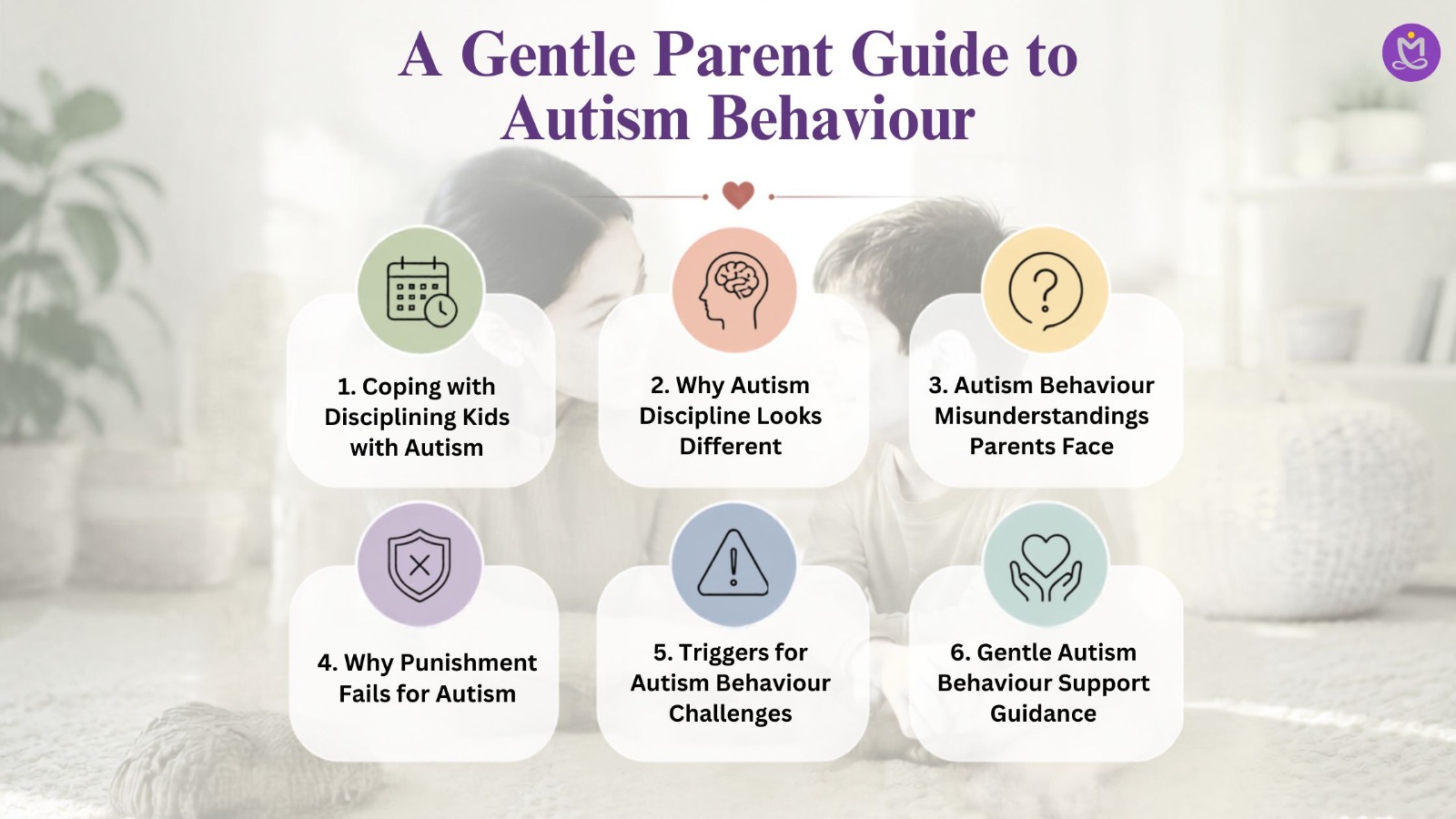
Why Autism Discipline Looks Different
Autism Behaviour Misunderstandings Parents Face
Why Punishment Fails for Autism
Gentle Autism Discipline Without Fear
Triggers Behind Autism Behaviour Challenges
Dr Ankush Garg Autism Expert
Gentle Autism Behaviour Support Guidance
Tracking Child Development Progress Checklist
Punishment vs Gentle Autism Discipline
Routine Structure Improves Child Behaviour
Managing Meltdowns Anger and Crying
Positive Reinforcement in Autism Discipline
Common Autism Discipline Mistakes Parents
Practical Autism Care Tips Home
Contact Us For Detail
Frequently Asked Questions About Autism
How to Discipline a Child With Autism?
Employ calming routines, clear communication, positive reinforcement and consistent guidance, rather than punishment. To support positive behaviour, it is important to understand the development of the brain, the sensory needs and the gut-brain relationship. [1][2][3]
Why Discipline Looks Different for a Child With Autism?
Communication is a problem for many parents, but for autistic parents, it's behaviour. [4][5]
At Manovaidya, we educate parents on the cause and patiently assist them with the support and guidance, rather than punishment.
What Parents Often Misunderstand About Autism and Behaviour?
This is a situation that many parents find themselves in when their child hears something one day and doesn't the next. This can be stressful, and leave families feeling uncertain about how to respond.
At Manovaidya we help parents gain insight into why children behave as they do. Families can help to promote good behaviour and future development, rather than just preventing the occurrence of unwanted behaviour, if they are appropriately structured, have appropriate routines, and receive appropriate support from individual members. [4][6]
Why Punishment Does Not Work for Many Autistic Children?
Punishment is likely to be ineffective and may cause anxiety, frustration or emotional upset in children with autism. [6][7]
Rather, knowing why the behaviour is occurring (sensory needs, communication challenges due to Autism, sleep, overall wellbeing, etc.) can better enable parents to respond to the behaviour in an appropriate manner and to foster positive behavior. [4][6]
How to Discipline a Child With Autism Without Fear or Pressure?
Gentle discipline is gentle, clear, consistent guidance, not punishment. [6][8]
Use simple language such as Stop, Wait, Soft hands, and target the behaviour, not the child. If the child is becoming overly upset, try to calm the child down first, then teach.
Parents at Manovaidya are supported by understanding the triggers of behaviour – including overload in the sensory input that may occur during autism, sleep, routine, screen time, and wellbeing. [5][6]
What Triggers Behaviour Challenges in Children With Autism?
There are numerous underlying causes of behaviour challenges; it could be sensory need, Autism communication issues, sleep problems, digestive problems or emotional stress. [5][9]
Understanding the whole child at Manovaidya is important as there are close links between the brain, gut, sleep, the sensory system and behaviour. [2][9][10]
This awareness can help parents to be more effective in supporting their child.
Dr Ankush Garg (Autism & Neuro-Ayurveda Expert) 
Dr. Ankush Garg is an Autism, ADHD, Child Development & Mental Health Specialist in India, Founder of Manovaidya and Creator of the Neuro-Ayurveda Development System.
His work focuses on developmental, behavioural and mental wellness concerns through a structured Neuro-Ayurveda approach that emphasizes personalized guidance, family-centred support and long-term wellbeing.
How Dr Ankush Garg Guides Parents on Gentle Autism Behaviour Support
At Manovaidya, the first step towards discipline is to understand the child, not the behavior. Dr. Ankush Garg evaluates factors like brain development, sensory requirements, sleep, daily habits, and Autism Behaviour triggers to offer tailored recommendations.
It's not about controlling the child, it's about helping parents to respond to the child's behaviour in a calm manner, to understand why the child is behaving in this way, and to help support their child's long-term development. [4][6]
How can a Parent track Progress using Checklist for Child Development?
Progress could be seen as when:
- Better sleep
- Improved digestion
- Reduced irritability
- Better eye contact
- Improved response to name
- Increased sitting tolerance
- More speech attempts
- Developing flexibility to routine changes
- Reduced sensory sensitivity
- Easier-to-manage behaviour
What is the Difference Between Punishment and Gentle Autism Discipline?
Gentle autism discipline is NOT about being soft or strict. It's about remaining calms, clear and consistent while teaching the child positive behaviours. [6][8]
How to Use Routine and Structure for Better Behaviour?
Autistic children tend to cope best with a predictable routine. Having a regular daily routine can help to alleviate anxiety and promote positive behaviour. [4][6]
You can simplify everyday life by establishing regular routines like waking up and eating, limiting screen time, having short learning periods, and a quiet bedtime. For some children visual schedules could be useful. [6]
What to Do During Autism Meltdowns, Anger or Crying Episodes?
First, during a "meltdown," help the child to feel safe and calm.
Minimize noise, go to a quiet place, use short words and speak softly, such as "You're safe," "I'm here," or "Take a deep breath.Explain and teach expected behaviour when child has calmed down. [5][6]
How Positive Reinforcement Helps in Autism Discipline?
Praise and encouragement through positive reinforcement will help children to learn good behaviours. [8]
Praise successes, such as staying still, using words, sitting still, listening.
Confidence can be gained and positive behaviour encouraged with simple praise, such as "Good waiting", "Nice listening" or "Well done!". [8]
What are the Simple Communication Tips Before Correcting the Child?
It is essential to make sure that your child understands the instruction before correcting their behaviour.
Use simple words, only one instruction at a time, and gestures and pictures as required. Often children with autism can more easily comprehend short clear instructions like "Toy down," "Hands calm," or "Now sit. [4][6]
What are the Common Discipline Mistakes Parents Should Avoid?
Common pitfalls are yelling at Autistic children during their meltdowns, communicating with them through long instructions, frequent changes of rules, punishment, lack of attention to sleep and daily schedule, too much screen time, comparing the child to others and expecting instant results. [5][6]
Patience, consistency and celebrating small improvements can support children to learn positive behaviours over time. [8]
How Parents Can Build Calm Behaviour at Home?
Begin with one behaviour, and repeat one behavior at a time. Select one easy task, like sitting quietly, waiting, or taking one order and practice it throughout the day.
Speak in a relaxed tone, provide brief instructions, acknowledge steps forward, and monitor progress. It's possible that children will learn positive behaviours, over time, through small consistent steps. [6][8]
Self-Check Tool for Parents
Discipline isn't just about rules. This also includes having an awareness of the child's overall wellbeing, behaviour, day-to-day routine and progress. [4][6]
The aim is not simply to correct behaviour, but to help the child to gradually acquire the ability to comprehend and act within the limits of expectations.
What Practical Autism Care Tips Parents Can Follow at Home ?
Simple Tips for Parents
* Follow a consistent daily routine.
* Give short and clear instructions.
* Praise small improvements.
* Reduce screen time gradually.
* Offer simple choices.
* Stay calm during Autism meltdowns.
* Track sleep, behaviour, and daily habits.
* Be patient and consistent.
Slowly but surely, we can make a difference with small steps. [4][6][8]
Step-by-Step Treatment Flow for Better Behaviour
- Gut Health Support
- Brain Nourishment
- Neural Development Support
- Attention & Behaviour Support
For further information please contact us.
There are many parents who are interested in autism support who are looking for a structured way of doing things for their kid.
Dr. Ankush Garg at Manovaidya always keeps the families aware of kids requirements with custom-made advice and evaluations.
Book a consultation
Call: +91-7823838638
Email: manovaidya2@gmail.com