-CrYNDrPl.png)
Hormonal Wellbeing
Stress & Thyroid Treatment in India
Understanding the Relationship Between Stress, Thyroid Health and Emotional Wellbeing.

Hormonal Wellbeing
Key Takeaways
- Understanding Stress, Thyroid Health & Emotional Wellbeing
- Stress & Thyroid Health Connection
- Hypothyroidism vs Hyperthyroidism
- Common Symptoms of Thyroid Disorders
- Stress, Hormonal Balance & Overall Wellbeing
- Emotional Wellbeing & Thyroid Health
- Warning Signs That Need Medical Attention
- Healthy Lifestyle Habits for Thyroid Support
- Stress Management & Healthy Routine Guidance
- Neuro-Ayurveda Development System
- Manovaidya Stress & Thyroid Assessment Process
- FAQs About Stress & Thyroid Health
Want more content like this?
Join our mind-body health newsletter for stress, thyroid and hormonal wellbeing guidance.
Your privacy is important to us.
A small, butterfly-shaped gland in the front part of the neck that makes hormones that are important to the body's metabolism, energy production, temperature, heart rate and other functions.
The thyroid may cause hypothyroidism (underactive thyroid) or hyperthyroidism (overactive thyroid) if it does not make enough thyroid hormone or too much thyroid hormone. These conditions should be diagnosed and treated medically.
A number of people ask, "Do emotional stress affect thyroid health?A lot of people ask whether emotional stress affect thyroid health. A study pointed out that chronic stress can affect the body's hormonal level and general health and wellbeing. Stress does not usually trigger thyroid problems, but can affect some people's symptoms and their ability to cope with illness or healthy lifestyle.
At Manovaidya, we do not just measure thyroid hormones - we look at the whole person. We take into account emotional wellbeing, lifestyle, sleep and mind-body health, and encourage healthier habits and care procedures, as well as appropriate care.
We practice the Neuro-Ayurveda Development System with Dr. Ankush Garg, Mental Health Specialist and Founder of Manovaidya which is a structured five pillar approach that integrates brain health, gut health, behaviour, lifestyle and emotional wellbeing.
What is the Thyroid Gland?
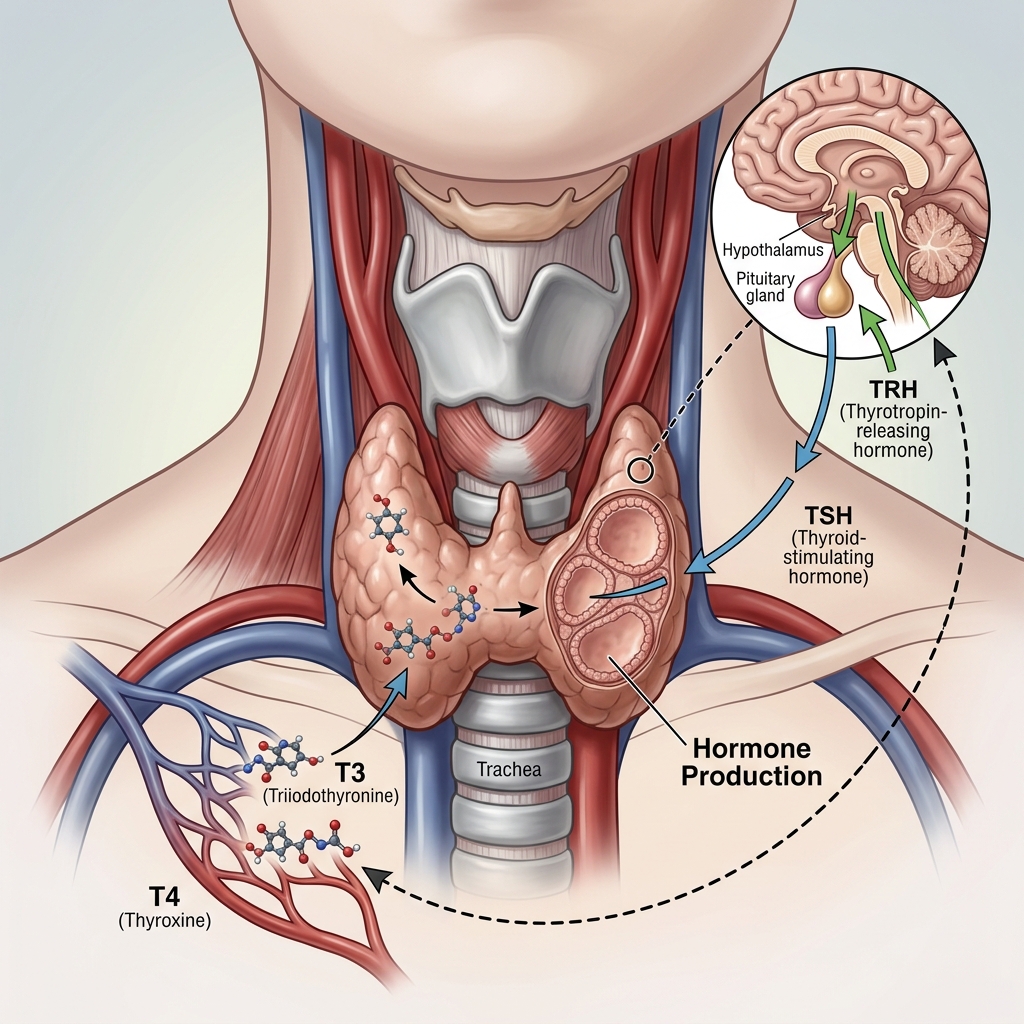
The thyroid gland is an important component of the endocrine (hormonal) system.
Too little or too much thyroid hormone can affect a variety of body systems. Thyroid disorders are diagnosed by a health care provider based on the physical examination and blood tests, and if needed, imaging tests.
How Are Stress and Thyroid Health Connected?
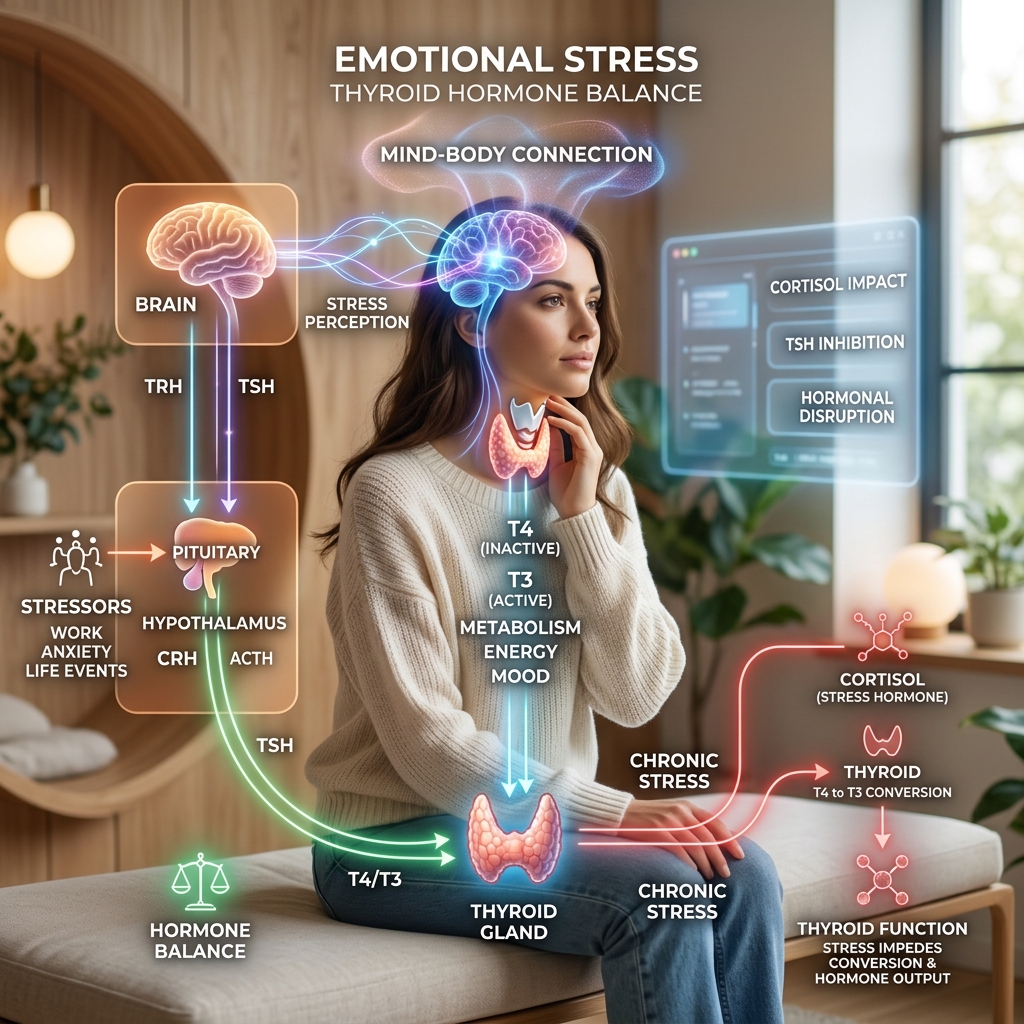
Stress hormones are naturally released by the body when it is stressed. The interaction of chronic stress with the endocrine system such as the thyroid is still under investigation.
Additionally, people with thyroid disorders might have emotional problems that require attention and treatment beyond their regular medical care.
Understanding Hypothyroidism and Hyperthyroidism
Thyroid gland can be underactive or overactive. In both cases, it is important to diagnose and treat these conditions by a qualified health care professional.
Hypothyroidism (Underactive Thyroid)
Hyperthyroidism (Overactive Thyroid)
Common Symptoms Associated With Thyroid Disorders
The symptoms of thyroid problems depend on what kind of thyroid problem it is. People may experience:
Many medical conditions can have these symptoms. A medical evaluation is required in order to have an accurate diagnosis.
Can Stress Make Thyroid Symptoms Feel Worse?
For some people with thyroid problems, emotional stress can make symptoms seem worse or harder to control.
Stress management is not a substitute for medical care, but it can help maintain emotional health and well-being, which can help to improve the quality of life.
Why Emotional Wellbeing Matters
Emotional well-being can be impacted by living with a thyroid disorder. Some individuals experience:
Can Stress Cause Thyroid Problems?
It is a common question that many ask, do emotional stresses lead to thyroid disorders? At present, there is no clear-cut medical proof that stress can cause most thyroid conditions. Over time, however, stress can impact the body's hormonal balance, emotional state and lifestyle choices, and this can impact the experience of some symptoms related to thyroid.
If you already have thyroid issues, you might find that when you're stressed, you're also feeling more exhausted, uninterested in sleep or more out-of-sorts than usual. Stress management should be considered a lifestyle, not a substitute for proper medical diagnosis or management.
Common Signs You Should Not Ignore
Some thyroid-related symptoms should never be ignored. Seek medical evaluation if you notice:
A neck full of water.A swollen neck.
Rapid or irregular heart rate.
Other thyroid symptoms with hair loss.
Early evaluations can determine the cause of the problem and lead to early treatment.
If symptoms persist for several weeks, if you observe changes to your neck swelling, if your energy level is still feeling unusually low, if some weight changes for no reason, if your heart rate is unusually fast or slow, if your thyroid medication appears ineffective, or if you experience new symptoms after diagnosis, you should consult your healthcare professional. Anyone who has been diagnosed with a thyroid disease should have regular follow-up.
Our Stress & Thyroid Assessment Process
Adjusting to a thyroid disorder doesn't just involve controlling the levels of thyroid hormone. Many people also report alterations in energy, sleep, mood and focus and a shift in daily habits. Medical diagnosis and treatment are critical, but knowledge of lifestyle and emotional health can also be essential for promoting wellbeing.
1. Understanding Your Health Journey
All consultations start with a full health history. We talk about: your thyroid diagnosis (if you have one), symptoms you are experiencing, your history of medications, blood tests, emotional wellbeing, stress levels, sleep habits, your daily routine, nutrition habits, physical activity, and family history.
2. Comprehensive Mind-Body Assessment
This assessment has been structured to examine various aspects that can affect your overall wellbeing such as emotional wellbeing, stress patterns, sleep quality, lifestyle habits, nutrition, physical activity, work-life balance, daily routines and overall quality of life.
3. Understanding Your Wellbeing Profile
We describe what we see in a simple and practical manner after the assessment. This comprises customised lifestyle recommendations and actionable steps to empower people to make sense of the connection between emotional wellbeing, lifestyle and thyroid health.
The Neuro-Ayurveda Development System
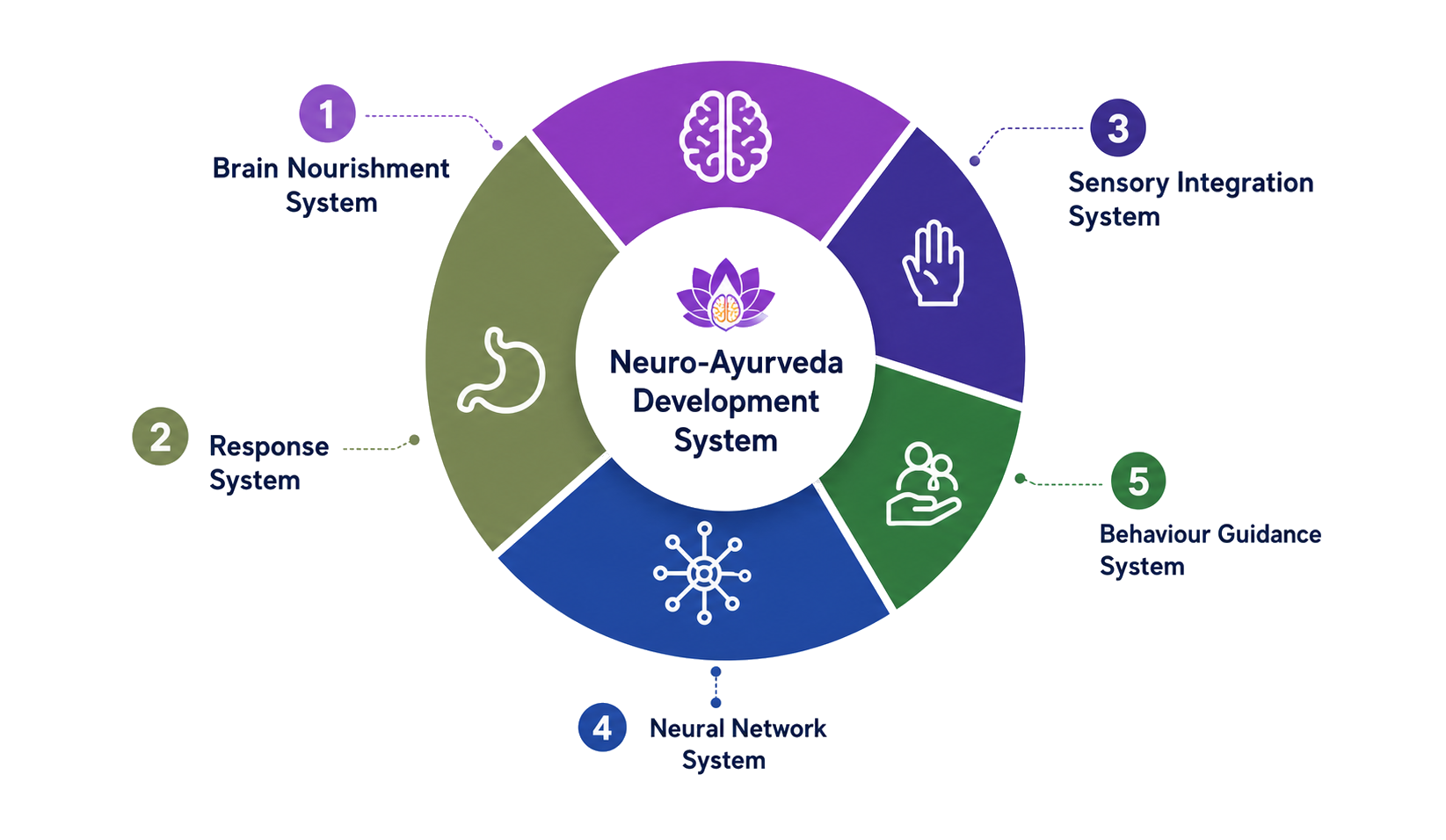
In Manovaidya, thyroid wellbeing is seen through the Neuro-Ayurveda Development System which is a 5 pillar approach that takes the brain, gut, behaviour, lifestyle and emotional wellbeing together. This approach is not just about the amount of thyroid hormone, but it's an approach to mind-body wellness over time.
1. Brain Nourishment System
The benefits of healthy brain function are: Emotional balance, Mental clarity, Stress resilience, Healthy sleep, Cognitive wellbeing, Overall quality of life. Taking action to support emotional wellbeing can assist an individual to better manage normal stress.
2. Gut Response System
Nutrition and digestive health are vital to people's well-being. In this pillar, there is a focus on understanding: Healthy eating habits, Gut-brain communication, Digestive wellbeing, Nutrition patterns, Lifestyle influences.
3. Neural Network System
The brain is a learning organ that changes and adapts every day with experiences. This pillar aims to build up: Emotional resilience, Healthy thinking patterns, Behavioural awareness, Stress management, Cognitive flexibility.
4. Sensory Integration System
Wellbeing is affected by environment and lifestyle. This pillar takes into account: Recovery, Relaxation, Environmental stress, Healthy routines, Lifestyle balance.
5. Behaviour Guidance System
Making healthy choices contributes to overall well-being. This pillar is about: Sustainable everyday habits, Behavioural awareness, Lifestyle improvement, Stress management, Healthy habit formation.
How We Support Individuals Concerned About Thyroid Health
Health is unique for each person. The care at Manovaidya is personalized based on the individual's emotional well-being, lifestyle and health issues.
Supporting Healthy Thyroid Function

Healthy lifestyle choices assist in promoting wellbeing, alongside medical interventions. These may include:
Lifestyle changes should be used in addition to, rather than instead of, medical treatment.
Why People Across India Choose Manovaidya
Delhi, Noida, Gurgaon, Faridabad, Ghaziabad and all across India, people and families opt for Manovaidya due to our approach to the mind-body health.
People from Delhi, Noida, Gurgaon, Faridabad, Ghaziabad and other parts of the country visit Manovaidya to understand how emotional wellness, stress and thyroid health are interconnected; which is achieved by comprehensive assessments and customized lifestyle advice and recommendations.
About Dr. Ankush Garg
Mental Health Specialist & Founder of Manovaidya
Dr. Ankush Garg is the Founder of Manovaidya and the developer of the Neuro-Ayurveda Development System.
His work focuses on understanding the relationship between emotional wellbeing, lifestyle, brain health and mind-body wellness. Through structured assessments, personalised guidance and continuous follow-up, he helps individuals better understand how stress and daily habits may influence their overall wellbeing while living with chronic health conditions.
Based in Delhi NCR, Dr. Ankush Garg provides Mind-Body Health Assessments, helping individuals understand the relationship between emotional wellbeing, lifestyle and thyroid health through the Neuro-Ayurveda Development System. He provides consultations across India through both online and in-clinic appointments.
Frequently Asked Questions (FAQs)
Concerned About Stress and Thyroid Health?
Book a structured Stress & Thyroid Assessment with Manovaidya to better understand the relationship between emotional wellbeing, lifestyle, hormonal health and thyroid disorders while receiving personalised guidance.