-CrYNDrPl.png)
Teen Mental Health Support
Exam & Performance Pressure Support in India
Helping Teenagers Build Confidence, Emotional Resilience & Healthy Academic Wellbeing. Learn about exam anxiety, academic pressure, fear of failure, and family guidance at Manovaidya.

Exam Stress & Academic Wellbeing
Key Takeaways
- Understanding Exam & Performance Pressure
- Common Signs of Exam Anxiety
- Causes of Academic Stress in Teenagers
- Fear of Failure & High Expectations
- Effects on Confidence & Emotional Wellbeing
- Impact on Concentration, Memory & Performance
- Importance of Healthy Sleep & Study Habits
- Managing Academic Burnout & Procrastination
- Neuro-Ayurveda Approach to Academic Wellbeing
- Parent Support During Examination Periods
- Manovaidya Assessment & Guidance Process
- FAQs About Exam Stress & Performance Anxiety
Want more content like this?
Join our teen mental wellness newsletter for exam stress, confidence and academic wellbeing guidance from our experts.
Your privacy is important to us.
Exam & Performance Pressure Support in India
- Exam Stress & Anxiety
- Academic Pressure Management
- Confidence & Self-Belief
- Fear of Failure
- Emotional Resilience
- Parent-Teen Academic Support
Supporting the confidence, emotional resilience and healthy academic wellbeing of teenagers.
Academic expectations have become a large part of our modern teenager's life. Many teenagers experience significant emotional stress in school exams, competitive settings, and when planning and making decisions about their future careers.
It is important that some pressure is applied to promote learning and development, but too much stress can lead to poor emotional health, low self-confidence, sleep deprivation, poor concentration and mental well-being.
There are many signs that parents can spot which can indicate that a teenager is experiencing anxiety before exams, excessive worry about results and low confidence or difficulty with academic expectations. Familiarizing self and family with these challenges helps them to support each other more effectively.
At Manovaidya, we know that exam stress goes beyond just studying. Factors such as emotional wellbeing, confidence, lifestyle habits, sleep patterns, family expectations and stress management skills can interact with each other to affect academic achievement and wellbeing.
Under the guidance of Autism, ADHD, Child Development & Mental Health Specialist in India Dr. Ankush Garg, Manovaidya adopts a systematic Neuro-Ayurveda perspective to shed light on the causes of stress during exams and provides a plan for emotional strength, resilience, and overall development for the teen and his or her family.
At Manovaidya, Exam & Performance Pressure Support Focuses On:
Exam Stress & Anxiety
Academic Pressure Management
Confidence & Self-Belief
Fear of Failure
Emotional Resilience
Parent-Teen Academic Support
Many people consider exams to be a crucial component of learning. For many teens, however, grades are intricately linked to their sense of self-worth, confidence and future expectations.
For many families seeking Exam Stress Support in India, Academic Pressure Support in India or Teen Mental Health Support in India, they are in need of an organized solution to help better understand their teenager's emotional state and academic difficulties.
Youth can be under pressure from:
School expectations
Competitive environments
Family expectations
Peer comparison
Career concerns
Fear of disappointing others
Too much is too much, but stress can be beneficial in some cases, it may have an impact on confidence, concentration and emotional wellbeing.
The pressure of school work is unique to each teenager. Some get extremely nervous in front of examinations, some lose motivation, avoid studying or get too emotional.
It is helpful for you to know about these differences if you want to provide a valuable support.
Common Signs of Exam & Performance Pressure
Stress can manifest itself emotionally, behaviourally, academically and physically for exam-related stress.
Emotional Signs
Excessive worrying
Fear of failure
Irritability
Overthinking
Emotional overwhelm
Low confidence
Behavioural Signs
Procrastination
Avoiding studies
Reduced motivation
Emotional outbursts
Excessive screen use
Academic Signs
Difficulty concentrating
Poor time management
Exam anxiety
Memory difficulties
Reduced performance despite effort
Physical Signs
Sleep difficulties
Headaches
Fatigue
Restlessness
Stomach discomfort
Parents should try to look for patterns, not individual events. If you are experiencing ongoing problems with your everyday life, this could warrant further attention and support.
Why Teenagers Experience Exam & Performance Pressure
Many parents think that exam stress is a result of insufficient preparation of the students.
Academic pressure is actually affected by several factors in reality.
Fear of Failure
Teenagers are afraid to let themselves down, let their parents or teachers down.
High Expectations
High expectations for academic learning can sometimes be overwhelming.
Competitive Environments
Peers and academic competition can impact confidence and self-esteem.
Future Uncertainty
Career, admissions and future questions may lead to stress.
Low Confidence
A lack of confidence in one's self can lead to a higher level of anxiety for teens taking exams.
Lifestyle & Sleep Habits
Irregular sleep and too much screen time can have a negative impact on concentration and emotional health.
How Exam Pressure Can Affect Teenagers
Too much school stress can have a negative impact on several aspects of life.
Emotional Wellbeing
Anxiety
Overthinking
Emotional exhaustion
Mood changes
Confidence
Many teenagers start to equate their self worth with their grade and outcomes.
Academic Performance
Paradoxically, the downside to too much pressure is a decrease in concentration, memory and performance on exams.
Relationships
Stress can affect the communication between parents, teachers and friends.
Physical Wellbeing
Sleep problems
Fatigue
Headaches
Reduced energy
Familiarizing yourself with these effects can help you to be mindful of how to support the family as a whole rather than focusing on academic outcomes.
The Neuro-Ayurveda Approach to Exam & Performance Pressure
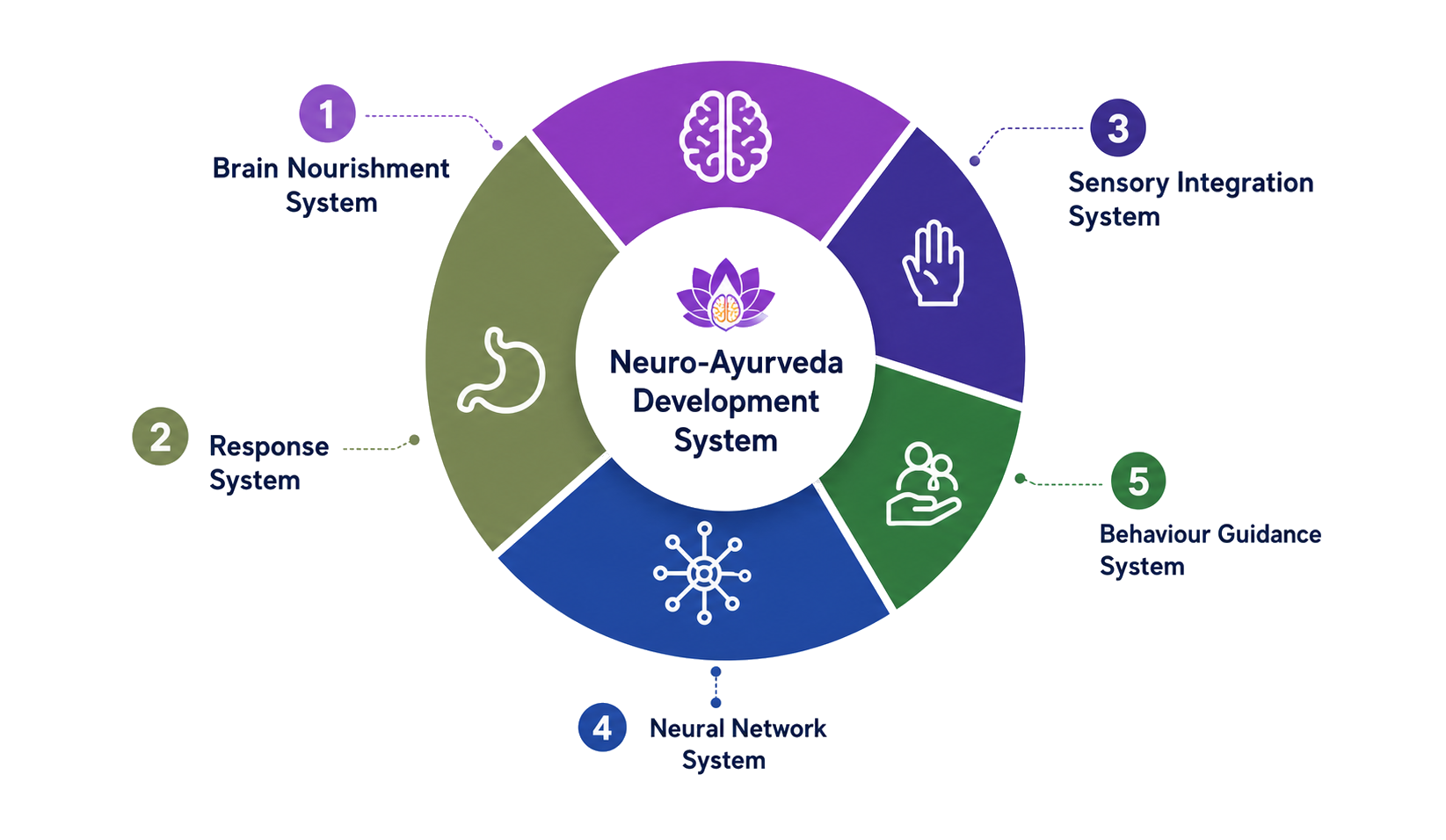
Exam stress at Manovaidya is viewed from a wider perspective.
Manovaidya does not just look at marks, performance, academic achievement; they look at the wider picture that could affect emotional wellbeing, confidence, concentration, motivation, attention and overall development.
The Neuro-Ayurveda Development System can benefit families by increasing their understanding of the various factors that can impact a teenager's academic success and emotional strength.
Brain Nourishment System
Healthy learning starts with healthy cognitive functioning.
The Brain Nourishment System is centered on the knowledge that there are certain factors that could affect:
• Attention
• Concentration
• Memory
• Learning readiness
• Decision making
There are many teens out there who are not unskilled but they are plagued by school difficulties. They might be experiencing emotional stress, less confidence, and/or poor routines.
Understanding brain information processing, learning and challenges is an important first step to supporting academic wellbeing.
Gut Response System
There is increasing evidence about the connection between digestive well-being and emotional well-being.
When teens experience academic stress, they may also express themselves in the following ways:
• Appetite changes
• Digestive discomfort
• Irregular eating habits
• Energy fluctuations
• Lifestyle-related concerns
The Gut Response System is all about recognising the possible impact the entire wellbeing system might have on emotional balance, concentration and functioning throughout the day.
Neural Network System
All experiences shape patterns of thinking, learning and responding in the brain.
The Neural Network System is oriented towards knowledge:
• Learning habits
• Study patterns
• Emotional responses
• Confidence levels
• Adaptability
This pillar assists families to recognise the impact that thinking attitudes and learning behaviours can have on learning outcomes in the longer term.
Sensory Integration System
There are varying reactions to school that many teenagers have.
Factors such as:
• Examination settings
• Noise
• Social pressure
• Classroom environments
• Digital stimulation
May affect concentration, mood and ability to work.
Knowing about these influences can often help develop an environment that is more conducive to learning.
Behaviour Guidance System
Actions may be a reflection of experiences.
When teens are feeling academic pressure, they might exhibit:
• Procrastination
• Avoidance of studies
• Irritability
• Emotional withdrawal
• Reduced motivation
This pillar will not only look at the behaviour, but also it will examine what factors may be contributing to the behaviour, and how families can respond more effectively.
How Parents Can Support Teenagers During Exams

Parents can have a significant impact on the experience of academic stress for teens.
With gentle guidance, teens can learn to develop confidence and better coping mechanisms.
Focus on Effort, Not Just Results
A lot of teens consider themselves to be important solely on the basis of their grades and achievements.
When it comes to self-confidence and resilience, it's important to acknowledge efforts, consistency and improvement.
Avoid Excessive Comparison
Comparing youth to their siblings, friends or classmates can add stress and diminish self-confidence.
All teens are unique in their strengths, abilities and learning styles.
Encourage Healthy Study Habits
Consistent routines, realistic schedules and balanced study habits often support better academic performance than last-minute pressure.
Promote Healthy Sleep
Sleep is very important in concentration, memory and emotional wellbeing.
A healthy sleep routine can help teenagers do their best.
Create a Supportive Environment
When teens feel emotionally validated but not continually assessed.
If there's no need to put the pressure on, a calm atmosphere is likely to help.
Help Manage Expectations
It is possible to set yourself goals that are motivating, but not realistic, which can lead to anxiety and fear of failure.
Parents can assist teens to focus on developing and learning instead of being perfect.
Encourage Balance
While academic achievement is significant, emotional health, physical health, recreation and relationships are also crucial components of healthy development.
How Manovaidya Supports Students & Families
At Manovaidya support starts by experiencing the learner as a whole person and not just in terms of academic performance.
We normally provide:
Step 1: Detailed Assessment
Knowledge of emotional wellbeing, confidence levels, study habits, lifestyle routines, sleep patterns, concentration difficulties and family concerns.
Step 2: Personalized Guidance
Making differential recommendations according to the emotional, behavioural and developmental needs of each teen.
Step 3: Parent Guidance & Family Support
To provide parents with greater understanding of academic stress, emotional health and how parents can support teens during difficult times.
Step 4: Neuro-Ayurveda Development System
Applying the five-pillar framework to better understand emotional wellbeing, confidence, concentration, motivation and overall growth.
Step 5: Progress Tracking & Follow-Up
Creating a structured roadmap that helps families monitor progress and make informed decisions over time.
When Should Parents Consider an Assessment?
Parents may consider seeking guidance if they notice:
Persistent exam anxiety
Fear of failure
Excessive worrying about studies
Declining confidence
Difficulty concentrating
Sleep problems before exams
Emotional breakdowns related to academics
Reduced motivation despite effort
Academic pressure affecting overall wellbeing
A formal assessment can assist families to understand what is contributing to emotional wellbeing, confidence and academic performance.
We want to help teens and families transition from stress, confusion and academic overload toward clarity, confidence, resilience and balanced growth.
Why Families Choose Manovaidya
For many families, it can be difficult to find the best resources for academic stressors and emotional wellness. Often, parents want to know what to do, what to tell their teens, and how to help them stay confident, emotionally balanced, and manage their academic loads.
We aim for much more than just marks, exams or performance at Manovaidya. We support families to understand the wider issues affecting concentration, confidence, motivation, emotional wellbeing and development.
Families Choose Manovaidya Because Of:
Structured Academic Wellbeing Assessment
Academic stress is different for every teen. Knowing about the emotional, behavioural and lifestyle factors is useful for developing a more individualised plan for support and development.
Neuro-Ayurveda Development System
We have a structured framework which supports families to explore the five interconnected pillars of emotional wellbeing and academic functioning:
• Brain Nourishment System
• Gut Response System
• Neural Network System
• Sensory Integration System
• Behaviour Guidance System
Parent-Centred Guidance
Both teens and parents are subjected to academic stress. Including family in the support of children can help to establish a more healthy and balanced classroom.
Personalized Support
All teens are different; they have their own strengths, weaknesses and learning styles. Guidance is personalized to suit the needs and circumstances of each person.
Long-Term Growth Focus
We are not only about getting the grades, but more about confidence, emotional resilience and healthy study habits and balanced development.
Family-Oriented Approach
Follow-up and shared efforts of parents and teens with clarity and guidance can often lead to meaningful progress.
Why Families Across India Connect With Manovaidya
Families from Delhi, Noida, Gurgaon, Faridabad and different parts of India connect with Manovaidya for Exam & Performance Pressure Support, Teen Mental Health Support and Academic Wellbeing guidance through online and in-clinic consultations.
About Dr. Ankush Garg

Autism, ADHD, Child Development & Mental Health Specialist in India
Know more about Dr. Ankush GargAutism, ADHD, Child Development & Mental Health Specialist in India
Dr. Ankush Garg is the Founder of Manovaidya and Creator of the Neuro-Ayurveda Development System.
His work focuses on Child Development, Teen Mental Wellness, Adult Mental Health, Women's Emotional Wellbeing and Senior Mental Health Support through a structured and personalized approach.
Many families searching for support for exam stress, academic pressure, emotional wellbeing and confidence challenges connect with Dr. Ankush Garg for structured assessment, personalized guidance and family-centred support.
Through detailed assessment, personalized recommendations, family guidance and regular follow-up, he helps families better understand the factors influencing emotional wellbeing, confidence, concentration and long-term growth.
Based in Delhi NCR, Dr. Ankush Garg supports teenagers, adults and families from across India through structured assessment, personalized guidance and the Neuro-Ayurveda Development System.
Frequently Asked Questions (FAQs)
Stress is a common occurrence among many teens before exams, as they fret about performance, results, opportunities and expectations. Examination-related stress can be caused by academic pressure, fear of failure, comparison with peers and uncertainty of result. Too much stress can have a negative impact on confidence, focus and emotional health, whereas some stress can be used to get people to prepare. Familiarity with the sources of exam stress can facilitate family support.
Book a Consultation
Concerned About Academic Pressure, Exam Stress or Performance Anxiety?
If your teenager is experiencing exam stress, fear of failure, declining confidence, concentration difficulties or emotional overwhelm, seeking clarity is often the first step.
At Manovaidya, our team helps families better understand academic wellbeing through structured assessment, personalized guidance and family-centred support.
Book a Consultation
Take the First Step Towards Better Confidence, Emotional Resilience & Academic Wellbeing
📞 Book Assessment Session
📞 Speak With Our Team
📞 Get Personalized Guidance