-CrYNDrPl.png)
Teen Mental Health Support
Teen Depression & Low Mood Support in India
Supporting the emotional development of teenagers to emotional strength, confidence and improved emotional wellbeing.

Teen Mental Health Support
Key Takeaways
- Understanding Teen Depression & Low Mood
- Sadness vs Persistent Depression
- Common Emotional & Behavioural Signs
- Causes of Low Mood in Teenagers
- Effects on Confidence & Self-Esteem
- Impact on Studies, Relationships & Daily Life
- Supporting Healthy Lifestyle & Sleep Habits
- Neuro-Ayurveda Approach to Emotional Wellbeing
- Building Emotional Strength & Resilience
- Parent-Teen Communication & Family Support
- Manovaidya Assessment & Guidance Process
- FAQs About Teen Depression & Low Mood
Want more content like this?
Join our teen mental wellness newsletter for emotional wellbeing guidance from our experts.
Your privacy is important to us.
Teen Depression & Low Mood Support in India
Emotional Strength
Confidence
Family Support

Supporting Teens to Develop Emotional Resilience, Self-Confidence & Enhance Emotional Wellness
The teen years are a difficult time of life. It is important for parents to understand that the sadness, disappointment and mood changes that happen occasionally when growing up is normal, but for some teenagers low mood can be persistent.
Poor mood, withdrawal, lack of motivation and inability to enjoy daily activities.
Many parents observe that their teen is detached, grumpy or depressed, or is no longer enjoying activities they used to. Parents may not understand what these changes are, or whether they are a normal part of adolescence or an emotional problem.
We recognise at Manovaidya that emotional wellbeing can be affected by a variety of factors such as confidence, relationships, lifestyle, school experiences, social pressures and mental health.
Under the guidance of Dr. Ankush Garg, Autism, ADHD, Child Development & Mental Health Specialist in India, Manovaidya adopts a structured Neuro-Ayurveda approach, assisting parents and families to grasp deep insights into emotional wellness and establish a long-term growth and resiliency plan.
At Manovaidya, Teen Depression & Low Mood Support Focuses On:
Emotional Wellbeing & Resilience
Confidence & Self-Esteem Building
Understanding Low Mood & Emotional Withdrawal
Healthy Lifestyle & Daily Habits
Parent-Teen Communication & Support
Long-Term Mental Wellness
It's only natural to feel sad occasionally. If teenagers get a bad grade on a test, they might be disappointed or upset when a friendship gets into a dispute or they have some setback. In most cases, these feelings will slowly get better over time and help.
Families do begin to seek answers when sadness persists, when it interferes with their daily lives and when it begins to impact their behaviour and motivation, confidence and relationships.
Many parents who are seeking Teen Depression Support in India, Teen Mental Health Support in India or guidance for Teen Emotional Wellbeing are looking for some structure in order to understand what their teen might be going through.
Teen depression and low mood can affect teenagers differently.
Some teenagers become quiet and withdrawn.
Others may appear angry, frustrated or emotionally sensitive.
Some may lose interest in hobbies and activities they once enjoyed.
Others may struggle with confidence, motivation and relationships.
Teenagers' experiences are individual and so understanding emotional wellbeing is more than about observing a behaviour—it's about understanding the other things that might be affecting what they are doing every day.
Common Signs of Teen Depression & Low Mood
The symptoms of teen depression are not always what parents may think they are.
It's not necessary for a teenager to be a "crybaby" to be having emotional problems.
Many teens suppress their feelings, and then go on living, even though they are having a lot of emotional struggle inside.
Parents might observe mood changes, behavioral issues, changes in studies or daily routines.
Emotional Signs
Persistent sadness
Irritability
Feelings of hopelessness
Emotional sensitivity
Low confidence
Negative self-talk
Increased emotional overwhelm
Behavioural Signs
Social withdrawal
Avoiding friends and family
Reduced interest in hobbies
Lack of motivation
Spending excessive time alone
Increased screen dependency
Academic Signs
Declining academic performance
Difficulty concentrating
Reduced participation
Lack of interest in studies
Fear of failure
Physical Signs
Fatigue
Changes in sleep patterns
Appetite changes
Reduced energy
Difficulty maintaining routines
Just having a few signs and symptoms doesn't necessarily indicate that a teenager is depressed. When emotional and behavioural changes persist over a longer period of time and start to interfere with functioning, however, it is important to understand and attend to those changes.
Why Teenagers Experience Depression & Low Mood
Many parents think that there's always one specific reason for the emotional problems.
Emotional wellbeing is often a complex mix of factors.
Academic Pressure
Closeness to school and exams and worries about future jobs can be a continuous emotional strain. If teens feel they can't keep up, it can cause a loss of confidence and motivation.
Social Comparison
Teenagers make comparisons with others, friends and social media content. The ongoing process of comparison can lead to feeling unworthy, uncertain, and/or emotionally distressed.
Relationship Challenges
Friendship issues, conflict with peers and social rejection can have a big impact on a teenager's emotional health.
Low Confidence & Self-Esteem
Self-confidence is a trait that can be lost by teenagers and lead to emotional struggles and negative thinking.
Screen & Social Media Influence
Overuse of social media can also lead to feelings of comparison, unrealistic expectations and emotional pressure.
Lifestyle & Sleep Habits
Inadequate sleep, irregular sleep patterns, low levels of physical activity and excessive screen time can affect emotional health and mental wellness.
Many parents are concerned that the situation of their teenager continuing to be sad, withdrawn, lack confidence or have a decreased interest or motivation can impact their future development, relationships and wellbeing. Familiarity with these issues from an early age can equip families with positive and empowered strategies to enhance emotional well-being and resilience.
How Depression & Low Mood Can Affect Teenagers
Low mood and depression can affect not just feelings, but many other aspects of life.
If emotional difficulties persist over a longer period of time they can impact on confidence, relationships, motivation, learning and wellbeing.
Many teen victims of sexual assault suffer silently because they don't know how to tell someone what's happening or can be afraid of being misunderstood.
Knowing what role emotional wellbeing plays in various aspects of life can enable families to offer meaningful support.
Emotional Wellbeing
Low mood and depression can leave you feeling overwhelmed.
Teenagers may experience:
Persistent sadness
Emotional numbness
Hopelessness
Irritability
Frustration
Increased sensitivity
Feelings of loneliness
As these emotional factors progress, they can impact teenage self-perception, relationship and future expectations.
Confidence & Self-Esteem
A lot of young people who are depressed start to question themselves.
Thoughts can be common such as:
I am not good enough.
Nobody understands me.
I always fail.
Things will never improve.
These ideas can slowly impact on confidence and self-confidence.
A child or teen who used to take part in activities might start to avoid them because they don't think they are capable of doing them.
Academic Performance
There is a strong relationship between emotional wellbeing and academic achievement.
Depression and low mood can cause teens to have problems with:
• Concentration
• Motivation
• Memory
• Participation in class
• Completing assignments
• Exam preparation
It's common for parents to begin by worrying about poor grades, rather than thinking about emotional wellbeing's impact on academic performance.
Relationships & Social Life
Depression can impact relationships with friends and family too.
Some teenagers may:
Spend more time alone
Avoid social interaction
Withdraw from friends
Communicate less
Become more sensitive to criticism
These shifts can result in miscommunication between teens, peers and parents.
Daily Functioning
Low mood could affect regular activities.
Teenagers may experience:
Reduced energy
Sleep difficulties
Changes in appetite
Difficulty maintaining schedules
Loss of interest in hobbies
Reduced participation in family activities
Recognizing these shifts as indicators of emotional difficulties can lead families to be more empathetic and supportive.
The Neuro-Ayurveda Approach to Teen Depression & Low Mood
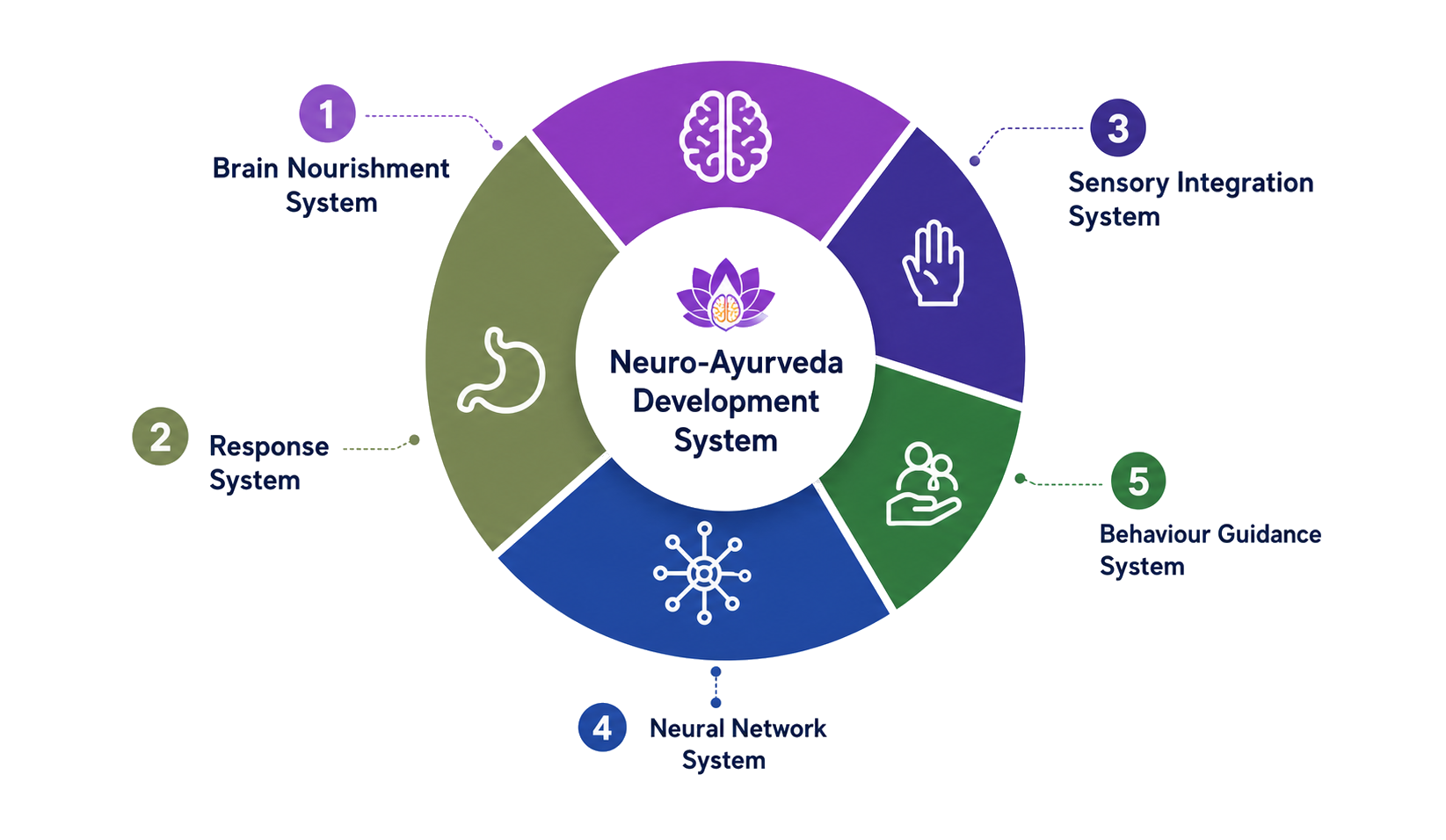
Emotional wellbeing is seen in Manovaidya in a more global and encompassing way.
Manovaidya's emphasis is on the whole picture of what might be affecting emotional wellbeing, confidence, behaviour, motivation, attention and overall development rather than just on sadness and motivation/behaviour.
The Neuro-Ayurveda Development System enables the families to better understand their emotional wellbeing through five interconnected pillars.
Brain Nourishment System
Wellbeing, emotional health is closely linked with cognitive and emotional health.
The Brain Nourishment System emphasises the understanding of factors which may affect:
• Emotional balance
• Confidence
• Attention
• Learning readiness
• Decision making
• Cognitive wellbeing
One way to help build emotional resilience is to appreciate how teens respond to emotions, experiences, and challenges.
Gut Response System
The connection between digestive health and emotional health is still being investigated.
Elevated blood pressure, increased blood sugar, and weight gain are just a few of the many things that may happen during the teen years when emotional issues are present:
• Digestive discomfort
• Appetite changes
• Irregular eating habits
• Energy fluctuations
• Lifestyle-related concerns
The Gut Response System is based on the awareness that general health and wellbeing could affect emotional stability and functioning.
Neural Network System
All experiences foster the formation of patterns of thinking, learning and responding in the brain.
The Neural Network System is about understanding:
• Thought patterns
• Emotional responses
• Behavioural tendencies
• Learning habits
• Adaptability
Families can often find better clarity when they understand these patterns and know how to interpret the information.
Sensory Integration System
Emotional wellbeing can be affected by the environment of a teenager.
Factors such as:
• Social environments
• Noise
• Digital stimulation
• Social expectations
May affect stress, feelings and everyday problems among teens.
Knowing about sensory influences can help to set up more supportive environments.
Behaviour Guidance System
Emotional experiences may be reflected in behaviour.
When teens are feeling down they may exhibit:
• Withdrawal
• Irritability
• Lack of motivation
• Reduced communication
• Avoidance behaviours
This pillar is not just about behaviour, it's about understanding what is going on for the behaviour to help families to respond in an effective way.
How Parents Can Support Teenagers
During adolescence, parents can make a significant contribution to the care and support of emotional wellbeing.
As long as it is something you can do, even minor adjustments or changes with communication, understanding and daily routines, can make a difference.
Stay Emotionally Available
It is important for many teens to understand they can find help when they are not ready to talk.
When teens feel emotionally present, it can be a huge comfort for them.
Listen Without Judgement
Talking to teens is easier when they feel you're listening to them instead of judging.
Stay calm and listen respectfully to build trust and communication.
Avoid Constant Criticism
Too much feedback can lower morale and lead to emotional stress.
Constant correction is not supported by guidance, which is likely to generate better results.
Encourage Healthy Routines
Emotional wellbeing can be encouraged by healthy sleep routines, balanced schedules, physical activity and regular daily routines.
Support Social Connection
Teens may feel more connected and supported through positive friendships, family interaction and healthy social experiences.
Focus on Strengths
Many teens who are emotionally troubled tend to focus on their perceived weaknesses.
Parents can help by acknowledging strengths, effort and progress, not just problems.
Create a Supportive Home Environment
Teenagers tend to be better able to get through difficulties when they're in a calm, understanding and emotionally safe setting.
How Manovaidya Supports Teenagers & Families
Support starts at Manovaidya with a comprehensive approach to understanding the teenager as a whole, rather than just one symptom or concern.
We normally do the following:
Step 1: Detailed Assessment
Knowing about emotional wellbeing, motivation, confidence, lifestyle habits, sleep patterns, social experiences and family concerns.
Step 2: Personalized Guidance
Making individual recommendations according to the emotional, behavioral and developmental needs of the adolescent.
Step 3: Parent Guidance & Family Support
Supporting parents to learn about communication, emotional health and how they can help their teen at home.
Step 4: Neuro-Ayurveda Development System
Using the five pillars to gain a better insight into emotional wellbeing, behaviour, confidence and growth.
Step 5: Progress Tracking & Follow-Up
Establishing a plan that allows families to track progress and make decisions along the way.
We are here to assist teens and families to transition from confusion and emotional distress to clarity, confidence and wellbeing.
Why Families Choose Manovaidya
For many families, deciding on the right support system for a teen can be daunting. Parents often seek clarity, guidance and direction that creates a structure to help them understand more about their teen's emotional well-being.
At Manovaidya we do not only consider symptom management but we also aim to support families to understand other factors which may affect emotional wellbeing, confidence, behaviour, motivation and overall development.
Families Choose Manovaidya Because Of:
✔ Structured Teen Mental Wellness Assessment
All teens are different. Knowing the factors that impact emotional, behavioral and lifestyle factors helps to develop a more individualized plan of support and development.
✔ Neuro-Ayurveda Development System
Emotional wellbeing is addressed in our structured framework by focusing on five interconnected strands that help families to understand emotional wellbeing:
• Gut Response System
✔ Parent-Centred Guidance
Teen mental wellness is not all about the teen.
Parents are an important part of a supportive environment for emotional growth and resilience.
✔ Personalized Support
Each teen has their own unique set of emotional issues.
Advice is always personalized based on needs and situation.
✔ Long-Term Growth Focus
We aim to support teens to develop and grow in confidence, emotional health, life habits and wellbeing, not just solutions.
✔ Family-Oriented Approach
Cooperation and understanding with parents and teens, with the right guidance, can make it easier to achieve meaningful progress.
Why Families Across India Connect With Manovaidya
Delhi, Noida, Gurgaon, Faridabad and other cities in India reach out to Manovaidya for Teen Depression, Teen Mental Health, Teen Emotional Wellbeing Support in both online and in-clinic settings.
About Dr. Ankush Garg

Autism, ADHD, Child Development & Mental Health Specialist in India
Founder of Manovaidya and Creator of the Neuro-Ayurveda Development System
Know more about Dr. Ankush GargAutism, ADHD, Child Development & Mental Health Specialist in India
Dr. Ankush Garg is the Founder of Manovaidya and Creator of the Neuro-Ayurveda Development System.
His work focuses on Child Development, Teen Mental Wellness, Adult Mental Health, Women's Emotional Wellbeing and Senior Mental Health Support through a structured and personalized approach.
Over the years, he has worked with children, teenagers, adults and families seeking support for developmental, behavioural, emotional and mental wellness concerns.
Many families searching for a Mental Health Specialist in India are looking for more than symptom-based guidance. They are looking for clarity, direction and a structured roadmap.
Dr. Ankush Garg's work focuses on helping families better understand emotional wellbeing, behavioural patterns, confidence challenges, lifestyle-related influences and long-term mental wellness planning.
Through structured assessment, personalized guidance, family support and regular follow-up, he helps individuals and families move from confusion toward greater clarity, confidence and wellbeing.
Today, families from different parts of India connect with Manovaidya because they are looking for a compassionate, structured and personalized approach that focuses on overall wellbeing and long-term growth.
Based in Delhi NCR, Dr. Ankush Garg supports teenagers, adults and families from across India through structured assessment, personalized guidance and the Neuro-Ayurveda Development System.
Frequently Asked Questions (FAQs)
There are various reasons why teenagers might be feeling sad, such as being under lots of academic pressure, having problems with their friends, feeling they are not as good as others, lack in confidence, or emotional problems or stress in their family. Sadness is a normal occurrence in life, but when sadness lasts for several weeks and starts impacting the way you relate with others, sleep, activities, or your drive, then there is a deeper emotional concern. Having an awareness of the factors that affect emotional wellbeing can assist families in supporting and guiding them through this crucial period of development.
Book a Consultation
Book a Consultation
Take the First Step Today

Concerned About Your Teenager's Emotional Wellbeing?
If your teenager is experiencing persistent sadness, emotional withdrawal, low motivation, confidence challenges or behavioural changes, seeking clarity is often the first step.
At Manovaidya, our team helps families better understand emotional wellbeing through structured assessment, personalized guidance and family-centred support.
Book a Consultation
Take the First Step Towards Better Teen Emotional Wellbeing
📞 Book Assessment Session
📞 Speak With Our Team
📞 Get Personalized Guidance