-CrYNDrPl.png)
Stress & Anxiety
Stress Management & Mind-Body Balance Treatment for Women in India
Understanding Stress, Tension & the Mind-Body Connection for Better Emotional Wellbeing
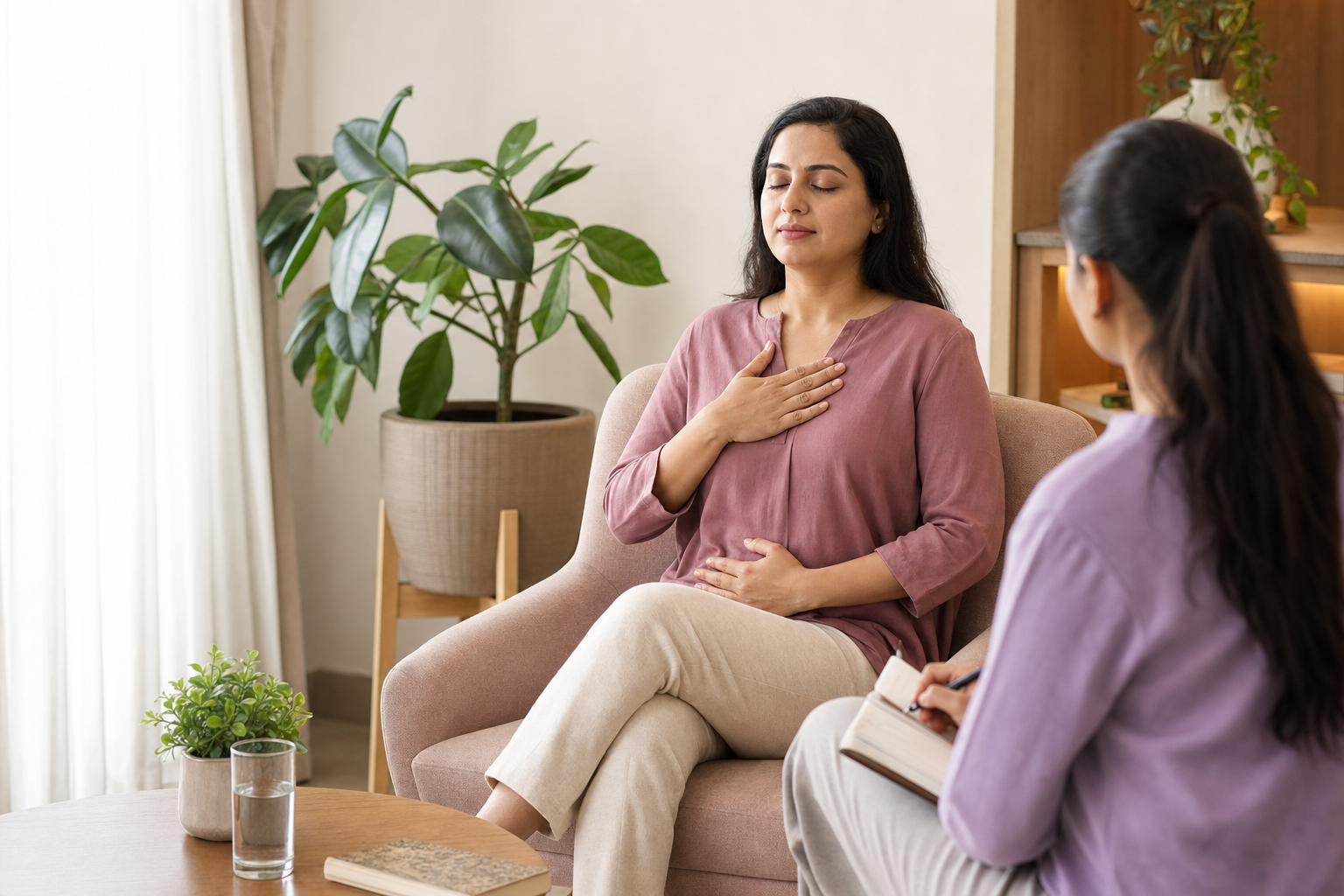
Stress Management & Mind-Body Balance
Key Takeaways
- Understanding Stress & Chronic Stress
- Stress and the Mind-Body Connection
- Common Signs & Symptoms of Stress
- Causes of Chronic Stress in Women
- Stress vs Anxiety Explained
- Impact of Stress on Daily Life
- Supporting Healthy Mind-Body Balance
- Healthy Stress Management Strategies
- Neuro-Ayurveda Stress Management Approach
- Emotional Resilience & Long-Term Wellbeing
- Manovaidya Assessment & Support Process
- When Professional Guidance Is Needed
- FAQs About Stress & Mind-Body Balance
Want more content like this?
Join our women's mental health newsletter for stress, sleep and emotional wellbeing guidance.
Your privacy is important to us.
Stress is an inevitable by-product of life. Stress comes in many forms and for different women, different periods in their lives. Stress can help us to cope with challenges in small quantities. Stress, however, can start to impact on emotional and physical well-being when it occurs too often or lasts too long.
For many women, the roles of career, family, parenting, and caring for others, along with personal expectations overlap. This ongoing pressure can lead to emotional tension over time which can interfere with sleep, focus, energy, and quality of life.
Stressed doesn't just impact the mind. It also has an impact on the body. During stressful time, some women experience headache, muscle tension, digestive pain, tired or disturbed sleep. Some people may feel anxious or irritated, or be unable to relax or unwind.
The mind-body connection is a close connection between emotional wellbeing and physical health. Physical health issues can have an emotional impact and vice versa.
Sometimes it is OK to be stressed. If stress is chronic, overwhelming or starts to affect work, relationships, sleep or day-to-day functioning, however, then it may be time to get professional help.
We at Manovaidya believe that emotional wellbeing is cultivated through the equilibrium of brain health, physical health, healthy lifestyle choices, good sleep and emotional resilience skills. We don't just look at the symptoms that may present themselves, but we want to understand the factors that are causing emotional and physical imbalance.
Under the guidance of Dr. Ankush Garg (Autism, ADHD, Child Development & Mental Health Specialist in India), Manovaidya incorporates the Neuro-Ayurveda Development System to guide women through a structured assessment and facilitate personalised holistic care by understanding stress, tension and the mind-body connection.
If the stress has become a constant, is caused by emotional, physical tension or lack of sleep, and it's beginning to impact emotional wellbeing, work or relationships, it's time to find out what is causing it.
At Manovaidya, Stress Management & Mind-Body Balance Treatment Focuses On:
- Chronic Stress
- Mental Stress
- Emotional Stress
- Physical Tension
- Stress-Related Fatigue
- Emotional Exhaustion
- Mind-Body Balance
- Women's Emotional Wellbeing
Book a Structured Stress Management Assessment
If ongoing stress, emotional exhaustion, physical tension or poor sleep has started affecting emotional wellbeing, work or relationships, understanding the underlying causes is the first step toward better health.
Understanding Stress & Tension
Understanding Stress Beyond Symptoms
Stress can affect emotional wellbeing, physical health, sleep, energy, concentration and overall quality of life.
Stress can impact emotional health, physical health, sleep, energy, concentration and quality of life.
Stress is a normal reaction to situations that are perceived as demanding, uncertain and challenging.
Tension is the physical or emotional tension that can occur as a result of prolonged stress.
Stress isn't always a bad thing. Stress may help people to respond in an appropriate way during critical events. But if stress isn't relieved and happens regularly or constantly, it can start to impact emotional health and physical health.
Women who are looking to find Stress Management in India or Mind-Body Balance or Chronic Stress or Mental Stress or Emotional Stress or Stress Relief for Women are trying to find out why they are constantly tired, overwhelmed and emotionally drained.
Knowing the link between stress and the mind and body is the first step towards enhancing overall wellbeing.
The Mind-Body Connection
Similarly, ongoing physical discomfort may also affect mood, confidence and emotional wellbeing.
Supporting both physical and emotional health helps create healthier mind-body balance.
Common Signs & Symptoms
Emotional Symptoms
Anxiety, overwhelm, irritability, mood changes, emotional exhaustion and difficulty relaxing.
Physical Symptoms
Headaches, neck or shoulder tension, muscle stiffness, fatigue, poor sleep and digestive discomfort.
Cognitive Symptoms
Difficulty concentrating, mental fatigue, forgetfulness, constant worrying and racing thoughts.
Behavioural Changes
Social withdrawal, poor work-life balance, emotional eating and difficulty managing responsibilities.
Anxiety, over stimulation, irritability, mood swings, emotional fatigue and inability to relax.
Headaches, neck or shoulder tension, muscle stiffness, fatigue, poor sleep and digestive discomfort.
Lack of concentration, mental fatigue, forgetfulness, constant worrying and racing thoughts.
Social withdrawal, lack of a balance between work and life, emotional eating and trouble managing responsibilities.
Stress is unique in each woman's life.
If physical symptoms persist, they should always be examined by a medical professional.
Chronic stress can be caused by work stress, parenting stress, care giving, family responsibilities and financial stress.
Stress can be affected by health issues, hormonal changes, pregnancy, motherhood and lack of sufficient sleep.
Events such as major life changes, relationship difficulties or less time for recovery can impact the mind-body balance.
Stress can build up due to several factors that interact with each other.
Why Early Stress Management Matters
Recognising stress early allows women to strengthen emotional resilience, improve coping strategies and reduce its impact on emotional and physical wellbeing.
Awareness of stress at an early stage enables women to build emotional resilience, bolster coping mechanisms and minimise the effects of stress on their emotional and physical health.
Women come to expect to feel tired all the time and think of it as a normal life situation.
Early detection of stress can help women build emotional resistance, develop coping mechanisms, and minimize how much the stress affects them emotionally and physically before it becomes a serious problem.
How Chronic Stress Can Affect Daily Life
Stress has a much greater impact than feelings. Stress that persists over a long period of time can eventually have an impact on body health, sleep, relationships, work productivity and overall well-being.
Despite being physically and mentally exhausted, many women go on with their daily activities. These changes can be subtle and may not be aware of how much it is impacting their wellbeing in a negative way.
If women recognise these patterns early they can take steps to achieve better emotional balance and stress management.
Stress can affect emotional health in a number of ways.
If the emotional changes persist for an extended time or they affect your day-to-day functioning, professional advice might be helpful.
Stress is not something that just happens in the mind, it is also a stress in the body.
If there is any doubt that the physical symptoms are persisting, they should always be evaluated by a qualified health care provider to rule out any other medical issues.
Good sleep and well-being are interrelated.
Having trouble falling asleep at night.
Stress can be a vicious cycle, as poor sleep can raise stress further.
A prolonged stress can slowly impact work.
Ensuring emotional wellbeing can contribute to focus and the ability to cope during stressful times.
Stress can also impact communication skills and relationships.
It's crucial to maintain healthy communication and emotional support during the stress.
Stress vs Anxiety
Stress
- Usually linked to an identifiable challenge
- Often improves when the situation changes
- May respond to healthier coping strategies
Anxiety
- May involve excessive worry or fear
- Can persist without an immediate external challenge
- Requires professional assessment when ongoing
Stress tends to occur in reaction to a perceived threat or challenge, as might be a work deadline, family priorities or financial concerns.
Anxiety can manifest as unrealistic worry and fear, which can last for an extended period of time even in the absence of any external threat.
Anxiety disorders are identified mental health disorders that need professional evaluation and treatment.
Awareness of this difference can help women identify if they need more support.
The Mind-Body Connection
The brain and body always communicate.
Physical symptoms may result from emotional stress. Similarly, a persistent physical pain or disease could affect emotional health.
This is a bi-directional connection, therefore physical and emotional health are both important for overall health and wellness.
The Neuro-Ayurveda Development System
At Manovaidya, stress management is understood through a holistic perspective.
The Neuro-Ayurveda Development System takes into account the relationship between the health of the brain, emotional well-being, lifestyle habits, sleep, nutrition, and behaviour, not just the symptoms.
Good brain health leads to better emotional balance.
Stressful periods may be managed with support for balanced nutrition and healthy digestion to support energy levels, mood and overall resilience.
Coping skills are learned and experienced behaviors which become healthy when learned.
Mindfulness, Journaling, counselling, reading and learning new coping skills can help build emotional resilience over time.
Positive sensory experiences may help promote relaxation.
Time in nature is therapeutic and healing.
Long-term stress can have an impact on behaviour.
Identifying these behaviors early could support women in establishing healthier habits and coping mechanisms.
Supporting Mind-Body Balance
Good day-to-day practices can complement medical or psychological treatment for emotional health.
Any exercise program that is recommended by your health care provider can help with physical and emotional health.
Relaxation techniques, such as deep breathing, mindfulness, yoga and meditation, can help to relieve stress.
Eating a balanced diet helps to maintain general good health and emotional well-being.
Discussing stress and isolation with trusted family members, friends or support groups can help decrease stress and feelings of isolation.
If stress or emotional fatigue, or physical symptoms persist in the workplace, with your relationship, in sleep or in your life, despite engaged in self-care, professional guidance may be helpful in discovering factors and finding personalized coping strategies for stress. If stress is associated with thoughts of self-harm, suicide or inability to keep oneself safe, seek immediate medical/mental health support.
How Manovaidya Supports Women
Step 1: Comprehensive Assessment
Step 2: Personalized Guidance
Step 4: Neuro-Ayurveda System
Step 5: Ongoing Support
At Manovaidya, support starts with the person as a whole and not just the symptoms of stress.
Step 1: Comprehensive Assessment
Knowledge of emotional wellbeing, stress, lifestyle, sleep quality, physical health, work-life balance and personal challenges.
Step 2: Personalized Guidance
Individualized recommendations for each woman based on her emotional, psychological and lifestyle needs.
Step 3: Stress & Mind-Body Wellbeing Guidance
Educating women on the impact of stress on emotional and physical health, and promoting healthy coping.
Taking a five pillars approach to understanding emotional wellbeing, brain health, behaviour and overall wellness.
Step 5: Progress Tracking & Ongoing Support
Structured follow-up to support women to manage their stress over time and to reinforce healthy habits and build emotional resilience.
When Should You Consider Professional Guidance?
Often find yourself feeling stressed or drained emotionally.
Pay attention to stress that impacts on sleep and/or physical health.
Have recurring headaches or muscle tension, fatigue due to stress.
It's hard to take it easy even while you're on vacation.
Notice stress that impacts work, or relationships.
Are emotionally overwhelmed most days.
Continue experiencing stress despite lifestyle changes.
Personalized guidance and assessment early can help recognize factors and promote better stress management.
We aim to empower women to gain a deeper understanding of the mind and body connection, build emotional strength, and cultivate the ability to manage stress in the long term with compassion and personalisation.
Why Women Across India Choose Manovaidya
Comprehensive Women's Mental Health Assessment
Neuro-Ayurveda Development System
Personalized Guidance
Holistic Mind-Body Wellbeing
Focus on Emotional Resilience & Long-Term Stress Management
Ongoing Support & Progress Tracking
Stress is a normal part of life, but constantly stressed should not be normal. Emotional load is invisible yet prevalent for many women as they juggle work, family, relationships, parenting and personal expectations. This sustained stress can over time start to impact emotional and physical health.
We know that at Manovaidya stress is not a one cause one effect phenomenon. Brain health, sleep, nutrition, lifestyle habits, hormonal shifts, emotional responses and emotional resilience all have a role to play in emotional wellbeing.
We do not just want to know what is causing stress for each woman, we want to grasp the full picture of what is happening.
By providing a safe, supportive setting and a tailored approach, we guide women in developing their emotional strength and long-term well-being.
Before developing individually tailored guidance.
Manovaidya works within the Neuro-Ayurveda Development System which recognizes emotional wellness in terms of five intersecting systems.
An understanding of the potential effect of biological, emotional and lifestyle factors on stress, emotional balance and wellbeing can be supported by this framework.
Stress is different for every woman.
This individualised strategy involves providing guidance to each woman specifically based on her emotional and physical requirements.
Work on these interrelated areas helps to achieve health and resilience in the long-term while maintaining a healthier mind-body balance.
It's our job to take stress away for now and for good.
Learn positive strategies for coping with stress.
The daily routines that lead to a healthy life are essential to healthy emotional wellbeing.
Stress levels and situations vary over time.
Through regular follow up and structured progress monitoring, women become aware of their progress, consolidate healthy behaviors and continue to build emotional resilience.
Why Women Across India Trust Manovaidya
Women from Delhi, Noida, Gurgaon, Faridabad, Ghaziabad and all over India reach out to Manovaidya to avail Stress Management and Mind-Body Balance Support, Women's Mental Health Guidance & Emotional Wellbeing Support online and offline.
From chronic stress to physical tension, emotional exhaustion to sleep issues or a lack of work/life balance, we tailor our approach to your specific needs and concerns and place a priority on maintaining your emotional wellbeing in the long run.
Dr. Ankush Garg is the Founder of Manovaidya and the Developer of the Neuro-Ayurveda Development System.
His work extends across Child Development, Adult Mental Health, Women's Mental Health and Senior Mental Health, with a focus on understanding the relationship between brain health, emotional wellbeing and overall quality of life.
Many women seek guidance when chronic stress, emotional exhaustion or mind-body imbalance begin affecting sleep, work, relationships or daily functioning. Through structured assessment, personalised guidance, lifestyle recommendations and continuous follow-up, Dr. Ankush Garg helps women better understand these challenges while supporting long-term emotional wellbeing through the Neuro-Ayurveda Development System.
Based in Delhi NCR, Dr. Ankush Garg supports women across India through structured assessment, personalised guidance and holistic mental health care.

About
Dr. Ankush Garg
Autism, ADHD, Child Development & Mental Health Specialist in India
Dr. Ankush Garg is the Founder of Manovaidya and the Developer of the Neuro-Ayurveda Development System.
His work extends across Child Development, Adult Mental Health, Women's Mental Health and Senior Mental Health, with a focus on understanding the relationship between brain health, emotional wellbeing and overall quality of life.
Many women seek guidance when chronic stress, emotional exhaustion or mind-body imbalance begin affecting sleep, work, relationships or daily functioning. Through structured assessment, personalised guidance, lifestyle recommendations and continuous follow-up, Dr. Ankush Garg helps women better understand these challenges while supporting long-term emotional wellbeing through the Neuro-Ayurveda Development System.
Based in Delhi NCR, Dr. Ankush Garg supports women across India through structured assessment, personalised guidance and holistic mental health care.
Frequently Asked Questions About Stress Management & Mind-Body Balance
Stress is a normal body reaction to a situation that poses a challenge or demands. Stress can be useful when it's short term, helping you deal with an important event, but when it occurs often or for a long time, it can have a negative impact on emotional health, physical health and quality of life.
Book a Consultation
Book a structured assessment and personalized guidance session with the Manovaidya team to better understand chronic stress, emotional wellbeing, the mind-body connection and long-term stress management.
Whether your concerns relate to chronic stress, emotional exhaustion, work-life imbalance or physical symptoms associated with stress, our team is here to help you explore personalised support.
Book Your Assessment Today
- Book Consultation
- Speak With Our Team
- Get Personalized Guidance
- Stress Management Assessment
- Mind-Body Balance Support
Book Your Consultation with Manovaidya Today
Manovaidya Clinic
Noida, Uttar Pradesh, India
Contact Us Now