-CrYNDrPl.png)
Digestive Wellbeing
Stress & Digestive Health Treatment in India
Understanding the Connection Between Stress, Emotional Wellbeing and Digestive Health.

Digestive Wellbeing
Key Takeaways
- Understanding Stress & Digestive Health
- Stress and the Gut-Brain Connection
- How Stress May Affect Digestion
- Common Stress-Related Digestive Symptoms
- Emotional Wellbeing & Digestive Health
- Signs That Need Medical Evaluation
- Lifestyle Support for Digestive Wellbeing
- Understanding the Neuro-Ayurveda Approach
- Mind-Body & Digestive Health Assessment
- Stress Management & Healthy Daily Habits
- Manovaidya’s Digestive Wellbeing Approach
- FAQs About Stress & Digestive Health
Want more content like this?
Join our mind-body health newsletter for stress, digestion and gut-brain wellbeing guidance.
Your privacy is important to us.
There's a network of communication that connects the digestive system and the brain, known as the gut-brain axis. This means that how you feel emotionally and your digestive health are always affecting each other. Many people remarked that when they are stressed, worried or when they are under pressure, they feel their appetite changes, their stomach feels uncomfortable, bloated or indigested.
When you are stressed you may feel some discomfort or discomfort may occur regularly, either of these is not something you should ignore. Medical conditions that require diagnosis and treatment correctly can be a cause for digestive problems. Emotional stress may influence the way you feel symptoms and is not the only trigger.
We believe that it is essential to know the person, not just their digestive symptoms at Manovaidya. We consider wellbeing, lifestyle, sleep, nutrition and the gut/brain link to enable people to understand their overall health.
Dr. Ankush Garg, Mental Health Specialist and the Founder of Manovaidya, is the head of our team. The Neuro-Ayurveda Development System is a system that takes a holistic approach to the brain, gut and behavior/lifestyle to support the mind-body connection.
How Are Stress and Digestion Connected?
Nerves, hormones and immune pathways constantly communicate between the brain and the digestive system.
The stress reaction of your body, when you are emotionally stressed, will impact your function. You might notice changes in your appetite, digestion or bowel habits when you are going through a time.
As with any type of physical pain, an individual's digestive pain can be a source of emotional pain also, and thus can create a vicious circle between physical and emotional well-being.
Understanding this connection helps explain why taking care of both wellbeing and digestive health is important for overall wellness.
Stress activates the bodys natural stress response, which prepares the body to deal with situations. If you are stressed for a period of time you may notice that your digestion changes for a short time, which is your body's way of reacting to the stress. When stressed for a period of time, you may experience persistent digestive upset. The connection between emotional wellbeing and gut health is still being explored and is known as the gut-brain axis, where the brain and the gut continuously communicate.
An understanding that stress is not a cause for all conditions is necessary. Persistent and severe digestive symptoms may have medical causes, and should always be properly evaluated.
The Gut-Brain Connection

The digestive system is connected to the brain by a system of nerves that constantly communicate with each other.
Likewise, digestive health can also influence emotional well-being, emphasizing the connection between physical and emotional health.
Common Digestive Symptoms That May Be Associated With Stress

Altered bowel movements.
They're not only triggered by stress and may occur with numerous medical illnesses. When you have symptoms of digestion disorders, make sure to always consult a qualified health professional.
Why Emotional Wellbeing Matters for Digestive Health
Many of our daily routines can impact our wellbeing and contribute to digestive issues. Ongoing stress can impact on:
Signs You Should Not Ignore
You may have some stomach troubles from time to time, but if it occurs regularly, contact a doctor. Avoid ignoring symptoms such as:
When Should You See a Doctor?
Do not think digestive symptoms are because of stress. If you have: see a doctor away:
Early visits to a doctor can help to detect conditions and ensure treatment is received.
Our Mind-Body & Digestive Health Assessment Process
There are numerous possible causes of digestive symptoms. Some are medical related, and emotional wellbeing, lifestyle habits, sleep and chronic stress can all impact how some people may feel when experiencing digestive discomfort. We believe at Manovaidya that the whole picture is important and not just digestive symptoms of disease. We are assessing your digestive health to better understand how digestive health, emotional wellbeing and lifestyle are interconnected, so that we can provide you with personalised guidance.
Understanding Your Health Concerns
All consultation sessions start with a careful listening to your experiences. We talk about: Your digestive issues, Emotional wellbeing, Stress level, Eating habits, Sleep quality, Daily routine, Lifestyle habits, Medical history and Previous investigations and treatments. By seeing the full health story, we can look for things that could be contributing to your health and wellbeing.
Comprehensive Mind-Body Assessment
Our assessment is structured to investigate a number of factors that can impact digestive well-being. They are: Emotional stress, Lifestyle habits, Sleep quality, Digestive health, Energy levels, Work-life balance, Nutrition, Behavioural patterns and Overall quality of life. This comprehensive evaluation can uncover patterns that can support emotional and digestive health.
Understanding Your Wellbeing Profile
Following the assessment we provide a simple and practical explanation of what we observe. This includes: Emotional wellbeing profile, Lifestyle factors, Stress patterns, Digestive health observations, Areas requiring attention, Personalised recommendations, and Practical next steps. We aim to educate people on the link between their emotional and digestive well-being and promote informed healthcare choices.
The Neuro-Ayurveda Development System
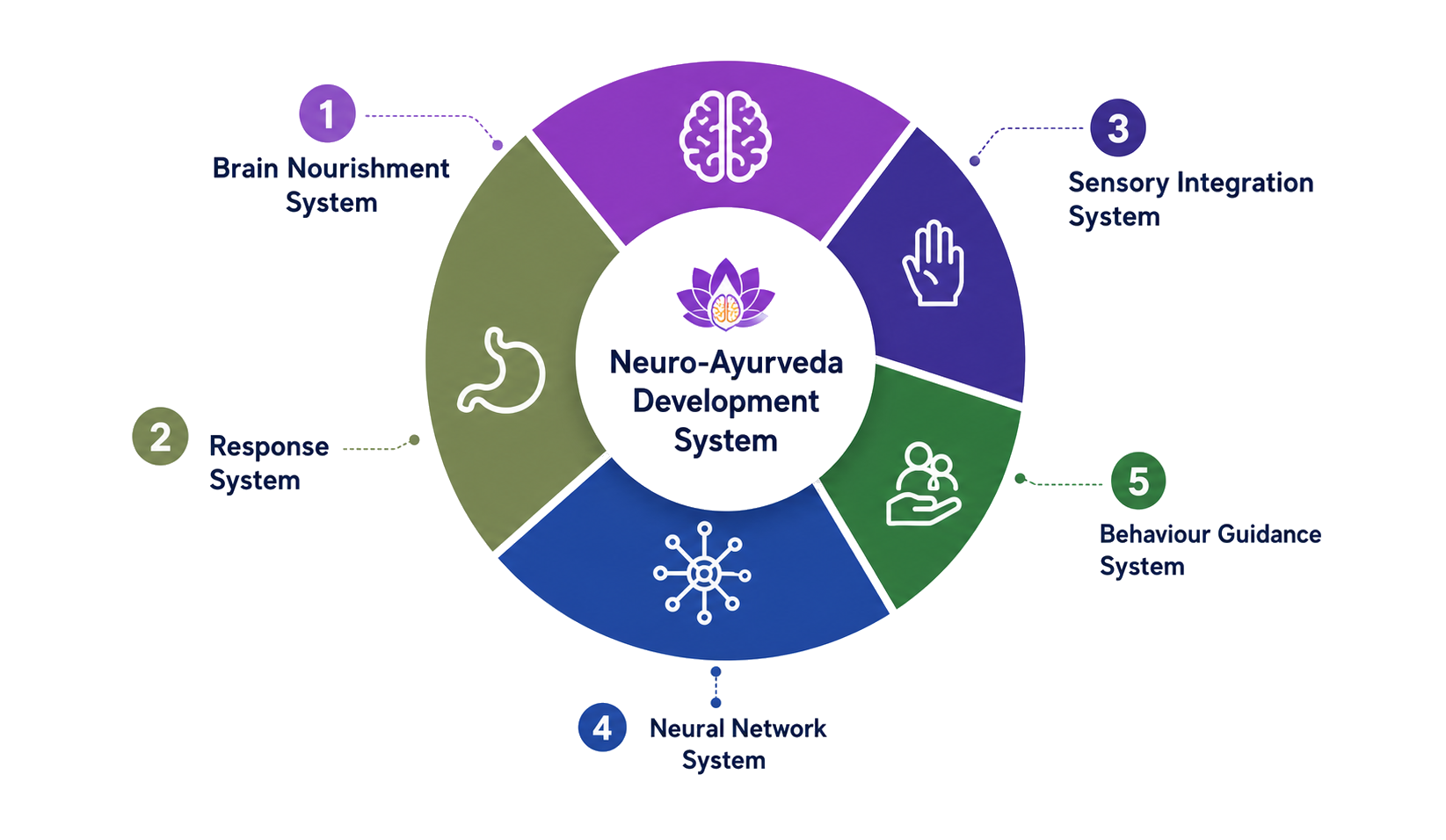
At Manovaidya, digestive wellness is seen as a holistic, five-pillar Neuro-Ayurveda Development System that takes all aspects of brain health, gut health, behaviour, lifestyle and emotional wellbeing into account. This perspective rather than emphasizing digestion symptoms gives insight into how emotional health affects a person's wellbeing in a wider sense.
1. Brain Nourishment System
Good brain health is associated with: Emotional regulation, Stress resilience, Mental clarity, Sleep quality, Decision-making, Overall wellbeing. Maintaining emotional wellness can help people develop more successful coping mechanisms to stress in their daily lives.
2. Gut Response System
The digestive system is crucial to an individual's wellbeing. This pillar aims to educate on: Digestion health, Nutrition, Healthy eating habits, Gut-brain communication and Lifestyle factors that affect gut wellness.
3. Neural Network System
The brain is constantly changing as a result of experiences, learning and lifestyle habits. In this pillar, healthy ways of thinking, emotional adaptability, stress resilience and behavioural awareness will be strengthened.
4. Sensory Integration System
Emotional and physical well-being can be affected by factors in the environment every day. This pillar takes into account experiences with the senses, stress in the environment, relaxation, recovery and lifestyle balance.
5. Behaviour Guidance System
Good habits help the emotional and digestive health. This pillar is based on: Stress Management, Healthy Routines, sustainable lifestyle habits, behaviour awareness, and long-term wellbeing.
How We Support Digestive Health
Individuals have unique digestive health experiences. At Manovaidya, support is tailored to the person's emotional state, digestive issues, as well as lifestyle needs. We want to help people to better understand the link between emotional wellbeing and digestive health, and encourage healthier habits for the long term.
Supporting Digestive Health and Emotional Wellbeing

Taking care of your health means caring for your body and emotional wellbeing. Some habits that can lead to good health are:
• Taking medications as told and following advice for diagnosed digestive conditions
Looking Beyond Symptoms
It is not about your stomach, that's OK, then.It's not about your stomach, then, is it not? Your mood, sleep and lifestyle habits and existing medical conditions can all have an impact on your symptoms. At Manovaidya we believe in understanding the person, not symptoms. Taking the time to think about health and wellbeing together can help you establish healthier habits in the long term which will benefit you in all aspects of your life.
Why People Across India Choose Manovaidya
Often, people from Delhi, Noida, Gurgaon, Faridabad, Ghaziabad and other parts of India come to Manovaidya to understand how stress affects their digestive health and the gut-brain connection through detailed assessment and customised advice.
We aim to educate people on the interplay between emotional wellbeing, digestive health and lifestyle and the positive impact this has on overall wellbeing.
About Dr. Ankush Garg
Mental Health Specialist & Founder of Manovaidya
Dr. Ankush Garg is the Founder of Manovaidya and the developer of the Neuro-Ayurveda Development System. His work focuses on understanding the relationship between emotional wellbeing, gut health, brain health and lifestyle while helping individuals experiencing stress-related digestive concerns and other mind-body health challenges.
Through structured assessments, personalised guidance and continuous follow-up, Dr. Ankush Garg helps individuals better understand the gut-brain connection and develop healthier long-term lifestyle habits.
Based in Delhi NCR, he provides Mind-Body and Digestive Health Assessments for individuals across India through both online and in-clinic appointments, helping individuals understand the relationship between emotional wellbeing, gut health and overall wellness through the Neuro-Ayurveda Development System.
Frequently Asked Questions (FAQs)
Concerned About Stress and Digestive Health?
Book a structured Stress & Digestive Health Assessment with Manovaidya to understand the relationship between emotional wellbeing, gut health, digestion and lifestyle while receiving personalised guidance.