-CrYNDrPl.png)
Teen Stress & Anxiety Support
Teen Stress & Anxiety Support in India
Helping Teenagers Build Emotional Resilience, Confidence & Better Emotional Wellbeing. Learn about signs, causes, emotional wellbeing, parent guidance and the Neuro-Ayurveda approach at Manovaidya.


Teen Stress & Anxiety Support
Key Takeaways
- Understanding Teen Stress & Anxiety
- Common Emotional, Behavioural & Physical Signs
- Causes and Triggers of Teenage Anxiety
- Academic Pressure & Performance Anxiety
- Social Media, Screen Time & Emotional Wellbeing
- Effects on Confidence, Learning & Relationships
- Supporting Healthy Sleep & Lifestyle Habits
- Neuro-Ayurveda Approach to Teen Wellness
- Building Emotional Resilience & Self-Esteem
- Parent-Teen Communication & Family Support
- Manovaidya Assessment & Guidance Process
- FAQs About Teen Stress & Anxiety
Want more content like this?
Join our Teen Mental Wellness newsletter for more care tips from our experts.
Your privacy is important to us.
Teen Stress & Anxiety Support in India
Helping Teenagers Build Emotional Resilience, Confidence & Better Emotional Wellbeing
Many things change during the teen years – emotionally, socially, academically and personally. This is a time when teens are often stressed out, anxious, under pressure and uncertain about themselves, coping with school, relationships, social demands and future aspirations.
Everyone at Manovaidya knows that there's more to teen stress and anxiety than worrying too much. Adolescents' emotional wellbeing, confidence, behaviour, lifestyle habits, social experiences and family dynamics can interact and have an impact on their mental health and wellbeing.
Under the guidance of Dr. Ankush Garg, Autism, ADHD, Child Development & Mental Health Specialist in India, Manovaidya takes a methodical Neuro-Ayurveda approach that allows the teen and family to get a better grip of emotional wellbeing, and to develop a plan for healthy development and healthy living.
Many families seeking Teen Stress & Anxiety Support in India, Teen Mental Health Support in India or direction for Teenage Stress and Anxiety are searching for a structured strategy that will permit them to comprehend their teenager's emotional health and wellbeing more effectively and long-lasting growth in the long-run.
Numerous families seeking Teen Anxiety Support in India, Teen Stress & Anxiety Support in India or Teen Mental Health Support in India are in search of structured guidance and long-term emotional wellbeing support.
Teen Stress & Anxiety Support at Manovaidya was designed to focus on the following:
Emotional Wellbeing & Resilience
Stress & Anxiety Management
Confidence & Self-Esteem Building
Academic & Performance Pressure
Healthy Lifestyle & Daily Habits
Parent-Teen Communication & Support
In many ways the teens are a time of great change. The physical development, emotional growth, social expectations, academic responsibilities and planning for the future can all place new demands on teenagers. This is why so many families are seeking advice about Teen Mental Health Concerns, Teen Mental Health Support and Teen Emotional Wellbeing, today.
Sometimes a teenager's wellbeing and day-to-day functioning is impacted by other issues related to them, e.g., Teenage Stress and Anxiety, low confidence, academic pressure, emotional difficulties and social problems.
Many parents will see their teen getting withdrawn, irritable, stressed or emotionally distant, but often are not sure if this is part of the changes that are happening in their teens or if it is a deeper emotional problem.
Stress and anxiety can affect teenagers differently.
Some may become quiet and withdrawn.
Others may become angry, emotional or irritable.
Some teenagers may constantly worry about school, friendships, appearance or future goals.
Others may struggle with confidence, motivation or decision-making.
Each teenager's experience is different and it is important to recognise that sometimes it is more important to understand the factors that underpin emotional wellbeing than to simply look at what is happening behaviourally.
At Manovaidya, our goal is to help families better understand emotional wellbeing, confidence, behaviour and lifestyle-related influences that may affect a teenager's mental wellness.
Common signs of teen stress & anxiety

Common Signs of Teen Stress & Anxiety
Emotional, academic, social and physical signs can appear together. Families can use these signs to understand when support may be needed.
Stress and anxiety in teens can manifest in various ways.
Many teenagers may not openly express what they are feeling emotionally. More often than not, however, it can be seen in behaviours, habits, feelings or physical changes.
Parents may notice:
Emotional Signs
• Excessive worrying
• Overthinking
• Irritability
• Mood swings
• Low confidence
• Fear of failure
• Emotional overwhelm
Behavioural Signs
Social withdrawal
Avoiding responsibilities
Reduced motivation
Increased screen use
Difficulty managing daily routines
Emotional outbursts
Academic Signs
Difficulty concentrating
Declining academic performance
Exam-related anxiety
Fear of making mistakes
Reduced interest in studies
Physical Signs
Sleep difficulties
Fatigue
Headaches
Stomach discomfort
Restlessness
Muscle tension
Having one or two signs doesn't necessarily mean that there's a big problem. When emotional or behavioural change persists for a longer period of time and starts to have an impact on functioning in everyday life, however, this needs some attention and understanding.
Why Teenagers Experience Stress & Anxiety
Many parents think that stress is only experienced during studies.
However, in real life, most teen stress and anxiety can be affected by several factors.
Academic Pressure
Competitive environments, exams and expectations from the future career can put a lot of pressure on students in the school setting.
Many teens are concerned about performance, grades/expectations.
Social Pressure
Friendships, peer acceptance and social relationships become increasingly important during adolescence.
Comparing oneself to others may impact confidence and emotional wellness of teenagers.
Future Uncertainty
Careers, higher education and future aspirations may cause anxiety and doubts.
Teens often feel pressured to make life decisions at a time when they aren't emotionally ready.
Students will examine the impact of screen and social media on others.
Too much time spent on social media can raise the amount of comparison and self-criticism and cause emotional stress.
Internet-sourced pressure to fit in with unrealistic standards may occur for many teens.
Family Expectations
Parents' expectations may be well-intentioned and cause extra pressure if the teenager feels that he or she can't keep up.
Such healthy communication and emotional support may be important in lowering this stress.
Lifestyle & Sleep Habits
Irregular sleep patterns, lack of exercise and too much screen time can contribute to an altered emotional state, attention and coping with stress.
Many parents are concerned that all the emotional issues, lack of confidence, excess screen time, stress of schoolwork, etc. may impact their teen's life and future growth and development in relationships and wellbeing. It is important to recognize these concerns early on in order to help families take proactive and informed actions to improve their emotional wellbeing and resilience.
How Stress & Anxiety Can Affect Teenagers
Stress and anxiety can impact a lot more than just emotions.
If emotional pressure persists for an extended period, it can impact confidence, relationships, learning, motivation and overall wellbeing.
Sometimes teens suppress their feelings or don't know how to communicate what they are feeling, or they are afraid to be misunderstood.
Knowing about the effect of stress and anxiety in various aspects of life can aid families to be more effective supporters.
Emotional Wellbeing
Emotional overwhelm is one of the most common stressors and anxiety effects.
Teenagers may experience:
• Frequent worrying
• Overthinking
• Irritability
• Mood swings
• Emotional sensitivity
• Fear of failure
• Feelings of helplessness
In the long run, unmanaged emotional stress can impact a teenager's life so it becomes difficult to enjoy life and balance emotions.
Confidence & Self-Esteem
Teenagers can be under stress or anxious, which impacts their sense of self.
There are a lot of teenagers who will start asking themselves the following questions:
• Am I good enough?
• Why can't I do better?
• What if I fail?
• How will others act towards me?
These thoughts can slowly start to diminish confidence and self-esteem.
That once-confident, motivated teenager can start shying away from challenges, worrying about getting things wrong or being judged.
Academic Performance
Emotional wellbeing is linked to academic achievement.
Children with high stress or anxiety may have trouble with:
• Concentration
• Memory
• Exam preparation
• Time management
• Decision making
A student's ability to function at his or her peak may be impaired if the emotional stress becomes too great.
Social Relationships
Stress and anxiety can affect teens' relationships with friends, classmates and family.
Some teens may experience:
More withdrawn
Less socially active
Easily irritated
Sensitive to criticism
Fearful of social situations
Friendship, communication and social confidence can be impacted by these changes.
Physical Wellbeing
However, mental and emotional wellbeing can also have an impact on physical wellbeing.
Teens may have:
• Sleep difficulties
• Fatigue
• Headaches
• Digestive discomfort
• Restlessness
• Reduced energy
It's often important to understand how emotional wellbeing relates to physical wellbeing, and how this can help better support teenagers.
The Neuro-Ayurveda Approach to Teen Stress & Anxiety
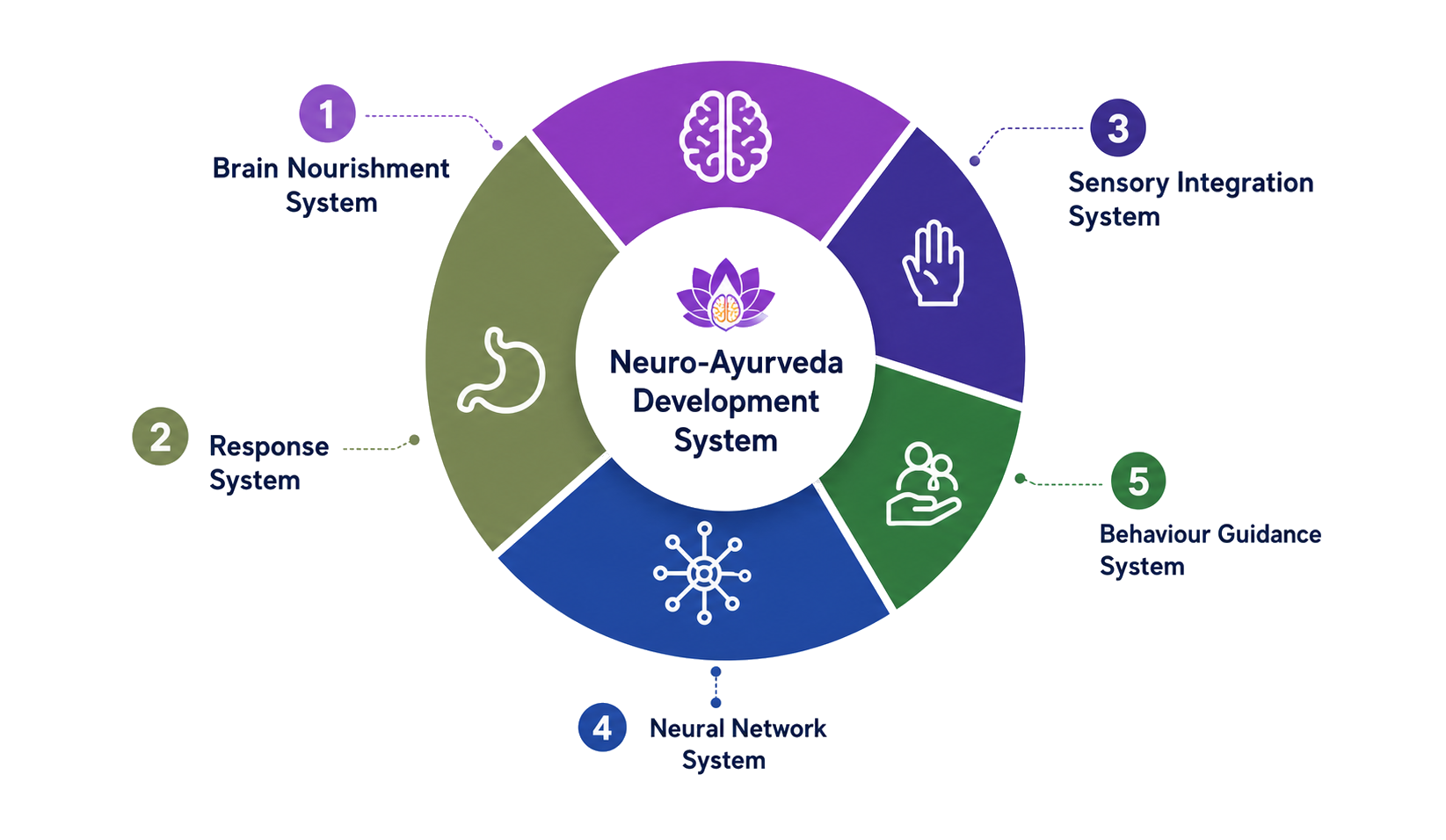
Neuro-Ayurveda Development System
A structured framework for brain, gut, sensory, behaviour, routine and family communication patterns.
Teen stress and anxiety are viewed in a more holistic manner at Manovaidya.
Manovaidya does not just look at stress or anxiety as the sole problems, but also considers the underlying issues which might have an impact on emotional health, confidence, behaviour, motivation, attention and development in general.
The Neuro-Ayurveda Development System empowers the family to gain a deeper understanding of the various factors that can contribute to emotional health and resilience.
Brain Nourishment System
Emotional wellbeing is closely linked to healthy functioning of the brain.
The Brain Nourishment System is based on the knowledge of what factors can affect:
• Attention
• Emotional regulation
• Learning readiness
• Confidence
• Decision making
• Cognitive wellbeing
Helping teens build emotional resilience can start with understanding how they process information, how they react to challenges and how they regulate their emotions.
Gut Response System
There's a growing appreciation in modern research and traditional medicine of the link between gut health and emotional well-being.
Many teens who experience stress and anxiety will also say that they experience:
• Digestive discomfort
• Irregular eating habits
• Appetite changes
• Food sensitivities
• Energy fluctuations
The Gut Response System is to understand the implications of digestive wellbeing on the functioning, mood and emotional balance.
Neural Network System
All experiences help build patterns of thinking, learning and responding in the brain.
The Neural Network System is concerned with knowledge about:
• Thought patterns
• Learning behaviour
• Emotional responses
• Attention
• Adaptability
This pillar aids families to become aware of the potential for emotional and behavioural patterns to emerge over time.
Sensory Integration System
Stress is a normal condition that affects many teenagers, depending on how they react.
Factors such as:
• Noise
• Crowded spaces
• Academic environments
• Social situations
• Digital stimulation
may affect emotional health and stress levels.
Understanding sensory influences often helps create more supportive environments for teenagers.
Behaviour Guidance System
Behaviours can be a way of communicating.
Teens can show signs of emotional stress by:
Anger
Withdrawal
Irritability
Avoidance
Lack of motivation
This pillar is not about responding to behaviour, but about understanding the factors that might be affecting behaviours and how families can respond more effectively to these behaviours.
Parents are one of the most important people to support a teenager's emotional wellbeing.
Often minor adjustments in communication, understanding, and daily activities can have a significant impact.
Listen Without Judgement
Many teens want to be heard before they want solutions.
Providing the opportunity to share feelings in an open setting encourages teens to share their feelings more easily.
Avoid Constant Criticism
Too much criticism can have a negative effect on confidence and cause emotional stress.
Teenagers are more likely to be supported in their guidance rather than judged.
Encourage Healthy Routines
Emotional wellbeing and resilience can be supported by consistent sleep, a balance in daily routines, physical activity and healthy habits.
Reduce Unnecessary Pressure
It's better to have some encouragement and sensible expectations, rather than to be pressured or compared.
All teens grow at their own rate.
Support Emotional Expression
Teens should feel free to share their feelings about:
• Fear
• Stress
• Frustration
• Confusion
• Disappointment
It is vital to learn how to express emotions healthily.
Promote Healthy Screen Habits
Technology is an integral part of life in the modern world, but there is a balance.
Support for teens' attention, sleep and emotional wellbeing may come from helping them maintain healthy boundaries around screen use.
Focus on Strengths
Far more than many teenagers hear about what they are doing right, they hear about what they are doing wrong.
Identifying strengths, and progress and effort can help to foster confidence and emotional resilience.
Parent guidance is an integral component of teen mental wellness because when parents and professionals collaborate to foster a nurturing environment for growth, confidence and emotional well-being, the teen is most likely to make the most progress.
Understanding the teenager as a whole and not just a symptom or concern is the first step of support at Manovaidya.
Our process consists of the following steps:
Step 1: Detailed Assessment
Identifying emotional wellbeing, stress, behaviour, lifestyle habits, confidence issues, sleep and family issues and screen use.
Step 2: Personalized Guidance
Making specific recommendations for the teen's emotional, behavioural and developmental needs.
Step 3: Parent Guidance & Family Support
Supporting parents to improve their understanding of communication, emotional wellbeing and how to help their teenager at home.
Step 4: Neuro-Ayurveda Development System
Using the five pillars to gain a deeper insight into emotional wellbeing, behaviour, attention, confidence and overall growth.
Step 5: Progress Tracking & Follow-Up
Establishing an organized plan over time to track progress and make decisions.
We aim to support adolescents and families in transitioning from confusion and stress to clarity, confidence and emotional wellness.
Why Families Across India Connect With Manovaidya
Delhi, Noida, Gurgaon, Faridabad, and other parts of India families get in touch with Manovaidya for Teen Stress & Anxiety Support, Teen Mental Health Support and Teen Emotional Wellbeing guidance via online and in-clinic counselling.
For many families, determining which support system is best for a teenager can be overwhelming. There is a need for parents to grasp what is going on and for practical advice to be available and a framework that can be utilised to help them understand their teen's emotional health.
We provide services at Manovaidya with a clear aim of not just treating the symptom of an emotional problem, but of helping the family to understand the wider issues that could have an impact upon a child's emotional wellbeing, their confidence, behaviour, motivation and their overall development.
Because Of: Families Choose Manovaidya
✔ Structured Teen Mental Wellness Assessment
All teenagers are different. Knowing the factors that affect a person's emotions, behaviour and lifestyle can help to develop a more individualised plan of support and development.
✔ Neuro-Ayurveda Development System
We have a structured approach that supports families in understanding emotional wellbeing by focusing on five interwoven strands:
________________________________________
✔ Parent-Centred Guidance
Teen mental wellness is NOT just the teen's problem.
Supporting environments for emotional development and resilience are important with parents.
✔ Personalized Support
Stress, anxiety and emotional issues are unique to each teenager.
Advice is always individualised and based on the specific situation.
✔ Long-Term Growth Focus
We are more interested in confidence, resilience, healthy habits and long-term wellbeing for our teens, than any short-term solution.
✔ Family-Oriented Approach
If you work with your teen and understand their needs as well as how to guide them, making positive progress can be more achievable.
About Dr. Ankush Garg
Autism, ADHD, Child Development & Mental Health Specialist in India
Dr. Ankush Garg is the Founder of Manovaidya and Creator of the Neuro-Ayurveda Development System.
His work focuses on Child Development, Teen Mental Wellness, Adult Mental Health, Women's Emotional Wellbeing and Senior Mental Health Support through a structured and personalized approach.
Over the years, he has worked with children, teenagers, adults and families seeking support for developmental, behavioural, emotional and mental wellness concerns.
Many families searching for a Mental Health Specialist in India are looking for more than symptom-based guidance. They are looking for clarity, direction and a structured roadmap.
Dr. Ankush Garg's work focuses on helping families better understand emotional wellbeing, behavioural patterns, confidence challenges, lifestyle-related influences and long-term mental wellness planning.
Through structured assessment, personalized guidance, family support and regular follow-up, he helps individuals and families move from confusion toward greater clarity, confidence and wellbeing.
Today, families from different parts of India connect with Manovaidya because they are looking for a compassionate, structured and personalized approach that focuses on overall wellbeing and long-term growth
Based in Delhi NCR, Dr. Ankush Garg supports teenagers, adults and families from across India through structured assessment, personalized guidance and the Neuro-Ayurveda Development System.Families looking for Teen Stress & Anxiety Support, Teen Anxiety Guidance or Teen Mental Wellness Support often
If parents notice that:
• Persistent stress or anxiety
• Emotional withdrawal
• Declining confidence
• Sleep difficulties
• Excessive screen dependency
• Behavioural changes
• Academic pressure affecting wellbeing
• Ongoing parent-teen communication challenges
Frequently Asked Questions
Strengthen Your Parent-Child Bond
Parenting a teenager can bring challenges like stress, emotional changes, communication gaps, and behavioural concerns.
At Manovaidya, we help parents better understand their child's emotional wellbeing through structured assessments, personalized guidance, and family-focused support.
Take the first step toward a healthier parent-child relationship.
- Understand Your Child Better
- Improve Communication
- Get Personalized Guidance