-CrYNDrPl.png)
Depression & Low Mood
Depression & Low Mood Treatment for Women in India
Supporting Women's Emotional Wellbeing, Hope & Mental Health Through Every Stage of Life
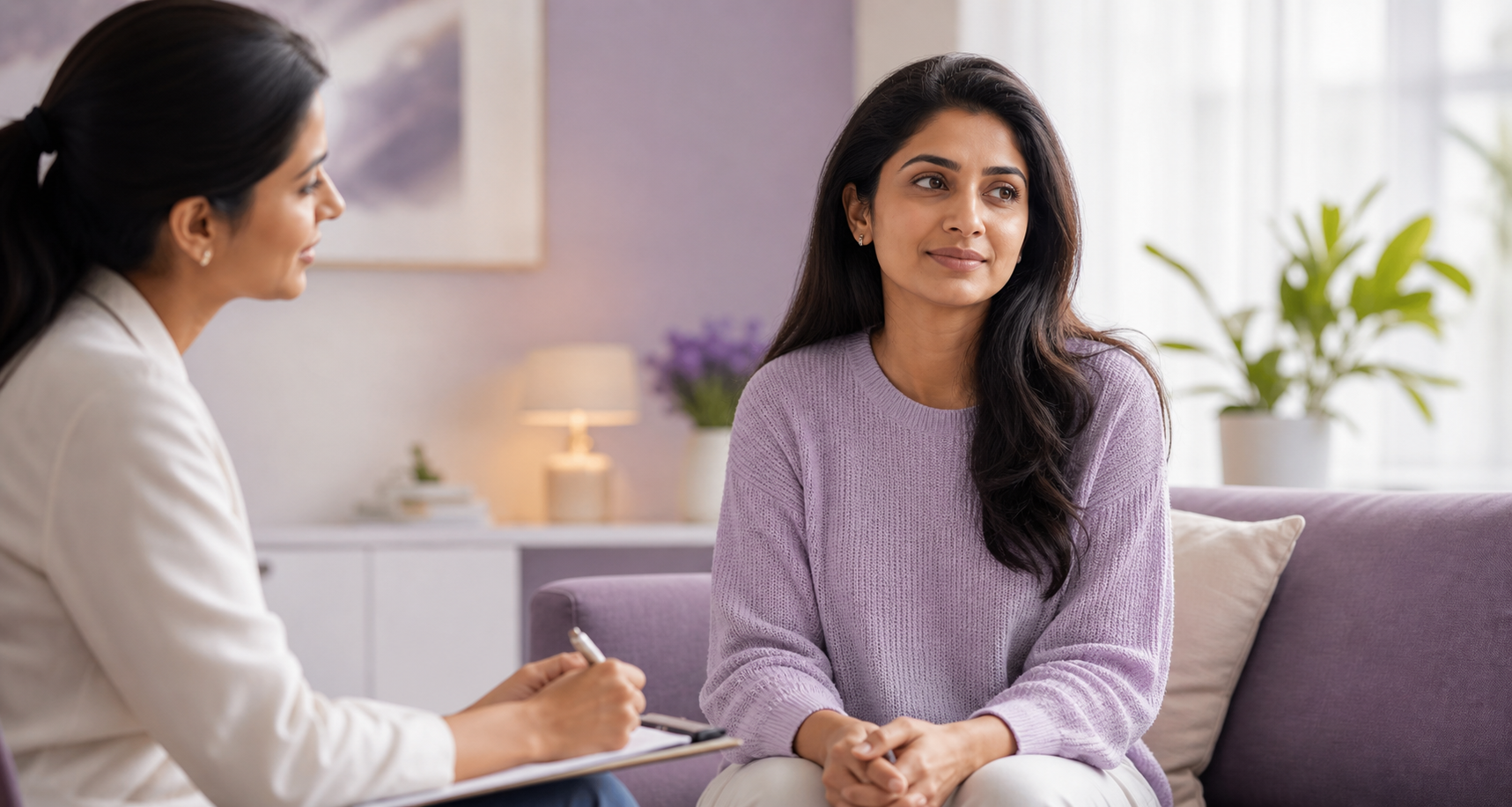
Depression & Low Mood
Key Takeaways
- Understanding Depression and Persistent Low Mood
- Temporary Low Mood vs Depression
- Common Signs of Depression in Women
- Hormonal Changes Can Influence Mood
- Depression Can Affect Physical Health
- Sleep and Depression Are Closely Connected
- Impact on Relationships and Daily Life
- Depression vs Stress and Emotional Burnout
- Supporting Women’s Emotional Wellbeing
- Neuro-Ayurveda Holistic Wellbeing Approach
- Manovaidya Assessment and Support Process
- FAQs About Depression and Low Mood
Want more content like this?
Join our women's mental health newsletter for emotional wellbeing, sleep and resilience guidance.
Your privacy is important to us.
All women have their lows and highs at various times of their lives. Sometimes, a woman may feel low on emotions because of the stressful events, relationship problems, work stress, family burden, hormonal changes or major life transitions. Low mood is a normal response to life but if the low mood persists, without interest or hopelessness, it cannot be ignored.
Depression is a very prevalent mental health condition in women. It is more than just a sad day or feeling sad. Depression can impact feelings, thoughts, physical well-being, relationships and enjoying normal activities. There are many women still dealing with work, family and responsibilities and experiencing emotional distress, which can be hard to see by others.
Others report emotional numbness, extreme fatigue or becoming disconnected from hobbies or activities. Others may observe sleep disturbances, changes in eating habits, concentration or motivation. These symptoms can impact self-assurance, productivity, relationships and quality of life over time.
Depression can happen when women are in various phases of their lives. Emotional wellbeing can be affected by some individuals during menstruation, pregnancy, the postpartum period, perimenopause and menopause. Relationship problems, infertility, caring for others, financial difficulties or the death of a loved one can also give rise to emotional issues.
The good news is that depression is a known medical disorder and a large number of women can get better when the disorder is detected early, treated properly and maintained with continuous care. You're not weak to ask for help, you are strengthening yourself to know what's going on in your emotional state and step towards improving it for betterment.
Emotional wellbeing is intertwined with brain health, sleep, physical wellbeing and healthy emotional balance and we believe this is the connection at Manovaidya. We want to know more than just her symptoms, we want to know her story.
Under the mentorship of Dr. Ankush Garg, Neuro-Ayurveda Development System, Autism, ADHD, Child Development & Mental Health Specialist in India, Manovaidya is taking an active approach to educating women about depression, low mood and emotional wellbeing using a structured assessment and personalised holistic approach.
If there has been a change to a persistent low mood, emotional exhaustion, hopelessness and loss of interest have begun to impact daily living, it is important to understand the cause of this.
At Manovaidya, Depression & Low Mood Treatment Focuses On:
- Persistent Low Mood
- Depression
- Loss of Interest
- Emotional Exhaustion
- Hopelessness
- Low Motivation
- Emotional Wellbeing
- Healthy Mental Wellness
Book a Structured Depression & Low Mood Assessment
If persistent low mood, emotional exhaustion, hopelessness or loss of interest has started affecting daily life, understanding the underlying causes is the first step toward better emotional wellbeing.
Understanding Depression & Low Mood in Women
Understanding Depression Beyond Low Mood
Depression can affect emotions, thoughts, physical health, relationships, motivation and the ability to enjoy everyday life.
Depression may impact feelings, ideas, body, relationships, drive, and enjoyment of life.
It is normal to feel down after a stressful event. But if sadness persists for weeks, if it interferes with daily functioning or if it is accompanied by a loss of interest, hopelessness or difficulty in functioning, it may be a sign of depression.
Depression is a medical illness which impacts how a person thinks, feels and acts. It's not a weakness, laziness or lack of willpower.
Women looking for Depression Treatment in India, Low Mood in Women, Women's Mental Health, Feeling Empty, or Persistent Sadness, are trying to gauge if it's a passing emotional imbalance or something that requires professional intervention.
Early recognition of depression enables women to access the appropriate support before symptoms start to impact on relationships, work, physical health and overall quality of life.
Depression is not Just "Feeling Sad”
Many people think that depression is being sad.
Women may still be smiling, making an effort to work and to care for others, but they feel emotionally exhausted within themselves.
Depression can go undetected for months or years, as symptoms are not always apparent.
Loss of interest in pleasurable activities.
These symptoms are continued for two weeks or more and become a disruption to daily life, it is recommended to be assessed by a professional.
Common Signs & Symptoms of Depression in Women
Emotional Symptoms
Persistent sadness, frequent crying, emotional emptiness, hopelessness, guilt, irritability and overwhelm.
Physical Symptoms
Constant tiredness, low energy, appetite changes, weight changes, sleep problems and body aches.
Cognitive Symptoms
Poor concentration, forgetfulness, negative thinking, difficulty making decisions and reduced confidence.
Behavioural Changes
Social withdrawal, low motivation, loss of interest, avoiding family and difficulty completing daily tasks.
Sadness, crying often, feelings of emptiness, hopelessness, guilt, irritability and overwhelm.
Constant tiredness, low energy, appetite changes, weight changes, sleep problems and body aches.
Low concentration, forgetfulness, focused on negative thinking, poor decision making and loss of confidence.
Social isolation, lack of motivation, loss of interest, no desire to interact with the family, struggles with everyday activities.
Each woman struggles with depression in her own unique way.
If physical symptoms are ongoing, it is always important to have a medical evaluation to determine if a medical condition exists.
What Causes Depression in Women?
Biological & Hormonal Factors
Hormonal changes during menstruation, pregnancy, postpartum, perimenopause and menopause may influence emotional wellbeing.
Relationships & Responsibilities
Relationship conflict, caregiving, parenting, household responsibilities and grief may contribute to emotional distress.
Stress, Sleep & Life Changes
Chronic stress, poor sleep, work pressure and major life transitions may affect mood and emotional resilience.
Emotional wellbeing can be affected by hormonal fluctuations at menstruation, pregnancy, postpartum, perimenopause and menopause.
Emotional stress can be caused by relationship conflicts, caring, parenting, domestic chores and bereavement.
Mood and emotional resilience can be influenced by chronic stress, poor sleep, work stress and significant life changes.
Typically depression will occur when there are biological, psychological, and social causes.
Emotional well-being can be affected by hormonal changes in menstruation, pregnancy, postpartum, perimenopause and menopause.
Emotional distress can be caused by relationship conflict, separation, divorce or unhealthy relationships.
Emotional stress can be exacerbated by professional demands, stress in the workplace and the demands of multiple roles.
Over time, parenting and caring for children or adults with disability, or managing responsibilities in the home, can become challenging and emotionally taxing.
When a loved one or major life change occurs you may be more emotionally vulnerable.
High stress levels over a prolonged period without sufficient rest can cause depression in some women.
Depression and poor sleep go hand-in-hand. These sleep problems can also negatively affect emotional functioning, and depression can disrupt sleep.
Why Early Recognition Matters
Recognising depression early allows women to strengthen emotional resilience, improve coping strategies and reduce its impact on emotional and physical wellbeing.
Early recognition of depression opens the door for women to foster emotional resilience, enhance coping skills and minimize the negative effects of depression on emotional and physical health.
Women often continue to suffer from trauma in silence, attending to others' needs.
When depression occurs early in its presentation, women can learn more about their symptoms, the possible factors that might contribute, and get the help they need before emotional suffering starts to impact their physical health, relationships, work performance and wellbeing.
Early intervention is linked to positive results and can be used to stop the symptoms getting worse with time.
How Depression Can Affect Daily Life
Depression is more than just feelings. It can impact a woman's thinking, feelings, work, care of family, and life.
Numerous women are still doing what they have to do even though within they are feeling emotionally spent. With time, depression can start to impact physical health, self-confidence, relationships, and quality of life.
A knowledge of these changes can make depression a serious medical disorder that should not be taken lightly or "lived with.
Depression can impact the emotional balance in a variety of ways.
These emotional changes can slowly lead to loss of confidence and loss of interest in everyday activities.
These symptoms can also be present in medical conditions and therefore, if symptoms are ongoing, physical symptoms needs to be evaluated by a health care professional.
There is a strong bi-directional relationship between sleep and depression.
Improving sleep habits often forms an important part of overall mental wellbeing.
Depression can impact personal relationships.
Professional care is complemented by supportive relationships and open communication.
These problems can slowly impact on working ability and quality of life.
Depression vs Stress
Stress
- Usually linked to a clear external pressure
- Often improves when stress reduces or support improves
- May be shorter-term and situational
Depression
- Involves persistent sadness, emptiness or hopelessness
- Can continue even when no obvious stressful situation exists
- Needs professional evaluation when symptoms continue
Stress and depression are different conditions.
Stress typically occurs when there are difficult or stressful situations.
Many women do well despite stress and sometimes relieve when the stressful situation alterations.
In the case of depression, the emotional changes persist despite the absence of an obvious stressful situation.
Sleep or eating disturbances.
Professional evaluation can be useful to differentiate between chronic stress and clinical depression.
Depression vs Emotional Burnout
Physical and/or emotional stress often leads to emotional burn-out.
Depression can have some of these symptoms, but typically includes more widespread emotional changes like sadness, hopelessness, loss of interest in life.
Because symptoms may overlap, proper assessment is important.
Hormonal Changes & Depression
In some women hormonal changes can affect mood. But never should it be taken for granted that it is "just hormonal" when it comes to enduring depression. Professional assessment aids in determining the cause(s) and intervention(s).
The Neuro-Ayurveda Development System
Emotional wellbeing is seen from a whole child perspective at Manovaidya.
The Neuro-Ayurveda Development System is not just about depression; it's about comprehending the connection between brain health, lifestyle, sleep, physical well being and emotional strength.
Supporting the brain nourishment is one of the factors that could impact mental well-being.
As more studies continue to be done on the relationship between gut health and emotional wellbeing, it is clear that this relationship is being studied more than ever before.
Mood, energy and emotional resilience may be affected by nutrition, digestion and general physical health.
Frequent mental activity promotes mental health.
Reading, journaling, mindfulness, and learning new skills and meaningful conversations can enhance cognitive and emotional health.
Emotional balance can be facilitated through positive sensory experiences.
Listening to relaxing music.
Behaviour is frequently altered in depression.
It's a crucial component of recovery to acknowledge these shifts without self-blame, but with self-compassion.
Supporting Emotional Wellbeing
Emotional wellbeing can be complemented with healthy habits every day, plus professional help when needed.
A healthy sleep pattern can help regulate emotions while keeping a person mentally healthy.
Taking part in regular exercise like walking, yoga or stretching could help reduce mood and wellbeing.
Eating well promotes optimal brain, body and emotional health.
Having positive family and friend relationships can help decrease loneliness and emotional isolation.
The emotional energy can be replenished and wellbeing enhanced through self-care, hobbies and fun activities.
Everyday stress can be managed by mindfulness, relaxation techniques, breathing exercises and healthy coping strategies.
If you feel depressed, have a problem with emotional exhaustion or low mood that affects your working, relationships or day to day life, you need professional evaluation. If you have thoughts of self-harm, suicide or if you think you are at immediate risk of harming yourself or others, get emergency medical help ASAP.
How Manovaidya Supports Women
Step 1: Comprehensive Assessment
Step 2: Personalized Guidance
Step 3: Emotional Wellbeing Guidance
Step 4: Neuro-Ayurveda System
Step 5: Ongoing Support
At Manovaidya, the treatment starts with the individual and not just the symptoms.
Step 1: Comprehensive Assessment
Knowledge of emotional well being, lifestyle habits, sleep pattern, physical health, hormonal stage and personal circumstances.
Step 2: Personalized Guidance
Making personalized suggestions according to every woman's emotional and physical and lifestyle requirements.
Step 3: Emotional Wellbeing Guidance
To educate women on depression and how emotional well-being and practical lifestyle habits can promote good long-term mental health.
Applying the five pillar approach to emotional wellbeing, brain health, behaviour and overall wellness.
Step 5: Progress Tracking & Ongoing Support
Delivering organised aftercare to assist women track their progress and bolster healthy behaviors over time and make informed choices about their emotional health.
When Should You Consider Professional Guidance
Diminish or drop out in hobbies or pastimes.
Have trouble sleeping or eating.
Are emotionally drained on most days.
Find it hard to work, or live, at home.
Avoid or withdraw relationships and social contacts.
Feel helpless or overly guilty.
Early assessment can help determine contributing factors, an understanding of symptoms and the appropriate treatment and support based on your individual needs.
We aim to raise awareness about depression, boost emotional health and develop healthier coping mechanisms, all in a compassionate and personalized manner.
Why Women Across India choose Manovaidya
Comprehensive Women's Mental Health Assessment
Neuro-Ayurveda Development System
Personalized Guidance
Holistic Women's Mental Health Care
Focus on Long-Term Mental Wellness
Ongoing Support & Progress Tracking
A thorough women's mental health evaluation is conducted.Women's mental health is assessed comprehensively.
Depression and lasting sadness can impact each woman in various ways. Some women may start with sadness or feeling unfeeling and drained of emotions, or losing interest in activities they used to enjoy. Other people might find it as not being motivated, crying often, not sleeping well, feeling disconnected emotionally or not being able to handle routine tasks.
At Manovaidya we know that depression is a complex condition that is not necessarily the result of just a single thing. Brain health, sleep, hormonal changes, lifestyle choices, relationship, physical health, and life experiences all affect emotional wellbeing. We don't just treat symptoms, we strive to find the whole situation with each woman's emotional health.
Assessment, personalised guidance, and a holistic view of women's mental health enable us to help women build emotional wellness, bolster resilience and advance to long-term mental wellness.
Every woman's experience with depression is unique.
Prior to developing individualized instructions.
Manovaidya is trained in the Neuro-Ayurveda Development System, a structured system that sees emotional well-being as being interdependent and integrated in five facets.
This system gives women awareness of the impact of biological, emotional and lifestyle issues on their mood, mental strength and general mental health.
No two women experience depression in exactly the same way.
This individualised strategy means that each woman is given advice according to her own situation, rather than a blanket advice.
Emotional wellbeing is strongly linked to general well-being.
This comprehensive grasp allows women to develop emotional health and happiness over the long term, instead of just short-term relief.
We aim to assist women in getting the emotional balance they may have lost, regaining their confidence and learning how to make better relationships and relationships altogether a healthier experience, and how to enhance their quality of life.
We are mainly working with women to learn to be emotionally resilient, to establish healthy routines, and long-term mental wellness, that span every stage of life.
The signs and symptoms of mental wellbeing can vary across time and recovery can be a gradual process.
Progressive monitoring and systematic monitoring of progress provide women with an awareness of their emotional shifts and support them to build healthy coping skills and make informed choices as their needs change over time.
Why Women Across India Trust Manovaidya
Women from Delhi, Noida, Gurgaon, Faridabad, Ghaziabad and all over India reach out to Manovaidya for Depression & Low Mood Support, Women's Mental Health Guidance and Emotional Wellbeing Support through online & in-clinic sessions.
As a student, working professional, homemaker, entrepreneur, newly married woman, mother or as you experience perimenopause and menopause, our personalised approach is focused on the understanding of your unique emotional health journey.
Dr. Ankush Garg is the Founder of Manovaidya and the Developer of the Neuro-Ayurveda Development System.
His work extends across Child Development, Adult Mental Health, Women's Mental Health and Senior Mental Health, with a focus on understanding the relationship between brain health, emotional wellbeing and overall quality of life.
Many women seek guidance when persistent low mood, emotional exhaustion or emotional imbalance begin affecting sleep, work, relationships or daily functioning. Through structured assessment, personalised guidance, lifestyle recommendations and continuous follow-up, Dr. Ankush Garg helps women better understand these challenges while supporting long-term emotional wellbeing through the Neuro-Ayurveda Development System.
Based in Delhi NCR, Dr. Ankush Garg supports women across India through structured assessment, personalised guidance and holistic mental health care.

About
Dr. Ankush Garg
Autism, ADHD, Child Development & Mental Health Specialist in India
Dr. Ankush Garg is the Founder of Manovaidya and the Developer of the Neuro-Ayurveda Development System.
His work extends across Child Development, Adult Mental Health, Women's Mental Health and Senior Mental Health, with a focus on understanding the relationship between brain health, emotional wellbeing and overall quality of life.
Many women seek guidance when persistent low mood, emotional exhaustion or emotional imbalance begin affecting sleep, work, relationships or daily functioning. Through structured assessment, personalised guidance, lifestyle recommendations and continuous follow-up, Dr. Ankush Garg helps women better understand these challenges while supporting long-term emotional wellbeing through the Neuro-Ayurveda Development System.
Based in Delhi NCR, Dr. Ankush Garg supports women across India through structured assessment, personalised guidance and holistic mental health care.
Frequently Asked Questions About Depression & Low Mood
Depression is one of the most frequently occurring mental health problems that can impact the mood, thinking or functioning of women. It can be more than sadness – and can include low mood, loss of interest, tiredness, sleep problems, problems with concentration and a sense of hopelessness. Women can experience depression at any stage of life and there is a need for professional evaluation if symptoms last.
Book a Consultation
Book a structured assessment and personalized guidance session with the Manovaidya team to better understand depression, low mood, emotional wellbeing and women's mental health.
Whether your concerns relate to persistent sadness, emotional numbness, loss of interest, hopelessness or low motivation, our team is here to help you explore personalised support.
Book Your Assessment Today
- Book Consultation
- Speak With Our Team
- Get Personalized Guidance
- Depression & Low Mood Assessment
- Emotional Wellbeing Support
Book Your Consultation with Manovaidya Today
Manovaidya Clinic
Noida, Uttar Pradesh, India
Contact Us Now