-CrYNDrPl.png)
Sleep & Daytime Fatigue
Sleep Disorders in Seniors Treatment in India
A fact sheet for older people on how to get better sleep, better brain health and healthier ageing.Helping Seniors Achieve Better Sleep, Better Brain Health & Healthier Ageing fact sheet for older people.


Sleep & Daytime Fatigue
Key Takeaways
- Sleep patterns naturally change with age
- Persistent sleep problems need attention
- Poor sleep may affect memory
- Daytime fatigue can impact daily life
- Sleep and emotional wellbeing are connected
- Health conditions may disturb sleep
- Medications can influence sleep quality
- Dementia may affect sleep-wake cycles
- Healthy routines can support better sleep
- Physical activity may improve sleep quality
- Regular assessment helps identify causes
- Personalized care supports healthy ageing
- Family guidance can improve sleep support
- FAQs address common senior sleep concerns
Want more content like this?
Join our senior healthy sleep newsletter for care tips from our experts.
Your privacy is important to us.
Sleep & Daytime Fatigue
A fact sheet for older people on how to get better sleep, better brain health and healthier ageing.Helping Seniors Achieve Better Sleep, Better Brain Health & Healthier Ageing fact sheet for older people.
Sleep is a crucial component of good health, emotional well-being and brain health across all stages of life. But, as people grow older, many tend to have a shift in their sleeping habits. Others have trouble getting to sleep or waking up multiple times in the night or up much earlier than they want, with no sense of rest.
Some sleep changes are normal as you age, but if you have ongoing sleep issues, this isn't part of the normal ageing process. Sleeping poorly can impact memory, concentration, mood, energy, balance and lifestyle. Difficulty sleeping over a longer period of time could also affect emotional health and cognitive function, leading to more challenges with daily activities.
Seniors can experience sleep problems for a variety of reasons. Medical conditions as well as chronic pain, medications, anxiety, depression, and lifestyle factors and neurological disorders like dementia have been linked to poor sleep. The causes are different for each person so it is important to know what is behind the cause.
Older family members may sleep too much or not be able to sleep at night, or become more confused after sleeping late. These changes may impact the senior as well as the caregiver, and proper assessment and guidance are important.
We at Manovaidya know that healthy sleep is essential to healthy ageing. Instead of treating insomnia as a symptom, it is important to consider the link between brain health, emotional wellbeing, physical health and daily routine in supporting better sleep.
Under the guidance of Dr. Ankush Garg, Autism, ADHD, Child Development & Mental Health Specialist in India, Manovaidya uses the Neuro-Ayurveda Development System to explain sleep disorders, healthy sleep habits and factors affecting healthy cognitive ageing to seniors and their families.
Insomnia in Seniors
Difficulty Falling Asleep
Frequent Night-Time Awakening
Early Morning Awakening
Poor Sleep Quality
Excessive Daytime Sleepiness
Sleep & Brain Health
Healthy Ageing
At Manovaidya, Sleep Disorders Treatment Focuses On:
Insomnia in Seniors
Difficulty Falling Asleep
Frequent Night-Time Awakening
Early Morning Awakening
Poor Sleep Quality
Excessive Daytime Sleepiness
Book a Structured Sleep Support Assessment
An important initial step if you have difficulty sleeping, wake up many times a night or are very tired during the day and this is impacting your daily life is to understand the reason.
Understanding Sleep Disorders in Seniors
Understanding Sleep Beyond Night-Time Rest
As a person gets older, sleep disturbances can affect memory, mood, energy, balance, habits and life in general.
Healthy Sleep
Brain Health
Emotional Wellbeing
Daily Routine
Healthy Ageing
Sleep disorders are a disorder of sleep that occurs frequently and impacts the quality, timing and/or length of sleep.
Sometimes people don't sleep well at night, but regular sleeping problems can affect their physical health, emotional well-being and everyday life.
Many senior citizens who request information on Sleep Disorders in Seniors, Insomnia in Elderly People, Poor Sleep in Older Adults or Senior Sleep Problems are seeking accurate information on why sleeping habits change as people get older and when to seek professional help.
Being aware of sleep issues early on can help seniors and their families realize that certain factors might be involved and learn healthy lifestyle habits to help wellbeing.
Are Sleep Changes a Normal Part of Ageing?
If someone continues to have trouble sleeping or feels very tired during the day, or has their sleep disrupted, that should not be ignored as "old age. If sleep difficulties persist, they warrant good professional care.
There can be natural changes to sleep patterns as we get older.
Some seniors may:
Fall asleep earlier.
Get up earlier in the morning.
Decrease amount of deep sleep.
Wake up quickly but not too much at night.
These changes are not necessarily a sign of a sleep disorder.
But, if you are having trouble sleeping or are feeling very tired during the day, or if your sleep is affecting your life, it is not something that should be overlooked.
Common Sleep Disorders in Older Adults
Normal Sleep Changes
Waking earlier in the morning
Spending less time in deep sleep
Brief night waking without major daytime impact
Sleep Disorder
Persistent insomnia or frequent waking
Excessive daytime tiredness
Sleep problems that affect mood, memory or daily life [1][2]
Several different sleep disorders may affect seniors.
Insomnia
For older people, one of the most prevalent sleep disorders is insomnia.
It may involve:
Difficulty falling asleep
Difficulty staying asleep
Waking too early
A feeling of not being refreshed after sleep [2]
Fragmented Sleep
Some older people get up several times during the night, and sleep is light and disturbed.
Excessive Daytime Sleepiness
A lack of sleep at night can result in more fatigue, daytime sleepiness, and daytime drowsiness.
Sleep Changes Associated With Medical Conditions
Some medical and neurological diseases, such as chronic pain, anxiety, depression or dementia can impact normal sleep.
Common Signs & Symptoms
Night-Time Symptoms
Problems getting to sleep, multiple awakenings at night and poor sleep at night.
Daytime Symptoms
Daytime fatigue, reduced energy, increased naps and difficulty maintaining daily routines.
Cognitive Symptoms
Lack of focus, forgetfulness, decreased attention and delayed thinking.
Emotional Symptoms
Irritability, mood changes, anxiety, low mood or emotional sensitivity following a poor sleep.
Bedtime can be just the beginning of a sleep disorder.
Some seniors experience:
Difficulty falling asleep
Frequent night waking
Early morning awakening
Daytime fatigue
Poor concentration
Memory difficulties
Irritability
Mood changes
Reduced energy
Fatigue - an increased risk of falls [1][2][3]
If there are symptoms that persist, they need to be appropriately evaluated to determine the cause.
What Causes Sleep Disorders in Seniors?
Age & Routine Changes
Natural sleep cycle changes, irregular sleep routines and daytime naps can disrupt sleep.
Health & Medication Factors
If you have chronic pain, medical problems or some medications can disrupt your normal sleep routine.
Emotional & Brain Health
Poor sleep can be caused by anxiety, depression, dementia or an altered sleep/wake cycle.
There are numerous reasons for sleep problems.
Some common causes are:
Natural Age-Related Sleep Changes
Body's sleep cycle is slowly modified as per age.
Chronic Pain
If you suffer from arthritis or another ailment, it may be difficult to sleep comfortably.
Anxiety & Depression
Emotional health issues can affect both the ability to fall and maintain sleep.
Medications
Some medications side effects could involve altered sleep habits or daytime sleepiness.
Dementia & Alzheimer's Disease
Brain changes can be responsible for sleep disturbances and sleep-wake disruption.
Medical Conditions
Breathing issues, thyroid conditions and other health conditions can also disrupt sleep.
Lifestyle Habits
Poor sleep quality may be due to irregular sleep schedules, lack of physical activity, excessive caffeine, alcohol consumption and long naps during the day.
Why Healthy Sleep Matters
A good sleep aids many facets of healthy ageing.
A healthy night's rest can help with:
Better memory
Improved concentration
Emotional wellbeing
Physical recovery
Healthy brain function
Reduced daytime fatigue
Better balance
Improved overall quality of life [1][3]
Many seniors can improve their sleep which also benefits their ability to live independently and maintain a healthy brain throughout the day.
How Poor Sleep Can Affect Daily Life
Poor sleep can impact on:
Brain Health & Memory
Emotional Wellbeing
Physical Health
Daily Activities
Sleep & Dementia
Sleep is crucial for physical and mental health. If sleeping is disrupted on a regular basis, the consequences can be far reaching and go beyond the tiredness of the next day.
For many older people, a lack of sleep can affect memory, attention, emotional state, balance and the quality of life. As time goes on, chronic insomnia can make it feel harder to function in everyday life and make the person more reliant on the support of family members.
Once these impacts are familiar, seniors and caregivers will better understand the importance of good sleep habits for healthy ageing.
Brain Health & Memory
The brain does a lot during sleep, the processing of information, supporting memory, maintaining healthy cognitive function just to mention a few.
Poor sleep over the long-term can lead to:
Difficulty concentrating
Reduced attention
Forgetfulness
Slower thinking
Reduced mental clarity [3]
Sleep issues are not necessarily indicative of dementia but if sleep issues are ongoing, it can be important to assess sleep problems, particularly if there is a noticeable decline in cognitive function.
Emotional Wellbeing
There is a strong link between sleep and emotional well-being.
Older adults who are having difficulty sleeping may also feel:
Irritability
Anxiety
Low mood
Reduced motivation
Increased stress
Emotional sensitivity [2][3]
Better sleep patterns can help promote emotional health as well as medical treatment if necessary.
Physical Health
Good sleep allows the body to heal itself.
Ongoing sleep problems may contribute to:
Daytime fatigue
Reduced physical energy
Lower activity levels
Poor balance
Increased risk of falls
Slower recovery from illness [1][2]
Maintaining healthy sleep is therefore an important part of healthy ageing.
Daily Activities
Lack of sleep can impact a myriad of daily activities.
For some seniors the following may be challenging:
Preparing meals
Managing medications
Driving safely
Remembering appointments
Completing household tasks
Maintaining social activities [1][2]
Early recognition of these issues can help the family to be more supportive and encouraging of independence.
Sleep & Dementia
Dementia can affect sleep and sleep can affect dementia. Through the professional assessment, families are better able to understand their children's sleep-wake disturbances, night-time restlessness and suitable care.
Sleep disturbances are common among people living with dementia.
Some individuals may experience:
Restlessness during the night
Increased confusion after sunset
Frequent waking
Changes in the sleep-wake cycle
Excessive daytime sleeping [4]
These symptoms can be caused by several different factors, and assessing these symptoms professionally can assist families to better understand the needs of the individual and the care that is most appropriate.
The Neuro-Ayurveda Development System
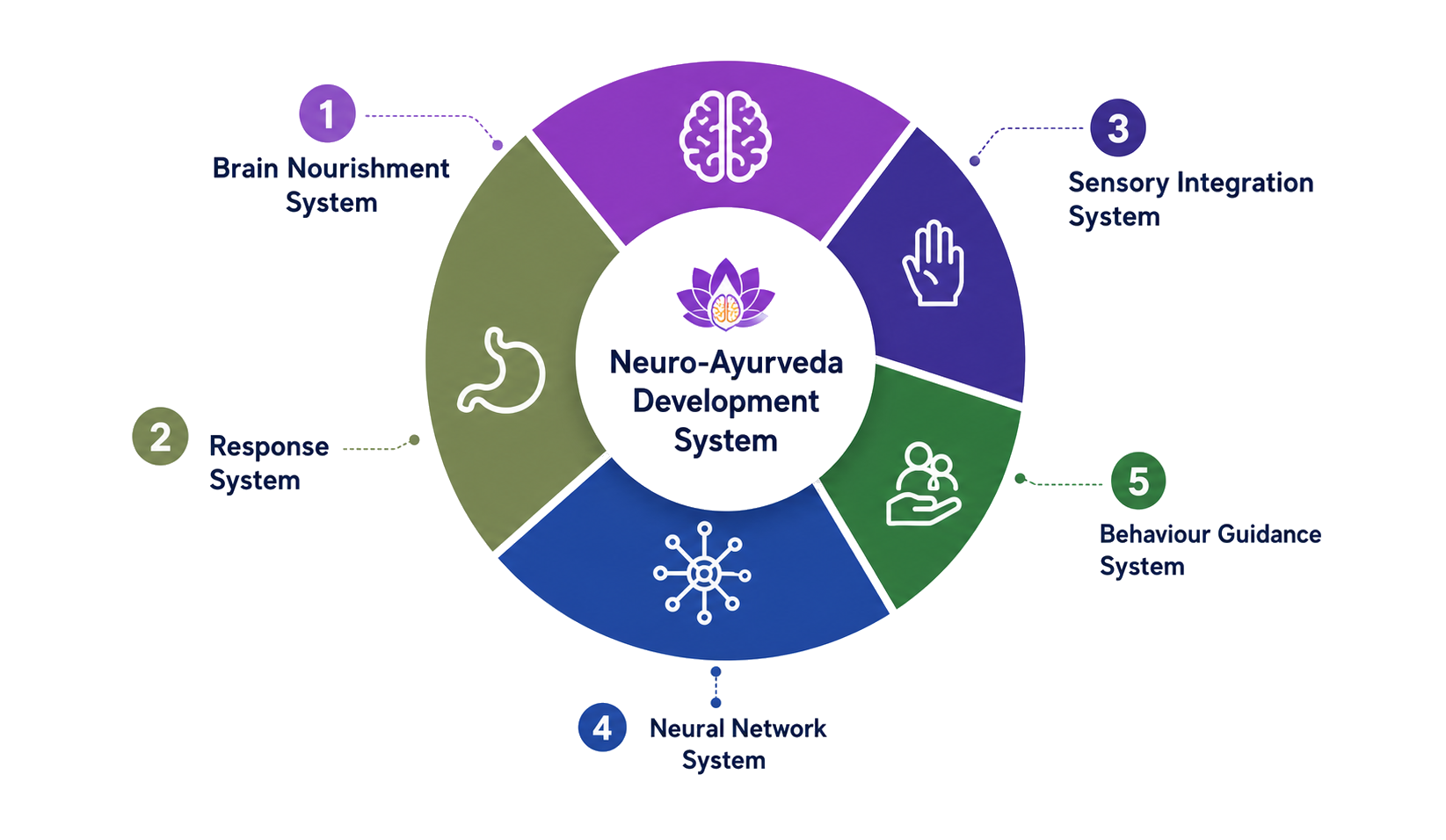
Brain Nourishment System
Gut Response System
Neural Network System
Sensory Integration System
Behaviour Guidance System
A healthy sleep is considered to be an integral part of brain health and healthy ageing at Manovaidya.
The Neuro-Ayurveda Development System is not just about insomnia; it is about helping people to comprehend the connection between sleep, emotional wellbeing, cognitive function and lifestyle habits.
Brain Nourishment System
The brain recovers during a healthy sleep and plays a role in:
Memory
Attention
Learning
Mental clarity
Emotional regulation
Cognitive resilience [3]
Nutrition for healthy brain nourishment, helps at the level of general cognitive wellbeing.
Gut Response System
The links between gut health and sleep continue to be investigated.
In some people, digestive problems, nutritional imbalances and irregular eating patterns can affect sleep quality. Good health is essential for overall good physical wellbeing, which is an important aspect of healthy ageing.
Neural Network System
Sleep is a crucial part of healthy brain function.
In addition to adequate sleep, ongoing mental engagement through reading and puzzles, as well as talking and learning new skills, can contribute to continued cognitive engagement.
Sensory Integration System
A peaceful, safe sleeping place can help to promote restful sleep.
Some useful practice is:
Keeping the bedroom quiet is important.
Reducing unnecessary noise
Comfortable room temperature
Consistent bedtime routines
Exposing infants to bright light before bedtime [2]
The following are some habits that could contribute to a more restful sleep setting.
Behaviour Guidance System
Daytime behaviour is often affected by sleep issues.
Some elderly people might turn into:
Easily irritated
Less patient
Socially withdrawn
More forgetful
Less motivated
Emotionally sensitive
It is important for families to grasp these changes in behavior with empathy and to respond to them appropriately.
Supporting Healthy Sleep Habits
Maintain a Consistent Sleep Schedule
Stay Physically Active
Limit Long Daytime Naps
Create a Comfortable Sleep Environment
Reduce Caffeine Late in the Day
Follow Regular Evening Routines [1][2]
Healthy sleep habits may contribute to better sleep quality and overall wellbeing.
Maintain a Consistent Sleep Schedule
Regular sleep and waking times help to maintain the body's normal cycle.
Stay Physically Active
Walking, stretching and age appropriate exercise throughout the day could help improve sleep at night.
Limit Long Daytime Naps
Some older adults may find it beneficial to take a nap during the day, but long naps in the late afternoon may make it more difficult to fall asleep at night.
Create a Comfortable Sleep Environment
Try for a quiet, dark and comfortable bed room that will help one sleep better.
Reduce Caffeine Late in the Day
Some people may find that drinks with caffeine, such as tea, coffee or alcoholic beverages, later in the evening may disrupt sleep.
Follow Regular Evening Routines
Reading, gentle relaxation or calming activities before bedtime may help prepare the body for sleep.
Seek Medical Evaluation for Persistent Sleep Problems
If the insomnia continues or is accompanied by excessive sleepiness, loud snoring, pauses in breathing while sleeping or poorer sleep quality, consulting with a qualified healthcare provider to determine if there are underlying issues that need to be addressed is recommended.
How Manovaidya Supports Seniors
Step 1: Comprehensive Assessment
Step 2: Personalized Guidance
Step 3: Healthy Sleep Guidance
Step 4: Neuro-Ayurveda System
Step 5: Family Guidance
Understanding the person is the starting point for support at Manovaidya rather than just looking at sleep issues.
We have a structured process that involves:
Step 1: Comprehensive Assessment
To gain insight into sleep concerns, cognitive health, emotional wellbeing, habits and daily functioning and medications.
Step 2: Personalized Guidance
Offering personalized suggestions, tailored to the senior's specific health profile and sleep-related issues.
Step 3: Brain Health & Healthy Sleep Guidance
Educating seniors and families on healthy sleep practices and cognitive wellness and practical lifestyle strategies to support better sleep.
Step 4: Neuro-Ayurveda Development System
Using the 5 pillars approach to learn about sleep, brain health, emotional wellbeing and healthy ageing.
Step 5: Progress Tracking & Family Guidance
Structured follow up to support seniors and caregivers track sleep patterns over time, reinforce healthy sleep habits.
When Should You Consider Professional Guidance?
Professional guidance should be considered if a senior:
Has difficulty sleeping for several weeks.
Wakes during the night more than once.
Is very sleepy during the day.
Snores loudly or has pauses in breathing during sleep.
Becomes more confused due to lack of sleep.
Has sleep problems affecting daily life, mood or memory.
Has rapid changes in sleep patterns.
Early assessment can identify the possible contributing factors, differentiate normal age-related changes from sleep disorders and aid in the appropriate management of sleep disorders. If sleep issues are associated with serious breathing complications, chest pain, fainting or any emergency symptoms, immediate medical care is required.
We are committed to educating seniors and families about sleep disorders, offering them a unique and compassionate approach to healthy sleep behaviours and enhancing quality of life.
Why Families Across India Choose Manovaidya
Routine Sleep & Cognitive Health Assessment
Neuro-Ayurveda Development System
Personalized Guidance
A Whole Sleep & Brain Health Approach
Focus on Better Sleep, Better Daily Living
Continuing Support & Family Guidance
Sleep problems can impact more than the amount of sleep in older adults. Bad sleep can affect memory and mood, energy, concentration and quality of life. Families may observe that their family member becomes more tired, forgetful or irritable after repeatedly not sleeping well.
Sleep problems are rarely the sole cause of sleep disorders in seniors at Manovaidya. There are a number of medical problems, emotional issues, medications, lifestyle choices and changes in the body which can interfere with sleep. We take a multidisciplinary approach, considering these factors collectively and not merely insomnia as a standalone issue.
Assessment, personalised guidance and a comprehensive understanding of healthy ageing will help us support and encourage seniors to achieve better wellbeing and lead healthier lives.
Comprehensive Sleep & Cognitive Health Assessment
Each of us as seniors has unique sleep issues.
A few people might suffer from:
Difficulty falling asleep
Waking up a lot at night
Early morning awakening
Poor sleep quality
Daytime tiredness
Changes in mood
Reduced concentration
Memory concerns [1][2][3]
Through assessment we are able to find out:
Sleep concerns
Cognitive health
Emotional wellbeing
Lifestyle habits
Nutrition
Daily routine
Existing medical conditions
Current medications
Family support
Before developing individualized instructions.
Neuro-Ayurveda Development System
Manovaidya follows the Neuro-Ayurveda Development System, a structured approach that takes into account healthy sleep and brain development based on five pillars.
Brain Nourishment System
Gut Response System
Neural Network System
Sensory Integration System
Behaviour Guidance System
This framework is designed to guide seniors and families to understand how their biology, emotions and lifestyle can potentially affect their sleep, cognitive health and healthy ageing.
Personalized Guidance
Sleep disorders manifest themselves in different ways for each senior.
Recommendations are personalised according to:
Sleep concerns
Emotional wellbeing
Lifestyle habits
Nutrition
Daily routine
Medical history
Current medications
Personal goals
This tailored approach is designed to make sure guidance is based on this individual's circumstances and not a set routine.
Holistic Sleep & Brain Health Perspective
Good sleep is related to wellbeing.
Our method takes into account the connection between the following:
Sleep quality
Brain health
Emotional wellbeing
Nutrition
Physical activity
Lifestyle habits
Cognitive function
Healthy ageing
To share a more comprehensive knowledge of sleep health in older age.
Focus on Better Sleep, Better Daily Living
We aim to ensure that seniors sleep better and have a better outlook on their energy, emotional health, mental function and confidence in daily living.
In addition, we support families, where appropriate, to establish healthy sleep patterns and environments in their homes that promote long-term wellbeing.
Ongoing Support & Family Guidance
Sleep patterns may vary as time goes by.
Progressive monitoring and regular follow-up enable seniors and their caregivers to be aware of sleep changes and reinforce healthy behaviors, making decisions as health needs change.
Why Families Across India Trust Manovaidya
Delhi, Noida, Gurgaon, Faridabad, Ghaziabad and the rest of India's families reach out to Manovaidya Sleep Disorders Clinic for Sleep Disorders Treatment, Healthy Brain Ageing Guidance and Senior Mental Health Support via online and in-clinic consultations.
About Dr. Ankush Garg
Dr. Ankush Garg
Autism, ADHD, Child Development & Mental Health Specialist in India
Dr. Ankush Garg is the Founder of Manovaidya and the Developer of the Neuro-Ayurveda Development System.
His work extends across Child Development, Adult Mental Health and Senior Mental Health, with a focus on understanding the relationship between brain health, emotional wellbeing and overall quality of life.
Many families seek guidance when an older loved one experiences persistent insomnia, disturbed sleep or changes in sleep patterns. Through structured assessment, personalised guidance, lifestyle recommendations and continuous follow-up, Dr. Ankush Garg helps seniors and families better understand sleep-related concerns while supporting healthy ageing through the Neuro-Ayurveda Development System.
Based in Delhi NCR, Dr. Ankush Garg supports seniors and families across India through structured assessment, personalised guidance and holistic mental health care.
Frequently Asked Questions
Sleeping patterns shift as we get older, but persistent sleep difficulties do not necessarily mean it is part of the normal ageing process. Medical conditions, chronic pain, medication, anxiety and depression, lifestyle and neurological conditions (such as dementia) may be associated with difficulty sleeping. For many reasons, there are multiple factors that can impact sleep, so if you have sleep issues that don't go away, you should consult a qualified health care professional.
Book a Consultation
Book a Consultation
Support Healthy Sleep With the Right Guidance
Book a structured sleep assessment and personalized guidance session with the Manovaidya team.
Book a structured assessment and personalized guidance session with the Manovaidya team to better understand sleep disorders, healthy sleep habits, brain health and healthy ageing.
Whether your concerns relate to insomnia, disturbed sleep, excessive daytime sleepiness or maintaining healthy sleep as you age, our team is here to help you explore personalised support.
Take the First Step
Sleep Disorders Treatment Assessment
Personalized Healthy Sleep Guidance
Family Support
Neuro-Ayurveda Development System
Brain Health & Sleep Planning
Book Your Consultation with Manovaidya Today
Manovaidya Clinic
Noida, Uttar Pradesh, India