-CrYNDrPl.png)
Senior Senior Brain Health
Mild Cognitive Impairment (MCI) Treatment for Seniors in India
Helping Seniors Understand Mild Cognitive Impairment, Early Cognitive Changes & Brain Health


Senior Senior Brain Health
Key Takeaways
- Understanding Mild Cognitive Impairment (MCI)
- Normal Ageing vs Mild Cognitive Impairment
- MCI vs Dementia and Alzheimer's Disease
- Early Signs and Symptoms of MCI
- Common Causes of Mild Cognitive Impairment
- Can MCI Progress Over Time?
- Impact on Daily Life and Independence
- Supporting Healthy Brain Ageing
- Neuro-Ayurveda Brain Health Approach
- Manovaidya Assessment and Support Process
- When Medical Evaluation Becomes Important
- FAQs About Mild Cognitive Impairment (MCI)
Want more content like this?
Join our senior brain health newsletter for care tips from our experts.
Your privacy is important to us.
Senior Brain Health
Helping Seniors Understand Mild Cognitive Impairment, Early Cognitive Changes & Brain Health
As people get older, they may see a slight decline in their memory or thinking abilities. They may occasionally forget appointments, take longer to remember names or find it more difficult to learn new information. Some of these changes are a normal part of ageing, others may be more than normal and require attention.
Many times, seniors and their families wonder about one condition, known as Mild Cognitive Impairment (MCI). Memory and/or thought changes that are more noticeable than typical changes of age, but not severe enough to interfere with independent living.
Those with MCI typically can live independently and take care of themselves, but they may experience problems with memory, attention or other abilities. However, they or their family members might have observed that recalling information, concentrating or solving a problem are more difficult than before.
Note that it is not the same with Mild Cognitive Impairment and dementia. Some people with MCI stay stable for a long period of time; some improve when they discover and treat the reasons for their MCI are reversible; and some may progress to dementia. There is a possibility of variation in outcomes, therefore, periodic medical evaluation and follow-up is important.
The expression "MCI" is often feared by many people, since they may think that MCI is always a precursor to Alzheimer's disease. In fact, not all people with MCI will go onto to develop dementia, and if discovered early there are ways to help families understand the situation and plan the right care.
The factors that contribute to healthy ageing of the brain are numerous, interconnected and include cognitive health, emotional health, sleep, nutrition, Physical activity and lifestyle habits and so much more.
Under the leadership of Dr. Ankush Garg, Autism, ADHD, Child Development & Mental Health Specialist in India, Manovaidya follows the Neuro-Ayurveda Development System to empower seniors and families to better understand Mild Cognitive Impairment, brain health and the factors that contribute to healthy cognitive ageing.
At Manovaidya, MCI Treatment is focused on:
Mild Cognitive Impairment (MCI)
• Early Memory Changes
• Mild Thinking Difficulties
• Cognitive Wellbeing
• Brain Health
• Healthy Ageing
• Dementia Awareness
• Alzheimer's Disease Awareness
Mild Cognitive Impairment (MCI) is a condition that involves changes in the memory or thinking which are clearly not as good as they might be at a person's age, but not severe enough to have a significant impact on the person's independence in activities of daily living.
People with MCI may still be able to take care of themselves, do household tasks and interact with their family and friends. They might start to forget things that have happened lately, have trouble learning new things or doing things that require concentration.
There are many families out there looking for a reliable information about Mild Cognitive Impairment Treatment in India, Early Cognitive Decline, MCI Symptoms or Memory Changes in Older Adults to find out if it is a normal ageing process or something that needs to be looked into.
Early identification of MCI can help seniors and families to receive medical advice if needed and to track changes over time, as well as to make healthy lifestyle choices to help protect brain function.
Knowing the distinction between normal ageing and MCI can help minus any unneeded worry and prompt early assessment.
Normal Age-Related Changes
The healthy elderly person may sometimes:
Memorize and recall a name.
Lost keys or glasses.
Have difficulty remembering information.
Need reminders to attend appointments.
Have limited knowledge of new technology.
These changes are typically not hindrances in independence.
Mild Cognitive Impairment
When they have MCI, they might:
Often lose track of recent conversations.
Be more likely to lose important objects.
Often forgets appointments even when reminded.
Has a more difficult time with complex planning.
Take longer to solve everyday problems.
Identify changes that are noticed by family members.
With these difficulties, the majority of people with MCI remain in their own homes.
Mild Cognitive Impairment vs Dementia
Often used interchangeably, these terms refer to different levels of cognitive functioning.
Mild Cognitive Impairment
Individuals with MCI have some memory or thinking changes, but most of the time they are able to function independently in everyday life.
Dementia
Dementia is more severe cognitive loss that slowly impacts memory, communication, thinking and functioning of normal daily routines. Regular monitoring and professional evaluation is important as not every person with MCI will go on to develop dementia.
Mild Cognitive Impairment vs Alzheimer's Disease
Alzheimer's disease is one of the most common causes of dementia.
MCI is not Alzheimer's disease.
Not all individuals with MCI will go on to have Alzheimer's disease, and some may only be diagnosed as a result of continued medical evaluation.
Cognitive changes are only determined to have a cause by a qualified health care professional and with the appropriate evaluation.
Common Signs & Symptoms of Mild Cognitive Impairment
Not all people will have the same symptoms.
Memory Symptoms
Some older students might experience:
Forgetting appointments
Misplacing important belongings
Trouble recalling recent conversations
Frequently asking for reminders
Pupils are forgetting well learned material.
Thinking Symptoms
Some individuals experience:
• Reduced concentration
• Slower decision-making
• Difficulty planning activities
• Trouble organising tasks
• Failure to retain information after being read or heard
Behavioural Changes
Some seniors become:
Less confident
Easily frustrated
Socially withdrawn
Less independent in thinking and acting
Anxious to lose memory
Daily Life
Independence is generally maintained, but some people experience some minor problems with:
• Managing finances
• Organising appointments
• Following detailed instructions
• Planning travel
• Learning unfamiliar technology
These emotional reactions can occur due to the person's own awareness of the changes.
Most people with MCI are able to do their everyday activities mostly without any help.
What Causes Mild Cognitive Impairment?
No one cause causes MCI.
There are some health and lifestyle factors that can lead to changes in cognition.
Common factors include:
Ageing
As the brain ages, there are natural changes that take place within it.
High Blood Pressure
Cardiovascular health in the long term can affect brain health.
Diabetes
Over time, uncontrolled diabetes can have an impact on blood vessels and on your mind.
Poor Sleep
Persistent sleep difficulties can lead to difficulty with attention, concentration and memory.
Depression & Anxiety
Mental health issues can impact thinking, memory, and emotional health.
Vitamin B12 Deficiency
In some people, low levels of vitamin B12 can lead to problems with memory and thinking.
Thyroid Disorders
Changes in thyroid hormone levels may affect concentration, memory and mental clarity.
Lifestyle Factors
In addition, there may be other factors affecting cognitive wellbeing, such as limited physical activity, social isolation, poor nutrition and chronic stress.
Why Early Understanding Matters
For many families, subtle declines in memory and thinking are a product of “old age”.
Early screening for MCI, however, can enable seniors to get timely medical evaluation, find the potential reversible causes and take appropriate healthy lifestyle measures to promote brain health.
Regular monitoring also assists the family to identify changes over time and make informed decisions regarding future monitoring if required.
Can Mild Cognitive Impairment Progress Over Time?
A frequent question that families ask is whether or not Mild Cognitive Impairment (MCI) always progresses into dementia.
The answer is no.
Each person has their own unique experience with MCI.
Others live for many years without experiencing any changes in what they do on a day-to-day basis. Others benefit from having underlying conditions like insufficient sleep, depression, vitamin deficiencies, or medication problems found and treated. For certain people the MCI may develop into dementia over time.
Since each person's progress is unique, it is essential for them to be seen regularly and monitored closely.
An early understanding of the future prevents taking a guess, and enables seniors and families to make informed decisions, help maintain healthy lifestyle habits, and provide appropriate guidance at any changes in the future.
How Mild Cognitive Impairment Can Affect Daily Life
While people with MCI can typically function independently, minor changes in their thinking can affect their day-to-day lives.
When seniors experience changes in their body, many find planning, concentration or learning new information more difficult.
Early recognition of these changes helps to enable families to offer practical support alongside helping to develop confidence and independence.
Memory & Thinking
People with MCI may have:
Difficulty remembering recent conversations
Forgetting appointments
Misplacing important belongings
Struggling to solve problems
Difficulty concentrating
Impatience with complex tasks and processes
Emotional Wellbeing
Emotional well being can be impacted by cognitive changes. Many seniors experience:
Frustration
Worry about memory
Reduced confidence
Worry about what may happen in the future.
Inability to be socially astute and humble
Fear of losing independence
Daily Activities
Most individuals with MCI are still able to take care of their daily activities. Some activities, however, will take more effort, e.g. playing the bass guitar.
• Organising finances
• Planning travel
• Remembering multiple appointments
• Learning new technology
• Managing complex paperwork
• Following detailed instructions
Family Relationships
First cognitive changes are typically noticed by family members. Some families observe that their loved one:
• Needs more reminders
• Repeats questions occasionally
• Has a less focused mind
• Becomes less confident
• Avoids mentally demanding activities
These changes can be seen by the person and others who share their life.
Open communication and reassurance can help minimize emotional stress.
Maintaining independence may be supported by simple organisational strategies and family support.
Knowing the reasons for these changes, without criticizing them, will help in maintaining healthy relationships and emotional wellbeing.
The Neuro-Ayurveda Approach to Healthy Cognitive Ageing
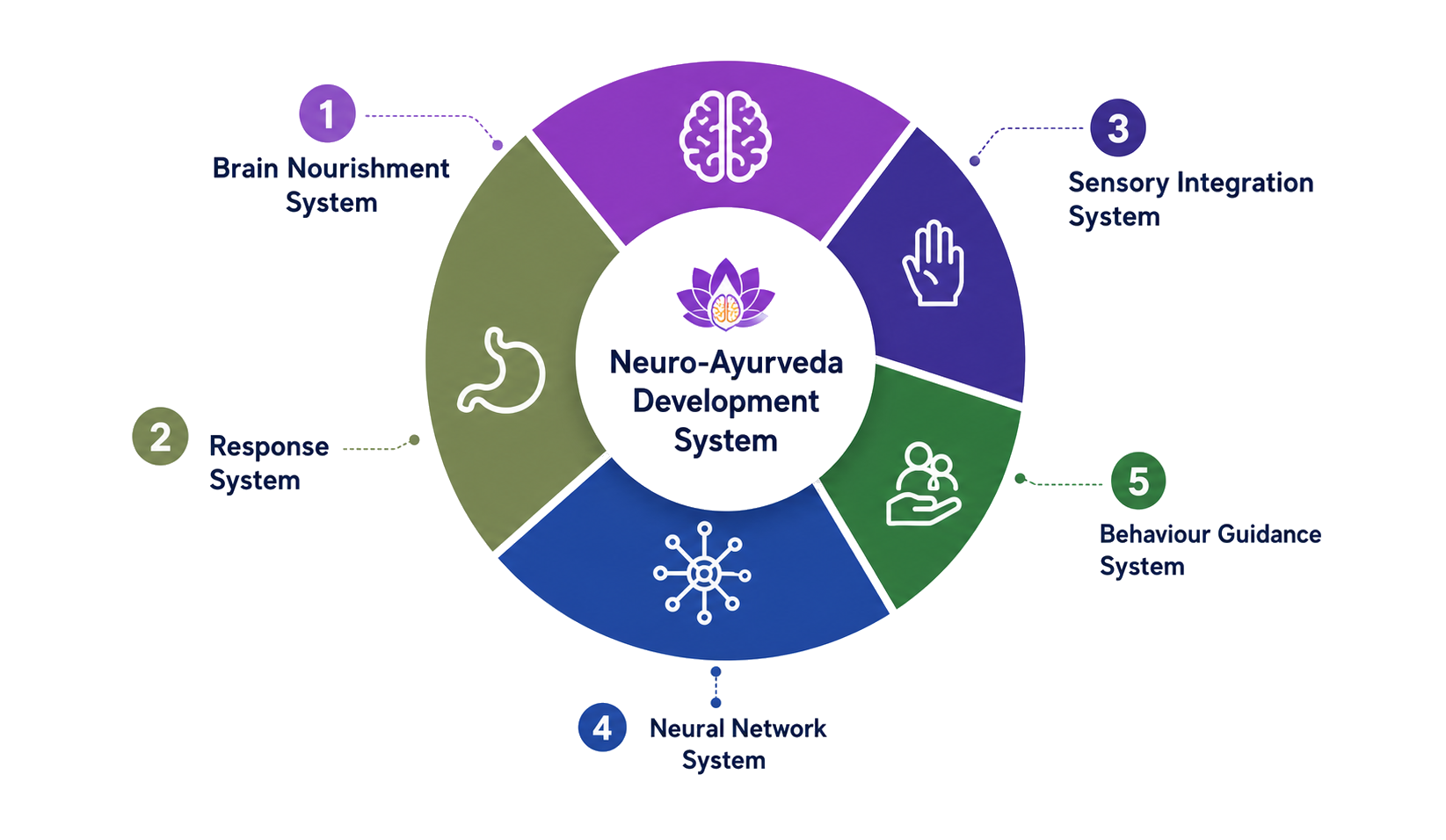
Brain health, emotional wellbeing and lifestyle and healthy ageing are all interconnected when it comes to cognitive wellbeing at Manovaidya.
The Neuro-Ayurveda Development System does not just look at memory changes – it can assist families and seniors in comprehending the wider range that could impact memory.
Supporting Healthy Cognitive Function
While you can't stop your brain from getting older, taking care of your body can help keep your brain healthy and happy.
Stay Physically Active
Walking, stretching, yoga and other age appropriate exercise promotes health and healthy ageing.
Maintain brain activity
The mind is stimulated by reading, puzzles, memory games, learning new hobbies and talking.
Prioritise Good Sleep
Good sleep helps with concentration, memory and cognitive ability.
Eat a Balanced Diet
Eating a healthy diet of fruits and vegetables, whole grains and healthy fats with sufficient protein nourishes the body and maintains health.
Stay Socially Connected
Having purposeful discussions and engaging with family and friends can support emotional wellness and mental engagement.
Manage Blood Pressure, Diabetes & General Health
It's important to manage chronic medical conditions so that they don't impact on healthy brain ageing.
Attend Regular Medical Follow-up
Medical evaluation is recommended on a regular basis as the symptoms can change over time and monitoring helps ensure the symptoms are being monitored and if they are changing, it can help identify if there is a need to be addressed.
How Manovaidya Supports Seniors
At Manovaidya, the first step in support is to understand the person not just the memory or thinking changes.
Our complete process involves:
Step 1: Comprehensive Assessment
To understand cognitive issues and emotional wellbeing, sleep, nutrition, lifestyle habits and day to day functioning.
Step 2: Personalized Guidance
Making tailored suggestions for each person's senior health and wellness goals.
Step 3: Support for Brain Health & Emotional Wellbeing
Educating seniors and families about what Mild Cognitive Impairment is, healthy ageing, and some helpful ideas for everyday activities.
Step 4: Neuro-Ayurveda Development System
Using the 5 pillars framework to understand cognitive wellbeing, behaviour, lifestyle and overall healthy ageing.
Step 5: Progress Tracking & Family Guidance
Offering a formal post-discharge follow-up to track changes, reinforce healthy habits and make decisions over time.
When Should You Consider Professional Guidance?
You should consider professional guidance if a senior:
• Experiences increasing memory or thinking difficulties.
• Has noticeable changes recognised by family members.
• Finds complex daily tasks becoming more difficult.
• Develops confusion, disorientation or personality changes.
• Has cognitive symptoms that gradually worsen over time.
• Feels concerned about changes in memory or concentration.
Early assessment can help determine if there are any potential contributing factors, differentiate between MCI and other conditions and inform appropriate planning and management.
We aspire to facilitate understanding of Mild Cognition Impairment and promote healthy cognitive ageing and independence and quality of life with compassionate, personalised guidance for seniors and families.
Why Families Across India Choose Manovaidya
Families may see mild memory or thinking changes that occur in their older adult loved one and wonder what these changes mean. Some people feel that Mild Cognitive Impairment (MCI) is a precursor to dementia, and some feel that it is part of ageing.
At Manovaidya, we feel everyone deserves an individual grasp of their cognitive health at senior levels. We don't make assumptions about how you feel, instead we take the time to understand what symptoms you may be having, how you live your life, your emotional wellbeing and your general health before offering you personal advice.
Structured assessment and ongoing monitoring, combined with a holistic approach, will help to support healthy cognitive ageing and maintain confidence, independence and quality of life for seniors.
Comprehensive Cognitive Health Assessment
Mild Cognitive Impairment is different for each senior. The structured assessment enables us to gain insights into cognitive issues, daily functioning, emotional health and wellbeing, sleep, lifestyle habits, nutrition, underlying medical conditions, family support and personal goals before developing individual guidance.
Mild memory changes
Difficulty concentrating
Slower thinking
Issues with planning complex activities
Reduced confidence
Mild organisational difficulties
Emotion stress due to cognitive changes
Neuro-Ayurveda Development System
Manovaidya follows the Neuro-Ayurveda Development System, which is a structured system that considers healthy cognitive ageing with 5 interconnected pillars.
• Brain Nourishment System
• Gut Response System
• Neural Network System
• Sensory Integration System
• Behaviour Guidance System
Personalized Guidance
Each person has their own individual requirements. Recommended changes are tailored based on psychological issues, lifestyle habits, emotional health, sleep patterns, daily habits, diet, medical history and individual objectives.
• Cognitive concerns
• Lifestyle habits
• Emotional wellbeing
• Sleep quality
• Daily routine
• Nutrition
• Medical history
• Personal goals
Holistic Brain Health Perspective
Healthy brain ageing is more than just memory. We take a holistic view of how brain health, emotional wellbeing, nutrition, lifestyle, sleep and physical activity and social engagement interact.
• Brain health
• Emotional wellbeing
• Nutrition
• Lifestyle habits
• Sleep quality
• Physical activity
• Social engagement
Focus on Healthy Ageing & Independence
We want to work with seniors to keep them independent for as long as we can and aid their cognitive health, emotional health and self-confidence in daily life.
• Healthy ageing
• Independence
• Cognitive function
• Emotional wellbeing
• Confidence
Ongoing Support & Family Guidance
Mild Cognitive Impairment may change over time. Seniors and caregivers are supported to track the progress of cognitive changes, to build up healthy practices and to make informed choices as they change.
• Regular follow-up
• Structured progress tracking
• Caregiver guidance
• Healthy routines
• Informed decisions
Why Families Across India Trust Manovaidya
Families in Delhi, Noida, Gurgaon, Faridabad, Ghaziabad and beyond India reach out to Manovaidya for Mild Cognitive Impairment (MCI) Treatment, Healthy Brain Ageing Guidance and Senior Mental Health Support both online and in-clinic.
Why Trust Manovaidya?
• Structured Neuro-Ayurveda Development System [7][8]
• Personalized Assessment Before Recommendations
• Senior-Focused Holistic Care
• Online & In-Clinic Consultations Across India
• Guidance by Dr. Ankush Garg
• Family-Centred Support
• Focus on Healthy Brain Ageing & Cognitive Wellbeing
About Dr. Ankush Garg
About Dr. Ankush Garg
Autism, ADHD, Child Development & Mental Health Specialist in India
Dr. Ankush Garg is the Founder of Manovaidya and the Developer of the Neuro-Ayurveda Development System.
His work extends across Child Development, Adult Mental Health and Senior Mental Health, with a focus on understanding the relationship between brain health, emotional wellbeing and overall quality of life.
Many families seek guidance when an older loved one experiences Mild Cognitive Impairment, early memory changes or thinking difficulties. Through structured assessment, personalised guidance, lifestyle recommendations and continuous follow-up, Dr. Ankush Garg helps seniors and families better understand cognitive concerns while supporting healthy ageing through the Neuro-Ayurveda Development System.
Based in Delhi NCR, Dr. Ankush Garg supports seniors and families across India through structured assessment, personalised guidance and holistic mental health care.
Based in Delhi NCR, Dr. Ankush Garg supports seniors and families across India through structured assessment, personalized guidance and the Neuro-Ayurveda Development System.
Frequently Asked Questions
Mild Cognitive Impairment (MCI) is a state of memory or thinking that is not as usual as it was when the person was in their twenties and thirties, but it is evident above and beyond what would be considered normal aging. Individuals with MCI typically can provide for their own personal needs and daily activities, but might require additional reminders or struggle with tasks more so than before.
Book a Consultation
Book a Consultation
Support Healthy Cognitive Ageing With the Right Guidance
Book a structured assessment and personalized guidance session with the Manovaidya team.
If you have some questions about mild memory or thinking changes, contact your GP.
The first step is to find out why if you or a loved one have been experiencing a growing sense of forgetfulness, trouble concentrating or changes in thinking.
We assist seniors and families to understand the nature of Mild Cognitive Impairment through structuring and assessment, personalised guidance and the Neuro-Ayurveda Development System at Manovaidya.
Book An Assessment Today
Book Consultation
Call us to speak with our staff.
Get Personalized Guidance
Treatment for MCI (mild cognitive impairment)
Healthy Brain Ageing Guidance
Help Achieve Healthy Cognitive Ageing With the Right Directions
Manovaidya Clinic
Noida, UP, India