-CrYNDrPl.png)
Senior Senior Mind Care
Dementia & Alzheimer's Care Treatment for Seniors in India
Supporting Seniors & Families Through Dementia, Alzheimer's Disease & Healthy Cognitive Care


Senior Senior Mind Care
Key Takeaways
- Understanding Dementia & Alzheimer's Disease
- Dementia vs Alzheimer's Disease
- Normal Ageing vs Dementia
- Common Signs of Cognitive Decline
- Causes of Dementia in Seniors
- Stages of Dementia Explained
- Supporting Daily Brain Health
- Neuro-Ayurveda Brain Health Approach
- Living Safely with Dementia
- Family Caregiver Support & Guidance
- Manovaidya Assessment & Care Process
- FAQs About Dementia & Alzheimer's Care
Want more content like this?
Join our senior brain health newsletter for care tips from our experts.
Your privacy is important to us.
Senior Mind Care
Supporting Seniors & Families Through Dementia, Alzheimer's Disease & Healthy Cognitive Care
As people get older, there may be more noticeable changes in memory, thinking and behavior. Some forgetfulness is a common part of the ageing process, but when it is a frequent problem affecting daily activities, it should never be seen as a normal part of ageing.
Families are often worried if an older person forgets things frequently, gets lost in familiar places, has trouble with daily tasks or has changes in behavior. These symptoms can lead to a diagnosis of dementia and Alzheimer's disease but understanding the difference is important.
Dementia isn't a single disease. A general term for several disorders affecting memory, thinking, reasoning, communication and daily living that progress over time.
Alzheimer's disease is the most common form of dementia but there are other causes. Other diseases, such as vascular dementia, Lewy body dementia and frontotemporal dementia, can also cause a decline in cognition.
It is also important to note that not all memory loss is a sign of dementia and not all people with dementia have Alzheimer's disease. Several medical conditions can have similar symptoms, thus proper medical evaluation is important to determine the cause.
If a senior or their family can identify early signs of cognitive changes, they will gain a greater understanding of the condition, be able to plan for the future and be given appropriate medical advice. While there are cases where dementia is preventable or curable, early support can assist people to stay independent, stay safe and achieve a quality life.
We know that dementia is a family disease and at Manovaidya we recognise that. Brain health, emotional well being, daily routine, nutrition, and caregiver support are all important to healthy cognitive ageing.
A dementia specialist with a specialization in Autism, ADHD, Child Development & Mental Health in India, Dr. Ankush Garg is a proponent of Neuro-Ayurveda Development System which inculcates understanding of dementia, Alzheimer's disease and what makes for cognitive wellbeing and healthy ageing among seniors and families.
Communication Difficulties
Healthy Brain Ageing
At Manovaidya, Dementia & Alzheimer's Care Treatment Focuses On:
• Dementia Awareness
• Alzheimer's Disease Awareness
• Memory Loss
• Cognitive Decline
• Behavioural Changes
• Family & Caregiver Guidance
Book a Structured Dementia & Alzheimer's Assessment
When your loved one has begun to suffer memory loss, confusion, behavioural changes, or difficulty with daily activities, it is important that you understand what it is.
Dementia is a progressive loss of mental function that is so advanced that it affects a person's daily life.
It may affect:
• Memory
• Thinking
• Reasoning
• Communication
• Decision-making
• Orientation
• Behaviour
• Daily functioning
The symptoms often get worse over time and tend to go slowly.
It is very common that many families looking for Dementia Care in India, Alzheimer's Disease Support, Memory Loss in Seniors or Cognitive Decline in Older Adults are wondering if the changes in their loved ones that they have observed are a cause for concern.
Educating people early on about dementia can assist a family to identify the symptoms and communicate better with the person living with dementia and to plan for the future.
Dementia Is Not a Normal Part of Ageing
The ageing process has an impact on the brain, but dementia is not a normal part of healthy ageing.
Occasionally, many healthy older adults have the following symptoms:
• Forget a name.
• Misplace their glasses.
• Need reminders.
Have a longer retention period for recalling information.
Dementia, however, is a progressive change in cognition that starts to disrupt independence with regard to daily activities.
These changes require medical examination, and should not be overlooked as "old age" changes.
What Is Alzheimer's Disease?
The most common cause of dementia is Alzheimer's disease.
It gradually affects areas of the brain responsible for memory, learning, language and problem-solving.
Symptoms may include subtle memory problems, and slowly progress to communication, reasoning, and daily functioning problems.
Alzheimer's disease is a very common condition, but it's not the only factor contributing to dementia.
These two terms are sometimes used synonymously, but are distinct.
Dementia
Dementia is a general term for a group of conditions which impact memory, thinking and every day functioning.
Alzheimer's Disease
Alzheimer's disease is one disease and the most frequent cause of dementia.
This distinction is important to understand so that families can better comprehend medical information, without creating too much confusion.
Common Signs & Symptoms of Dementia
The symptoms are different for everyone and different for each cause.
Memory Changes
Often, seniors will suffer from:
• Forgetting recent conversations
• Repeating questions
• Losing important belongings
• Forgetting appointments
• Difficulty remembering names
• Forgetting familiar routes
Thinking Difficulties
Some individuals experience:
• Poor judgement
• Difficulty planning
• Trouble solving problems
• Difficulty making decisions
• Reduced concentration
• Confusion
Communication Changes
Communication can be impaired due to dementia.
Some seniors may:
Struggle to find words
Repeat sentences
Lose track of conversations
Have difficulty understanding complex discussions
Behavioural & Emotional Changes
Some individuals experience:
• Mood changes
• Anxiety
• Irritability
• Social withdrawal
• Restlessness
• Reduced confidence
• Personality changes
Daily Living Difficulties
As the cognitive decline worsens, some elderly individuals will have greater trouble with:
• Managing medications
• Cooking
• Paying bills
• Personal hygiene
• Dressing
• Shopping
• Travelling independently
What Causes Dementia?
Dementia is not a single disease.
There are a number of medical conditions that can contribute to dementia.
Alzheimer's Disease
Most prevalent form of dementia.
Vascular Dementia
Can happen when there's not enough blood flowing to the brain, which is often caused by strokes or blood vessel disease.
Lewy Body Dementia
A disorder of the nervous system that can impact movement, thinking and visual perception.
Frontotemporal Dementia
A disorder which mainly affects behaviour, personality and language.
Mixed Dementia
It's possible for some people to suffer from more than one form of dementia at the same time.
Why Early Recognition Matters
There are many families that put off seeking medical advice because they think that memory loss is a normal part of getting older.
Early identification of cognitive changes can help health care providers explore the potential cause, determine if there is a treatable medical condition, assist in future planning and offer education and guidance to families, however.
Early recognition also helps seniors stay independent as long as they can, and is a great way to make them safer and make their life better.
Understanding the Stages of Dementia
Early Stage Dementia
For many seniors, they are still living independently and noticing some cognitive decline.For many seniors, they are still self-supporting and they start to notice some cognitive changes.
Middle Stage Dementia
Things can become more difficult at school every day and families may start to give more frequent supervision.
Late Stage Dementia
The focus of support is on comfort, safety, dignity and best quality of life.
Dementia is typically a gradual condition and there may be an increasing amount of cognitive changes that are noticeable over time. But dementia affects each person in a unique way, and at different rates.
Awareness of the various stages assists families to plan for the different care requirements for the senior and to keep the senior dignified, comfortable and living their life to the fullest.
Early Stage Dementia
Many seniors live independently in the early stage, but start to show signs of cognitive changes.
Common signs are:
Forgetting recent conversations
Misplacing important belongings
Difficulty remembering appointments
Needing a longer time to solve problems
Trouble finding the right words
Becoming confused in unfamiliar places
At this time many continue to be active socially and continue to maintain most of their day to day activities.
Middle Stage Dementia
As dementia worsens, everyday tasks can become more difficult.
Some older students might have symptoms of:
• Increased memory loss
• Difficulty recognising familiar people
• Confusion about time and place
• Greater dependence on family members
• Changes in mood or behaviour
• Difficulty managing medications and finances
At this point, families typically start to give more frequent guidance and support.
Late Stage Dementia
Later in the stages, people may need a lot of assistance in daily living.
The following are possible side effects of some people:
• Severe memory impairment
• Difficulty communicating
• Increased physical dependence
• Not eating or drinking enough
• Reduced mobility
They require more assistance with their personal needs.They need more care with their needs.
Support is stressed at this time to be comfortable, safe, dignified & the best quality of life.
Living With Dementia
When someone is diagnosed with dementia, it's a family affair.
While cognitive functioning may evolve, for many seniors, it's meaningful relationships and regular routines and activities that provide comfort and happiness.
By establishing a positive environment, anxiety levels can be lowered and confidence and wellbeing of the students promoted.
Maintaining Independence
In as much as possible, older people ought to be urged to carry on in their daily activities as they are able.
Simple changes like written cues, labelled cupboards, medication organisers and routines can be beneficial for independence and safety.
Communication Tips for Families
Communication with someone who has dementia can take more patience as the condition advances.
Helpful approaches include:
Speak slowly and clearly.
Use short simple sentences.
Maintain eye contact.
Give one instruction at a time.
Allow extra time for responses.
Avoid correcting or arguing unnecessarily.
Offer reassurance when the person becomes confused.
With supportive communication, both the senior and caregiver will be less frustrated.
Strategies for creating a Safe Environment
As cognitive changes worsen, safety takes on a greater role.
Families may consider:
• Removing trip hazards
• Improving lighting
• Keeping emergency contact details accessible
• Organising medications safely
• Using calendars and clocks for orientation
• Supervising activities that may involve risk
These practical changes can help senior citizens stay safe and independent as long as is possible.
Supporting Emotional Wellbeing
Emotions are still present for people with dementia despite changes in memory.
There are many people who benefit from:
• Familiar routines
• Music
• Family photographs
• Gentle conversations
• Social interaction
• Outdoor walks
• Meaningful hobbies
• Calm environments
Maintaining emotional wellbeing is a key aspect of dementia care.
The Neuro-Ayurveda Development System
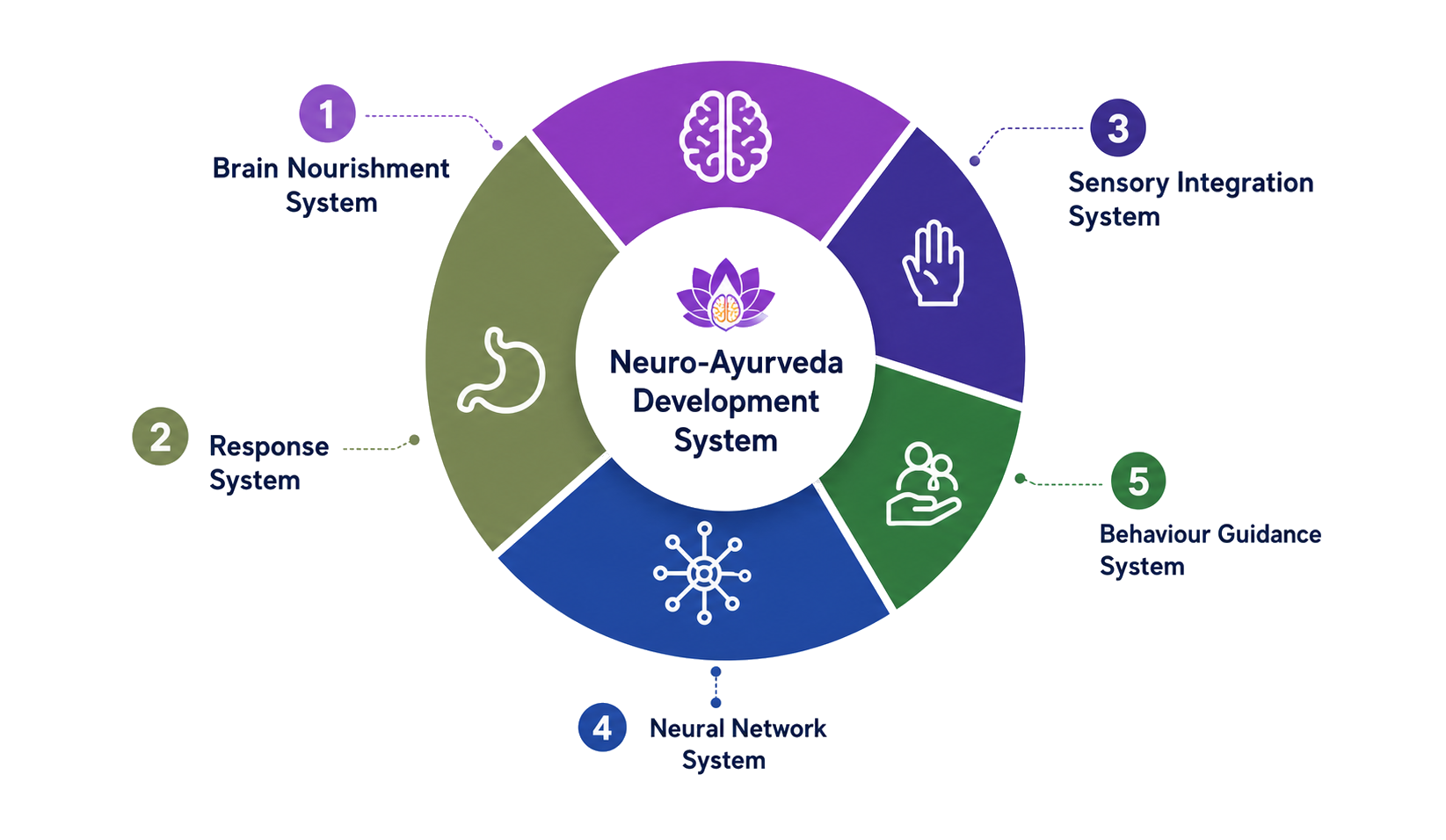
• Brain Nourishment System
• Gut Response System
• Neural Network System
• Sensory Integration System
• Behaviour Guidance System
At Manovaidya, healthy cognitive ageing is viewed through a holistic perspective.
The Neuro-Ayurveda Development System provides a family with an understanding of the many interconnected factors that affect brain health, emotional wellbeing and day to day functioning that goes beyond just memory symptoms.
Brain Nourishment System
The healthy functioning of the brain is essential for the following:
• Memory
• Learning
• Attention
• Decision-making
• Emotional regulation
• Cognitive resilience
The factors that affect brain nourishment could be used to help improve overall cognitive wellbeing.
Gut Response System
Scientific studies are ongoing to study the link between brain health and gut health.
Along with cognitive changes, many seniors with cognitive decline will also have nutrition changes, digestion changes or changes in appetite. Good health for the whole body is an important aspect of healthy ageing.
Neural Network System
The brain changes with age but engaging in meaningful cognitive activities can keep the brain active.
Reading, talking, puzzles, music, learning new simple skills, etc. can help keep the mind active as per the individual's capabilities.
Sensory Integration System
Some comforting and orienting experiences might be familiar to senses.
Listening to favourite music, spending time in familiar environments, looking at familiar pictures or enjoying familiar hobbies can all help to support emotional wellbeing.
Behaviour Guidance System
Changes in behaviour are frequently due to cognitive impairments and not the person's intent.
Some individuals may:
• Become anxious
• Wander
• Repeat questions
• Feel frustrated
• Withdraw socially
• Become restless
It is important to understand these behaviours with empathy so that a family can react in a calm manner, and minimise any unnecessary distress.
Supporting Healthy Brain Function
While sometimes it may not be possible to prevent or reverse dementia, healthy lifestyle choices can help with overall wellbeing.
Encourage Physical Activity
Walking, stretching and other appropriate exercises are used to keep the body healthy and mobile.
Promote Good Nutrition
Well balanced meals help to maintain energy and wellbeing for seniors and overall health.
Maintain Healthy Sleep
Sleep helps to improve emotional well-being and functioning.
Encourage Social Engagement
Emotional connection through the regular use of family, friends and community members.
Adhere to routine (CDRs)
Routine provides structure and can help decrease confusion and a sense of security.
Have regular medical follow-up.
Regular medical treatment is essential in the management of cognitive changes, other health issues and ongoing support for seniors and caregivers.
How Manovaidya Supports Seniors & Families
Step 1: Comprehensive Assessment
Step 2: Personalized Guidance
Step 3: Family Education
Step 4: Neuro-Ayurveda System
Step 5: Ongoing Support
At Manovaidya, support begins with understanding both the senior and the family.
Our structured process includes:
Step 1: Comprehensive Assessment
Knowledge of cognitive changes, ADLs, emotional status, lifestyle changes and caregiver issues.
Step 2: Personalized Guidance
Making tailored suggestions for the senior's cognitive, emotional and lifestyle needs.
Step 3: Family Education & Brain Health Guidance
Supporting families to better understand dementia, how to communicate and how to support daily living.
Step 4: Neuro-Ayurveda Development System
Using a 5-pillar approach to understanding cognitive wellbeing, behaviour, emotional health and healthy ageing.
Step 5: Progress Tracking & Ongoing Family Support
Offering structured follow-up to support the family to track changes, reinforce positive routines and engage in decision making as needs change along the way.
When Should You Seek Professional Guidance?
Professional guidance should be considered if a senior:
• Shows progressive memory decline.
• Frequently becomes confused or disoriented.
• Has difficulty managing daily activities.
• Experiences significant behavioural or personality changes.
• Gets lost in familiar places.
• Has increasing difficulty communicating.
• Requires growing assistance with everyday tasks.
Early assessment enables families to understand the underlying condition, recognise factors which may be amenable to treatment and plan for appropriate care.
Please get emergency medical help if there is a change in mental state, confusion, weakness, trouble talking, unconsciousness or other sudden medical symptoms as they may be a medical emergency and not a sign of progression of dementia.
We aim to educate older adults and caregivers about dementia and help maintain healthy cognitive function and a good quality of life through our understanding and personalized counselling.
Why Families Across India Choose Manovaidya
It can be a very emotional and physical struggle to care for a family member or loved one who suffers from dementia or Alzheimer's disease. Families frequently have questions regarding memory changes, behavioural symptoms, communication problems and how they can provide the appropriate support without losing their loved one's dignity.
We recognize that dementia affects each person in a unique way and at Manovaidya, we are here to support you. Each person's progression, symptoms and daily life will be different; therefore, it is important that an assessment is personalized and guidance is family-based.
We aim to know the cognitive changes as well as to help maintain emotional wellbeing, healthy routines and support caregivers and their quality of life.
Comprehensive Cognitive & Functional Assessment
Each senior's experience of dementia is unique.
Some people may have:
• Progressive memory loss
• Confusion and disorientation
• Communication difficulties
• Behavioural changes
• Uncontrolled eating and drinking habits
• Reduced independence
• Emotional distress
• Caregiver-related challenges
When we use our structure we get to know:
• Cognitive concerns
• Daily functioning
• Emotional wellbeing
• Sleep quality
• Lifestyle habits
• Nutrition
• Medical history
• Family support system
• Caregiver concerns
before creating personalised guidance.
Neuro-Ayurveda Development System
Manovaidya adheres to the Neuro-Ayurveda Development System, a structured framework that views Cognitive wellbeing as the interconnections of five pillars.
• Brain Nourishment System
• Gut Response System
• Neural Network System
• Sensory Integration System
• Behaviour Guidance System
The framework assists seniors and families in understanding the various factors, including biological, behavioural and lifestyle factors that could affect brain health, emotional wellbeing and everyday functioning.
Personalized Guidance
Dementia affects each person differently.
Recommendations are personalised according to:
• Cognitive symptoms
• Emotional wellbeing
• Daily routine
• Sleep quality
• Nutrition
• Behavioural changes
• Family support
• Caregiver needs
• Personal goals
This personalised approach means that guidance is based on different plans for the individual, rather than a generic plan.
Holistic brain health approach
Dementia care is about more than just helping with memory.
In our approach, we take into account the relationship between:
• Brain health
• Emotional wellbeing
• Nutrition
• Lifestyle habits
• Sleep quality
• Physical activity
• Social engagement
• Family support
To give a wider view on health-related ageing of the brain and on well-being.
Focus on Dignity, Independence & Quality of Life
We want to help keep seniors comfortable, dignified and independent for as long as we can and to give families practical information to help them care for their loved ones better.
We don't just aim to improve communication, daily activities and emotional wellbeing when it comes to cognitive decline, but throughout the care journey.
Ongoing Support & Family Guidance
Taking care of someone who has dementia is an ongoing process.
Follow-up and structured progress tracking enables families to see and understand changes over time, reinforce positive routines and make decisions about change in care needs.
Why Families Across India Trust Manovaidya
Delhi, Noida, Gurgaon, Faridabad, Ghaziabad and other cities in India’s National Capital Region reach out to Manovaidya for Dementia & Alzheimer's Care Treatment, Senior Cognitive Health Guidance and Family Caregiver Support both online and in-clinic.
About Dr. Ankush Garg
Dr. Ankush Garg
Autism, ADHD, Child Development & Mental Health Specialist in India
Dr. Ankush Garg is the Founder of Manovaidya and the Developer of the Neuro-Ayurveda Development System.
His work extends across Child Development, Adult Mental Health and Senior Mental Health, with a focus on understanding the relationship between brain health, emotional wellbeing and overall quality of life.
Many families seek guidance when an older loved one experiences progressive memory loss, dementia or Alzheimer's disease. Through structured assessment, personalised guidance, lifestyle recommendations and continuous follow-up, Dr. Ankush Garg helps seniors and families better understand cognitive changes while supporting healthy ageing through the Neuro-Ayurveda Development System.
Based in Delhi NCR, Dr. Ankush Garg supports seniors and families across India through structured assessment, personalised guidance and holistic mental health care.
Frequently Asked Questions
Dementia is not a single condition, but a collection of them that slowly impact a person's memory, thinking, reasoning, communication and ability to carry out daily activities. Dementia is not a natural part of ageing and there are a number of medical conditions that can lead to dementia. It is crucial to get a proper medical evaluation so you can find out what is causing the condition and know how to treat it appropriately.
Book a Consultation
Book a Consultation
Support Healthy Cognitive Ageing With the Right Guidance
Book a structured assessment and personalized guidance session with the Manovaidya team.
If you are worried about dementia or Alzheimer's in a loved one, consider these ways to help.
If your loved one is experiencing changes in their daily life, memory loss, confusion, and even changes in behaviour, it's crucial to understand the root of the problem.
We will support seniors and families to understand dementia and Alzheimer's disease through structured assessment, personalised guidance and through the Neuro-Ayurveda Development System here at Manovaidya.
Book Your Assessment Today
• Book Consultation
• Speak With Our Team
• Get Personalized Guidance
• Dementia & Alzheimer's Care Treatment
• Healthy Cognitive Ageing Guidance
• Support Healthy Cognitive Ageing With the Right Guidance
Manovaidya Clinic
Noida, Uttar Pradesh, India.