-CrYNDrPl.png)
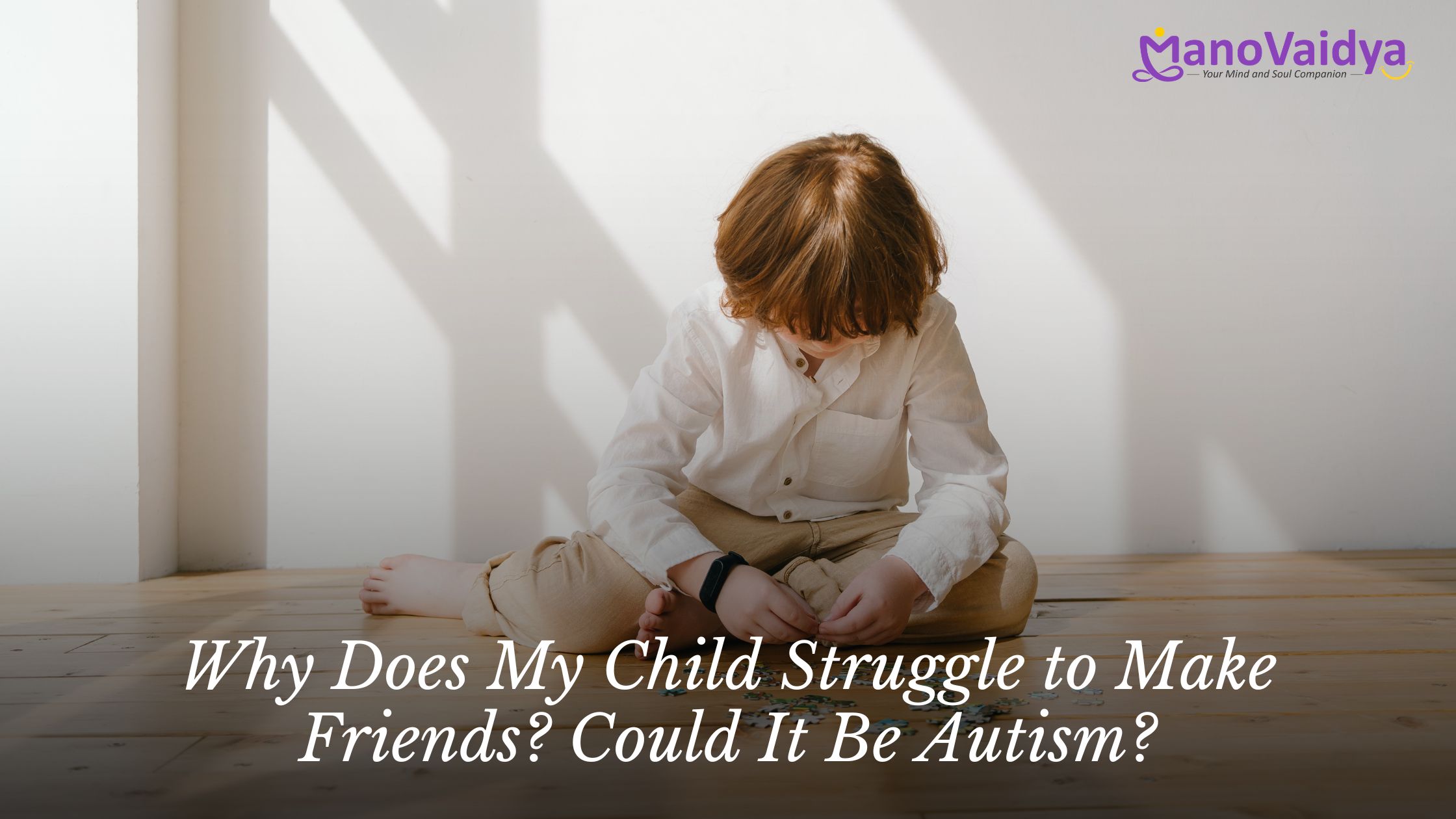
Does your child find it difficult to join other children in play, start a conversation, share toys, or understand what others are feeling? When these difficulties continue over time, parents may start looking for Autism Treatment in India and wonder whether difficulty making friends could be related to autism.
Not every child who struggles socially has autism. Some children are shy, anxious, slow to warm up, have speech or language difficulties, or simply need more opportunities to practise social interaction. However, persistent differences in social communication, reciprocal interaction, play, and relationships can be among the features associated with autism.
About Dr. Ankush Garg

Dr. Ankush Garg is an Autism, ADHD, Child Development and Mental Health Specialist in India, Founder of Manovaidya and Creator of the Neuro-Ayurveda Development System.
His work focuses on developmental, behavioural, and mental wellness concerns through a structured approach that considers the individual child's needs, behaviour, communication, attention, and everyday functioning.
A Child Development Clinic can help parents understand concerns related to their child's communication, behaviour, attention, learning, and overall development.
Why Does My Child Struggle to Make Friends?
Making friends involves much more than simply talking to another child.
Children gradually learn how to:
Start and maintain conversations
Take turns while talking or playing
Notice facial expressions and body language
Share interests with others
Understand another person's feelings
Adjust their behaviour according to the situation
Join group activities
Handle disagreements
Understand social rules that are not directly explained
Some children develop these skills naturally, while others need additional support and practice.
A child who prefers playing alone occasionally may simply enjoy independent play. The concern becomes more relevant when difficulties with social interaction are persistent, occur across different situations, and affect relationships or everyday functioning. Autism is associated with challenges in social communication and interaction, including difficulty developing, maintaining, and understanding relationships.
Could Difficulty Making Friends Be a Sign of Autism?
It can be, but difficulty making friends alone does not mean a child has autism.
Autism involves a broader pattern. Along with social-communication differences, diagnostic criteria include restricted or repetitive behaviours, interests, or activities. These characteristics can appear differently from one child to another.
For example, a child may want to make friends but struggle to understand how to enter a group conversation. Another child may prefer repetitive play and show little interest in playing with peers. Someone else may talk comfortably about a favourite topic but find back-and-forth conversation difficult.
Understanding why a child is struggling can therefore be more useful than simply asking whether the child is "social" or "not social."
What Social Difficulties May Parents Notice?
Parents may notice several small differences before they become obvious.
A child may:
Rarely initiate interaction with other children
Prefer playing alone most of the time
Find turn-taking difficult
Not know how to join a group game
Talk mainly about their own interests
Struggle with back-and-forth conversation
Have difficulty understanding jokes or indirect communication
Find changes in play routines upsetting
Not notice when another child wants to stop playing
Repeat the same type of play instead of exploring different ways to play
These behaviours can occur for different reasons. A child with a language delay may want to interact but lack the words needed to do so. A child with anxiety may avoid social situations because they feel uncomfortable. A child with autism may experience differences in social communication, interaction, or understanding social cues.

What About Younger Children?
Parents sometimes notice social differences during the toddler years.
Some Autism signs in toddlers can include limited sharing of interests, reduced response to social interaction, fewer gestures, difficulty with interactive games, limited pretend play, or reduced interest in joining other children. The CDC also highlights developmental differences such as not pointing to show something interesting or not noticing and joining other children in play as potential signs that warrant attention.
However, children develop at different rates. A toddler who is shy around unfamiliar children or prefers playing beside other children rather than directly with them does not automatically have autism.
The pattern matters.
Parents should consider whether several developmental differences are appearing together and whether they are persistent enough to affect communication, play, learning, or everyday interaction.
Does My Child Understand How Friendship Works?
One useful question for parents is not simply:
"Does my child have friends?"
Instead, ask:
"Does my child understand the back-and-forth nature of friendship?"
For example, can your child:
Ask another child what they want to play?
Wait for the other child to take a turn?
Notice when someone is bored or upset?
Change the game when another child suggests something?
Share enjoyment with another person?
Understand when someone does not want to continue playing?
Repair a disagreement after an argument?
Some autistic children may need additional support with these social skills. The American Academy of Pediatrics notes that social difficulties can include challenges entering, sustaining, and ending interactions, understanding verbal and nonverbal cues, perspective-taking, interactive play, negotiation, and conflict resolution.
Are There Other Reasons a Child May Struggle Socially?
Yes. Autism is only one possible explanation.
Difficulty making friends can also occur alongside:
Speech and language difficulties
Hearing problems
Anxiety
Attention difficulties
Learning challenges
Emotional or behavioural concerns
Limited social opportunities
Difficulty understanding social language
Major changes at home or school
Differences in confidence or temperament
This is why parents should avoid diagnosing autism based on one behaviour.
A professional assessment can help distinguish between social difficulties related to autism and challenges arising from another developmental, emotional, communication, or environmental factor.
When Should Parents Consider a Consultation?
A consultation with an Autism Specialist may be useful when social difficulties are persistent and begin affecting the child's everyday life.
You may consider seeking guidance if your child:
Consistently avoids interaction with peers
Wants friends but cannot maintain friendships
Has difficulty communicating needs or interests
Frequently misunderstands other children's behaviour
Becomes distressed during group activities
Struggles significantly with changes in play
Has noticeable differences in communication or play development
Shows several developmental concerns at the same time
A consultation does not have to begin with the assumption that the child has autism. It can simply be an opportunity to understand the child's developmental strengths and difficulties more clearly.
How Is Autism Assessed?
There is no single blood test or medical scan that can independently diagnose autism.
Assessment generally involves understanding developmental history, communication, behaviour, social interaction, restricted or repetitive patterns, and functioning across different situations. Parents and caregivers often provide important information about how the child behaves at home, school, and in social environments.
This is particularly important because children may behave differently in different environments.
A child who is quiet at school may communicate freely at home, while another child may appear comfortable with adults but struggle significantly with peers.
A complete picture is therefore more useful than one observation.
What Kind of Support Can Help?
The type of support depends on what the child actually needs.
If the main difficulty involves communication, speech and language support may be relevant. If social interaction is the concern, structured opportunities to practise social skills may help. Some children may benefit from behavioural, developmental, educational, occupational, or relationship-based approaches.
The CDC describes social-relational approaches, social stories, social skills groups, and approaches involving parents or peer mentors among interventions that may support social development.
The American Academy of Pediatrics also emphasizes individualized goals, family involvement, assessment-based intervention, and evidence-supported approaches when planning autism care.
The goal is not simply to make a child behave like everyone else. Support should focus on meaningful communication, participation, relationships, independence, and the skills that matter to the child's everyday life.
A Personalized Approach to Child Development
At Manovaidya, the child's developmental picture can be considered across communication, behaviour, attention, sensory experiences, learning, and social interaction rather than focusing on one isolated symptom.

The Neuro-Ayurveda Clinic approach is based on understanding individual needs and creating a personalized developmental framework. The Neuro-Ayurveda Development System includes five areas:
Brain Nourishment System – considers areas related to learning, attention, and cognitive development.
Response System – focuses on how a child responds to different situations and stimuli.
Sensory Integration System – considers responses to sound, touch, movement, and other sensory experiences.
Neural Network System – looks at interconnected developmental and functional processes.
Behaviour Guidance System – considers behaviour patterns, routines, emotional responses, and practical support.
This framework is presented as a personalized developmental approach and should not be considered a diagnostic test or a replacement for established clinical assessment.
Can Ayurvedic Support Be Part of a Child's Care?
Parents looking for an Ayurvedic mental health specialist may be interested in complementary approaches alongside developmental support.
However, it is important to distinguish supportive care from claims of a cure. There is no established Ayurvedic treatment that has been shown to eliminate autism. Parents should also discuss herbs, supplements, or other complementary treatments with an appropriately qualified healthcare professional, particularly when a child is already receiving medication or other therapies.
For autism, current evidence supports individualized developmental, behavioural, educational, communication, and other supportive interventions based on the child's needs.
Why Parents Look for a Child Development Specialist
When a child has difficulty making friends, parents may initially focus only on social behaviour. But the underlying difficulty may involve communication, sensory processing, attention, emotional regulation, language, or several areas together.
A Child Development Specialist can help parents look at these areas as part of the child's overall developmental profile.
The purpose of an assessment is not simply to attach a diagnosis. It is to understand what the child is experiencing and identify appropriate next steps.
Can Autism Be Treated?
Parents often ask, Can autism be treated?
Autism is a developmental condition, and there is no single treatment that removes autism. However, appropriate interventions and support can help children develop communication, social, learning, adaptive, and daily-living skills and improve their ability to participate in everyday life.
Therefore, the focus should be on identifying the child's individual needs and providing appropriate support rather than searching for a universal cure.
Why Parents Choose Manovaidya
Parents may choose Manovaidya when they want to understand several developmental concerns together rather than looking at one behaviour separately.
The approach emphasizes:
Understanding the child's individual developmental profile
Considering strengths along with difficulties
Looking at home, school, and social functioning
Involving parents in the developmental process
Creating personalized goals based on the child's needs
Reviewing progress over time
This can be particularly relevant when social difficulties occur alongside communication, sensory, behavioural, attention, or learning concerns.
About Autism Treatment in India
Families searching for Autism Treatment in India may find many different approaches online. This can make it difficult to understand which information is relevant to their child.
A useful starting point is to look for an approach that begins with proper assessment, clearly defined goals, family involvement, and ongoing review rather than promising a universal solution.
For families seeking developmental guidance in India, local consultation can also make it easier to understand the child's home environment, school experience, daily routine, and available support options.
Final Thoughts
If your child struggles to make friends, it is natural to wonder whether autism could be involved. But difficulty making friends by itself does not confirm autism.
Look at the wider picture: How does your child communicate? How do they respond to other children? Can they share interests? Do they understand turn-taking? How do they handle changes, group activities, and social cues?
When several concerns occur together, a detailed developmental evaluation can help clarify what your child needs.
At Manovaidya, the focus is on understanding the child as a whole and considering development, communication, behaviour, sensory experiences, learning, and social interaction together. Early attention to developmental concerns can help parents understand their child's needs and explore appropriate support.
Need Guidance for Your Child?
If you are concerned about your child's communication, social interaction, behaviour, or development, a professional consultation can help you understand the next appropriate step.
Call: +91-7823838638
Email: manovaidya2@gmail.com
References
CDC – Autism Signs & Symptoms
Social communication, behaviour and developmental signs.
https://www.cdc.gov/autism/signs-symptoms/index.htmlNIMH – Autism Spectrum Disorder
Overview of autism, symptoms and development.
https://www.nimh.nih.gov/health/publications/autism-spectrum-disorderAmerican Academy of Pediatrics – Autism Clinical Report
Guidance on autism evaluation and intervention.
https://publications.aap.org/pediatrics/article/145/1/e20193447/36917/Identification-Evaluation-and-Management-ofCDC – Autism Treatment & Intervention
Information on developmental and behavioural support.
https://www.cdc.gov/autism/treatment/index.htmlNIMH – Autism Spectrum Disorder
Information on social communication and repetitive behaviours.
https://www.nimh.nih.gov/health/topics/autism-spectrum-disorders-asd