-CrYNDrPl.png)
Teen Behaviour & Family Guidance
Parent-Teen Relationship Support in India
Helping Parents & Teenagers Build Better Communication, Trust, Emotional Connection & Healthy Relationships


Parent-Teen Relationship Support
Key Takeaways
- Understanding Parent-Teen Relationships
- Common Parent-Teen Relationship Challenges
- Reasons Teenagers Become Emotionally Distant
- Impact on Teen Emotional Wellbeing
- Confidence, Self-Esteem & Behaviour
- Academic and Social Relationship Challenges
- Building Better Communication & Trust
- Creating Healthy Boundaries
- Neuro-Ayurveda Relationship Support Approach
- Parent Guidance & Family Support
- Manovaidya Assessment & Support Process
- FAQs About Parent-Teen Relationships
Want more content like this?
Join our teen mental wellness newsletter for family communication, trust and parent guidance insights from our experts.
Your privacy is important to us.
Parent-Teen Relationship Support in India
Helping Parents & Teenagers Build Better Communication, Trust, Emotional Connection & Healthy Relationships
Adolescent years are very meaningful for the emotional, social and personal development. This period is an integral part of the adolescent development process and may lead to a sense of self-awareness, increased independence and decision making, but it can also cause conflict, misunderstandings and communication issues in the family.
Many parents report that their teen is not talking as much, is more likely to argue, or is less communicating or sharing thoughts. Some teenagers might be spending more time alone, might have strong responses to basic communication or may get frustrated when parents try to give them advice. In these circumstances, parents may not be sure whether these changes are typical to adolescence or a reason that their child requires extra support.
A healthy parent-teen relationship is one of the most important building blocks of emotional wellbeing, confidence, and long-term development of the teenager, and good communication, trust and understanding helps teenagers to deal with their challenges more effectively, and at the same time helps parents to provide guidance in a supportive way.
As a Neuro-Ayurveda expert, Dr. Ankush Garg (Autism, ADHD, Child Development & Mental Health Specialist in India) adopts a systematic approach to understand the behaviour of teenagers, emotional well being and family dynamics, thereby fostering better relationships and healthy communication with the family members.
At Manovaidya, Parent-Teen Relationship Support Focuses On:
Teenage Behaviour Challenges
Emotional Connection
Communication, conflict resolution & problem solving skills
Understanding Parent-Teen Relationships
As a teenager grows, parents' and teen's interactions will inevitably undergo change.
Once, children would tell their parents everything, but as they start to learn about themselves and their independence, they become more private.
Familiarizing families with this change can be confusing.
Parents feel their teen does not listen to them and teens feel they are not being understood.
In fact, both parents and teens are in a new phase of their lives.
Several families looking for Parent-Teen Relationship Support in India, Parenting Teenagers or Teen Behaviour Support are seeking practical solutions to help them communicate and gain trust again.
Adolescent healthy relationships cannot be created through control. They are developed with understanding, respect, communication and continued emotional support.
Adolescents who have healthy family relationships are more likely to be able to express themselves when they have concerns, seek advice from their families, and cope with life's problems.
Teens who have strong relationships are more likely to be confident and to be emotionally resilient and to make good choices.
Common Parent-Teen Relationship Challenges
No family is perfect and fights happen from time to time.
But the relationships can need more attention when there are conflicts that happen regularly or when communication starts to fail.
Parents might observe alterations of behaviour, communication, and emotional relationship.
Communication Challenges
Limited conversations
One-word answers
Avoiding discussions
Misunderstandings
Difficulty expressing emotions
Behavioural Challenges
Frequent arguments
Irritability
Refusing guidance
Emotional outbursts
Breaking family routines
Emotional Challenges
Emotional distance
Reduced trust
Feeling misunderstood
Increased sensitivity
Avoiding family interaction
Lifestyle Challenges
Excessive screen use
Spending more time alone
Lack of family engagement
Irregular routines
Reduced participation in shared activities
The presence of occasional disagreements is a normal part of adolescence. However, when relationship difficulties begin affecting communication, emotional wellbeing or family harmony, they deserve understanding and support.
Why Teenagers Become Distant From Parents
Many parents believe that teenagers intentionally avoid them or no longer value family relationships.
In reality, emotional distance often develops because multiple factors influence a teenager's behaviour during adolescence.
Identity Development
Teens' opinions, values and interests naturally start to form.
This growing independence can be mistaken as rejection at times.
Emotional Changes
There is a tremendous emotional development during adolescence.
While learning to cope with new experiences, teenagers can be subject to emotional or temperamental changes.
Academic Pressure
Teenagers may not communicate openly with their schools and teachers because of their emotions and fears of exams or future careers.
Peer Relationships
Friends are becoming more important in the life of the teenager.
You can find emotional support and advice among peers and slowly gain independence from parents as a teenager.
Screen & Social Media Use
Excessive use of digital devices can decrease face-to-face family interaction.
If healthy boundaries are not maintained, engaging in online communication can come across as something other than a meaningful conversation.
Fear of Judgement
Some teenagers don't talk because they think they'll be criticized or punished or that they won't be understood.
An emotionally safe setting can help to foster more communication.
Communication Patterns
Teenagers might be less inclined to express their feelings or their daily life when the discussion turns to academics, rules or mistakes.If discussion focuses only on academics, rules or mistakes, teenagers may not be inclined to share their thoughts or daily life.
Many parents are concerned that the lack of emotional closeness they have with their teen now, may be a permanent condition. In most cases, healthy communication, understanding and a consistent emotional response can help to restore trust and improve family relationships over time.
How Parent-Teen Relationship Challenges Can Affect Teenagers
The relationship between parents and teenagers influences much more than daily communication.
A healthy family relationship provides emotional security, trust and guidance during one of the most important stages of life. When communication becomes difficult or conflicts continue for a long time, teenagers may find it harder to manage emotions, make decisions and navigate everyday challenges.
Understanding how relationship challenges influence overall wellbeing often helps families focus on building connection rather than simply correcting behaviour.
Emotional Wellbeing
When teens feel unwell understood and emotionally unattached, they can have the following experiences:
Emotional withdrawal
Increased frustration
Irritability
Low confidence
Feelings of loneliness
Difficulty expressing emotions
Many teens wish their parents would help them, but don't know how to tell their parents what they're feeling.
An emotionally safe space can be a more conducive place for people to have healthier conversations and foster better relationships.
Confidence & Self-Esteem
Adolescents' experiences of communication at home can affect their self-understanding.
This can lead to low levels of confidence and self-belief over time if there is lots of criticism, comparison or conflict.
Conversely, positive encouragement, trust and respectful communication support teens skills in emotional self-regulation and positive self-esteem.
Behaviour
People's behaviour is frequently a way of communicating.
Teenagers' acting up and being remote and argumentative doesn't always mean that they are purposely being difficult.
These behaviours may be a result of emotional stress, confusion, frustration or trouble expressing emotions.
Knowing what is causing the behavior can aid parents in responding to it more effectively.
Academic Performance
Relationship challenges at home may influence concentration, motivation and learning.
If teenagers are in chronic emotional stress, they can have trouble:
• Focus on studies
• Complete assignments
• Stay motivated
• Manage examination pressure
Emotional wellbeing at home can provide a better foundation for future achievement.
Social Relationships
Communication, trust and emotional regulation is taught to teens in the family.
Creating healthy relationships between parents and teens can positively impact teens' friendships and interpersonal skills.
With better family communication, teens often feel more at ease with their own voice in areas of their lives outside of the family.
Long-Term Development
Adolescence is a time that is important for developing future confidence, communication and emotional resilience .
Strong family relationships can help to support:
Better decision-making
Greater independence
Healthy emotional regulation
Positive self-esteem
Stronger coping skills
Establishing trust in the teen years can prove to be advantageous to parents and teens for years to come.
The Neuro-Ayurveda Approach to Parent-Teen Relationship Treatment
At Manovaidya, we know that problems in relationships are not usually the fault of just one person.
We consider the whole situation and don't just concentrate on behaviours or communication issues but on the wider issues that could affect emotional wellbeing, confidence, behaviour, family relationships and development.
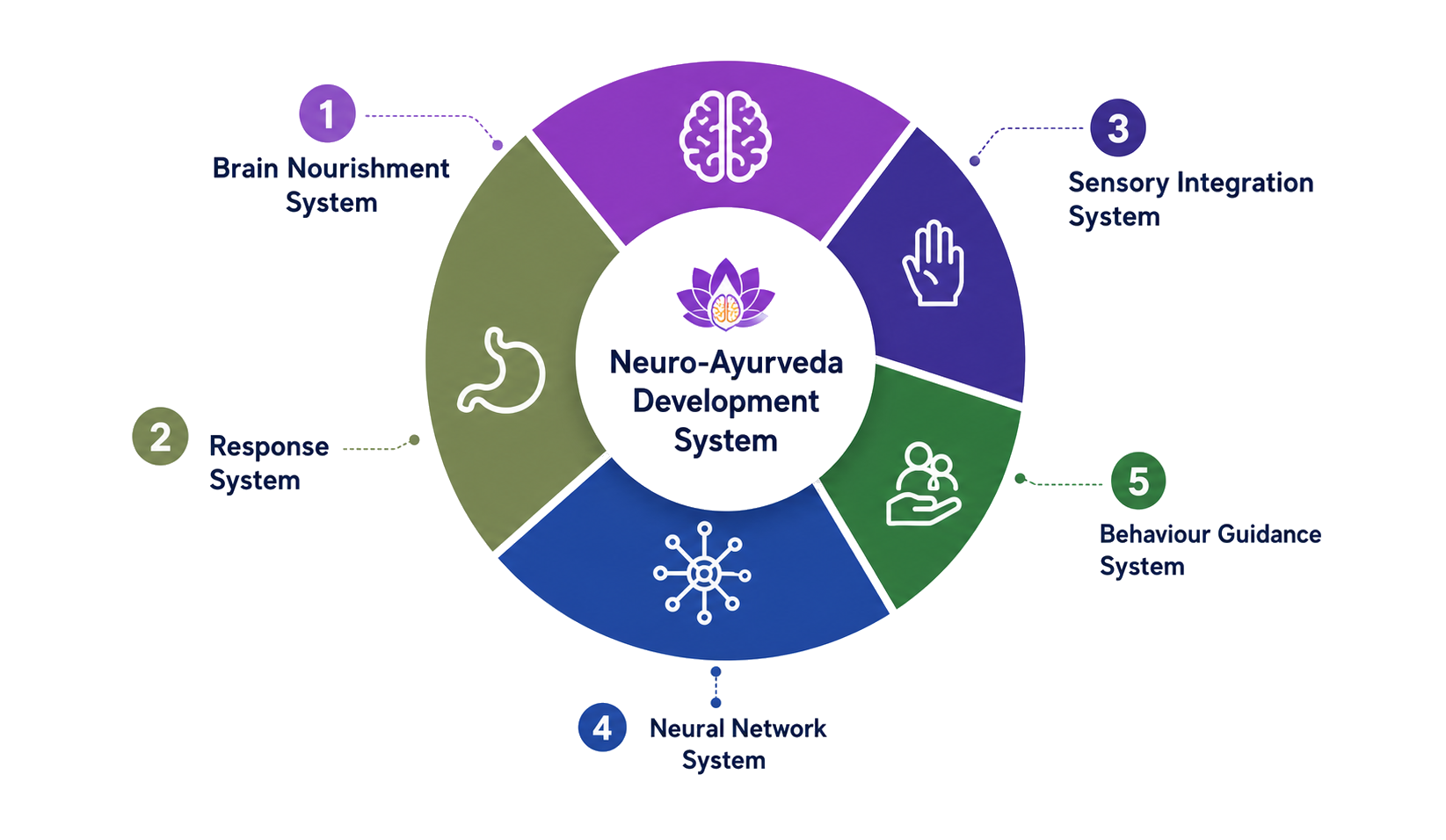
The Neuro-Ayurveda Development System assists families to understand these challenges in five interconnected systems.
Brain Nourishment System
Good communication starts with good emotional and thinking capabilities.
The Brain Nourishment System is centered on learning about the elements that could have an impact on:
Emotional regulation
Attention
Decision making
Self-awareness
Confidence
Communication
Helping teenagers develop emotionally sometimes starts with the knowledge of how they process thoughts, emotions and events in their everyday lives.
Gut Response System
Growing research continues to explore the relationship between physical wellbeing and emotional health.
Emotional stress can also cause many teenagers to suffer from:
Irregular eating habits
Digestive discomfort
Reduced energy
Lifestyle imbalance
Sleep disturbances
The Gut Response System is based on the idea that a person's overall wellbeing might affect their emotional balance and functioning in their everyday life.
Neural Network System
All experiences help to contribute to the thinking and responding patterns.
The Neural Network System is about understanding:
Communication habits
Emotional responses
Behavioural patterns
Relationship experiences
Adaptability
Over time, families can use this knowledge of patterns to enhance communication and relationship development.
Sensory Integration System
Teenagers' emotional wellbeing is affected by their surroundings.
Factors such as:
School environment
Social situations
Family atmosphere
Digital stimulation
Daily routines
may affect behavior, communication and emotional reactions.
Families can benefit from understanding these influences, which can aid in making healthier home environments.
Behaviour Guidance System
Emotional experiences can frequently be reflected in behaviour.
Adolescents dealing with relationship issues may exhibit:
Anger
Emotional withdrawal
Reduced communication
Irritability
Defiance
Avoidance
Unlike the other pillars which respond to behaviour, this pillar aims to respond to what is going on in the family member and what may be influencing those behaviours.
How Parents Can Build Stronger Relationships With Teenagers
Trust, communication and respect are the foundations of healthy relationships.
Often, little, but regular changes can have a lasting impact on family relationships.
Listen Before Giving Advice
Often teens want to be heard before corrected.
When someone is upset, it is important to listen without interrupting them in order to establish an emotional climate of safety and promote open communication.
Avoid Judging Every Conversation
If every discussion turns into criticism or advice, teenagers may stop sharing their thoughts.
Showing curiosity and understanding often builds stronger trust.
Respect Growing Independence
Teenagers are in a natural phase of need for increased independence .
Giving the right type of freedom and maintaining good boundaries can enhance confidence and responsibility.
Spend Quality Time Together
Meaningful family time does not always require elaborate activities.
Simple conversations, shared meals or spending uninterrupted time together can strengthen emotional connection.
Appreciate Effort
Recognizing effort, kindness and personal growth often builds confidence and encourages healthier communication.
Stay Calm During Conflicts
Disagreements are a normal part of adolescence.
Responding calmly instead of reacting emotionally often helps resolve conflicts more effectively.
Create Emotional Safety
When teenagers know they can be heard with respect instead of fearing criticism or punishment, they are more likely to share their thoughts with respect.Teenagers will respond with respect when they know that they will be heard with respect, not fear criticism or punishment.
Establishing emotional safety is one of the most important bases for a healthy parent-teen relationship.

How Manovaidya Supports Families
Support starts with an understanding of the family as a whole at Manovaidya, rather than with only the teen's behavior.
We usually do the following:
Step 1: Comprehensive Assessment
Knowing about the family communication, emotional wellbeing, behaviour patterns, daily routines, lifestyle habits and concerns of parents.
Step 2: Personalized Guidance
Making recommendations for emotional, behavioural and developmental needs of the teenager, taking into account the family environment.
Step 3: Parent Guidance & Family Support
Helping parents improve communication, strengthen trust and create a more supportive home environment.
Step 4: Neuro-Ayurveda Development System
Utilize the five pillars approach to understanding emotional wellbeing, family, confidence and behaviour.
Step 5: Progress Tracking & Follow-Up
Having a clear plan to track how the family's communication, emotional wellbeing and development are improving.
When Should Parents Consider an Assessment?
Parents may consider seeking guidance if they notice:
Frequent arguments
Emotional distance
Reduced communication
Ongoing trust issues
Persistent anger or irritability
Difficulty setting healthy boundaries
Behavioural changes affecting family life
Emotional wellbeing concerns
Relationship challenges affecting daily functioning
A structured assessment can help families better understand the factors influencing communication, behaviour and emotional wellbeing while creating a practical roadmap toward healthier relationships.
Why Families Choose Manovaidya
It can be a challenge to know exactly what to do to support a teen with behavioural, emotional or family issues. Many parents are not only seeking solutions to challenging behaviours, but also a framework on how to restore trust and communication and establish healthy familial relationships.
At Manovaidya we feel that change is only possible through understanding. We take a broader view and focus on arguments, behaviour/discipline, and do not miss the chance to help families understand the emotional, behavioural, and developmental factors that could be impacting the parent/teen relationship.
Comprehensive Parent-Teen Relationship Assessment
All families are unique.
Each teenager is unique in their personality, communication, emotional needs and developmental experience.
We use a structured assessment to get families to see how they communicate, what behaviours are of concern, how they feel and how they function as a family, before developing bespoke guidance.
Neuro-Ayurveda Development System
Manovaidya has adopted the Neuro-Ayurveda Development System, which is a structured system that takes into account emotional well-being and family dynamics from five perspectives:
• Brain Nourishment System
• Gut Response System
• Neural Network System
• Sensory Integration System
• Behaviour Guidance System
This helps the family to not only have an understanding of behaviours, but also the factors impacting on behaviours.
Parent-Focused Guidance
When parents feel confident in supporting teens, they will grow best.
Our guidance supports parents to better communicate with their teens and establish healthy boundaries and emotional connections with them.
Personalized Family Support
Every family experiences different challenges.
Some struggle with communication.
Some experience emotional distance.
Others face frequent arguments, trust issues or behavioural concerns.
Guidance is personalized according to the family's unique needs.
Long-Term Relationship Building
Our intent is not just to temper down the conflict.
We emphasize the development of healthier communication, more trust, emotional strength and positive long-term relationships with families.
Family-Centred Approach
Teens and parents have similar growth patterns.
With families better understanding one another, communication can become more healthy, relationships grow and emotional well-being is enhanced on its own.
Why Families Across India Connect With Manovaidya
Delhi, Noida, Gurgaon, Faridabad and other parts of India have families reaching out to Manovaidya for Parent-Teen Relationship Support, Teen Behaviour Guidance, Family Communication Support via online and in-clinic consultation.
About Dr. Ankush Garg
Autism, ADHD, Child Development & Mental Health Specialist in India
Dr. Ankush Garg is the Founder of Manovaidya and Developer of the Neuro-Ayurveda Development System.
His work focuses on Child Development, Teen Mental Wellness, Adult Mental Health, Women's Emotional Wellbeing and Senior Mental Health Support through a structured, personalized and family-centred approach.
Many families seek guidance not only because of behavioural concerns but because they want stronger communication, healthier relationships and a better understanding of their teenager's emotional needs.
Through structured assessments, personalized recommendations, parent guidance and continuous follow-up, Dr. Ankush Garg helps families better understand emotional wellbeing, behaviour, communication and long-term development.
Based in Delhi NCR, Dr. Ankush Garg supports children, teenagers, adults and families from across India through structured assessment, personalized guidance and the Neuro-Ayurveda Development System.
Helpful Teen Mental Wellness Links
Frequently Asked Questions
Many teenagers become more private as they grow and develop independence. Academic pressure, friendships, emotional changes and fear of judgement may reduce communication. This does not always mean they no longer trust their parents. Creating a calm and supportive environment often helps teenagers open up over time.
Book a Consultation
Concerned About Your Relationship With Your Teenager?
If communication has become difficult, trust feels weaker, arguments have become more frequent or your teenager seems emotionally distant, understanding the underlying factors is often the first step toward rebuilding a healthier relationship.
At Manovaidya, we help families better understand teenage behaviour, emotional wellbeing and communication through structured assessment, personalized guidance and family-centred support.
Take the First Step Towards Better Communication, Stronger Trust & Healthier Family Relationships
📞 Book Assessment Session
📞 Speak With Our Team
📞 Get Personalized Guidance