-CrYNDrPl.png)
Brain Health
Stress & Fatigue Treatment in India
Understanding the Relationship Between Stress, Fatigue and Emotional Wellbeing

Brain Health
Key Takeaways
- Understanding Stress & Persistent Fatigue
- Normal Tiredness vs Long-Term Fatigue
- Physical Fatigue vs Mental Fatigue
- Common Symptoms & Causes of Fatigue
- Stress, Sleep & Energy Connection
- Warning Signs That Need Medical Evaluation
- Supporting Healthy Energy Levels
- Neuro-Ayurveda Mind-Body Approach
- Lifestyle & Stress Management Support
- Manovaidya Stress & Fatigue Assessment
- Personalised Guidance & Follow-Up
- FAQs About Stress & Fatigue
Want more content like this?
Join our mind-body health newsletter for stress, fatigue and energy wellbeing guidance.
Your privacy is important to us.
It's perfectly normal to feel tired at the end of a busy day. However, if tiredness persists for weeks, has started to become a problem with your work or is not improving after getting adequate rest, it shouldn't be taken lightly. It could mean something is amiss in your body.
Fatigue is more than 'sleepiness'. Can manifest as physical weakness, mental heaviness or emotional exhaustion. Some may feel exhausted at all times, lack motivation for the task at hand, or struggle to come up with the energy to concentrate even if they are able to sleep well.
Fatigue may have a lot of causes. Bad sleep, diet, thyroid function, infections, chronic health issues, drugs, and emotional issues can all contribute. This is why it is important to establish the true cause first, before determining the types of necessary supports.
We do not consider low energy to be a small and isolated issue at Manovaidya. An attempt is made to grasp the whole person. Sleep, lifestyle, nutrition, emotional wellbeing/mind-body health are all linked together to develop healthier long-term habits.
We practice Neuro-Ayurveda Development System under the guidance of Mental Health Specialist, Dr. Ankush Garg, Founder of Manovaidya. A five-pillar approach that considers all aspects of brain, gut, behaviour, lifestyle and emotional health.
What is Fatigue?
Fatigue is a state of weariness, typically physical, mental or emotional and that lasts for an extended period of time. Rest does not always help it to pass.
After exercise, or when tired, normal tiredness will usually improve following sleep. Fatigue is different. Can cause disruption to work, relationships, concentration and daily life.
Fatigue is not a disease in its own right. A symptom which can occur due to numerous medical and psychological causes.
With a proper medical assessment, it is possible to identify the true cause and determine the appropriate treatment or assistance.
How Are Stress and Fatigue Connected?
The body's stress reaction continues and continues when someone is emotionally stressed for extended periods.
Some people experience fatigue during stress, but fatigue can occur for a number of other reasons. Constant fatigue can also be the symptom of many physical health issues.
Knowledge and awareness of the relationship between stress, lifestyle and energy level can assist a person in making health choices.
Can Stress Cause Fatigue?
Stress can have an impact on the mind and body. A person can feel physically drained, mentally overwhelmed and emotionally exhausted even after sleeping enough when stress occurs for a prolonged period.
Stress can disrupt sleep, routine, concentration and healing. However, there are a lot of different causes of fatigue. Don't assume that all of your tiredness is due to stress.
Fatigue that persists for weeks of time or begins to impact everyday life should be properly assessed by a healthcare professional.
Understanding Physical and Mental Fatigue

Fatigue is different between two people. A considerable number of people experience physical and mental fatigue simultaneously.
Physical Fatigue
Physical fatigue can include: Lack of energy, Tiredness in muscles, Less physical endurance, Extreme fatigue after performing simple tasks, Trouble with everyday activities.
Mental Fatigue
Signs of mental fatigue can include: Mental fatigue, problems concentrating, poor memory, decreased productivity, feeling overwhelmed, poor decision making, decreased motivation.
Common Symptoms Associated With Fatigue

Fatigue does not feel the same for everyone.
If fatigue persists it should be examined medically to determine the true cause.
Common Causes of Fatigue
There are many factors that can cause fatigue, therefore it is preferable to not self-diagnose fatigue.
Common Signs You Should Not Ignore
If fatigue continues, it is important not to shrug this off, particularly if it is accompanied by other symptoms.
These signs can be a sign of an underlying medical problem and should be addressed in a timely manner.
Why emotional wellbeing matters
There are a lot of areas of life that can become affected by long term fatigue.
Lower standard of living.
Emotional wellbeing is there in addition to medical care and healthy lifestyle practices, which makes life easier to manage everyday.
Our Stress & Fatigue Assessment Process
Fatigue is a symptom of many causes. Stress can be a very significant issue for one person. Other people might have a sleeping disorder, nutritional deficiency, medical conditions or lifestyle factors. That's why the whole story is important.
Here at Manovaidya, we consider emotional wellbeing, lifestyle, sleeping and daily habits in relation to energy to assess. We also recommend that medical assessment be undertaken when necessary.
1. Understanding Your Health Journey
Every consultation starts with your complete health history. Discussed: Beginning of fatigue, energy levels during the day, quality of sleep, emotional well being, levels of stress, work routine, physical activity, nutrition habits, existing medical conditions, existing medication, and previous investigations and treatments. This aids to grasp your general well-being profile prior to providing customized advice.
2. Comprehensive Mind-Body Assessment
The assessment we use is structured and examines various aspects that could impact energy and wellbeing. These are: Emotional wellbeing, Stress patterns, Sleep quality, Lifestyle habits, Nutrition, Physical activity, Work-life balance, Behavioural patterns, Daily routines, and Overall quality of life. The aim is to gain insight into the linkage of these areas to long-term wellness and healing.
3. Understanding Your Wellbeing Profile
There is an explanation of the observations in simple and practical language after the assessment. This consists of: Emotional wellbeing profile, Lifestyle observations, Stress patterns, Sleep assessment, Daily routine analysis, Areas requiring attention, Personalised lifestyle guidance and Practical next steps. We want to inform people about the relationship between emotional wellbeing and lifestyle and prolonged tiredness, and help them make informed decisions about their health.
The Neuro-Ayurveda Development System
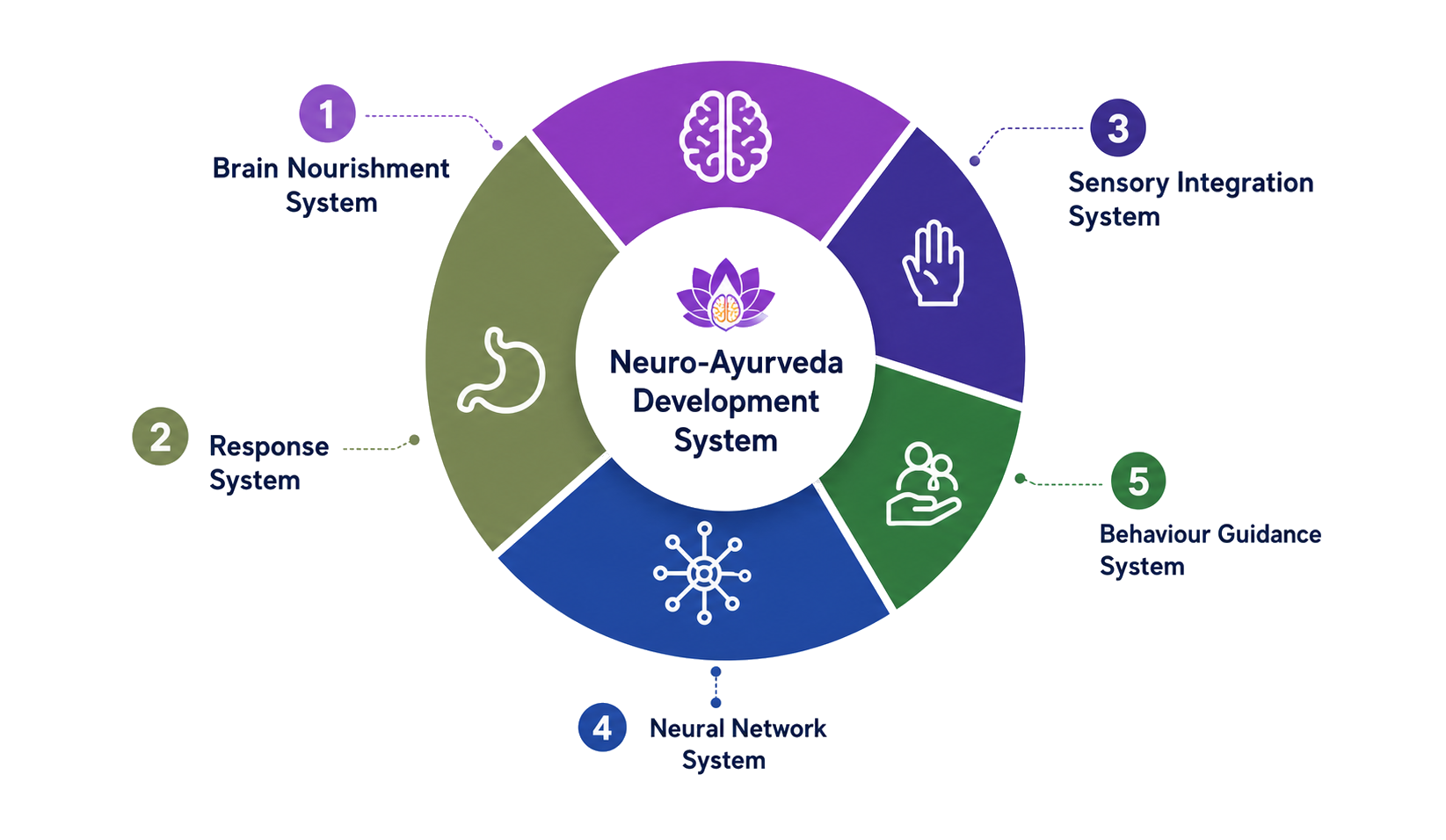
In Manovaidya, chronic fatigue is explained using the Neuro-Ayurveda Development System. This five-pillars approach addresses brain health, gut health, behaviour, lifestyle and emotional wellbeing as a whole.
This approach is not just about fatigue, it is about a more comprehensive approach to long term mind body wellness and sustainable energy.
1. Brain Nourishment System
Benefits of healthy brain function include: Mental clarity, Emotional balance, Healthy sleep, Stress resilience, Cognitive performance, Overall quality of life. If the brain is healthy, an individual can better deal with tasks of everyday life.
2. Gut Response System
Ensuring proper nutrition and digestive health is key for good energy levels. Understanding is the theme of this pillar and includes the following topics: Healthy eating habits, Gut-brain communication, Digestive wellbeing, Nutrition patterns and Lifestyle influences.
3. Neural Network System
The brain continues to change as a result of learning and life experiences. This pillar is about strengthening: Emotional resilience, Healthy thinking patterns, Behavioural awareness, Stress management, Cognitive flexibility.
4. Sensory Integration System
The daily environment and lifestyle can impact recovery. This pillar takes into account Mental workload, Environmental stress, Recovery, Relaxation and Lifestyle balance.
5. Behaviour Guidance System
Positive lifestyles help to maintain energy and wellbeing over time. Here is the list of the key areas this pillar addresses: Sustainable daily routines, Healthy sleep habits, Behavioural awareness, Stress management and Lifestyle improvement.
How we support individuals concerned about fatigue
Fatigue is a unique experience for each person. Here at Manovaidya, support is tailored to the emotional wellbeing, lifestyle and health concerns of the individual.
We want to get people to be aware of the impact of emotional wellbeing, lifestyle and everyday habits.
Small, everyday actions can contribute to energy, recovery and well-being. Helpful practices include:
Lifestyle habits become useful, but cannot be a substitute for adequate medical treatment.
When Should You See a Healthcare Professional?
Looking Beyond Feeling Tired
Fatigue may be a precursor to a health need, in the body or in the mind. Long-term energy is influenced by sleep, food, emotional status, activity level, and health conditions and daily habits.
Tiredness is not the only factor we consider at Manovaidya. We consider the big picture! When emotional wellbeing, lifestyle and physical health are seen together, one can make better informed choices for sustainable health.
Why People Across India Choose Manovaidya
People and families from Delhi, Noida, Gurgaon, Faridabad, Ghaziabad and rest of India prefer our holistic approach to mind-body health to avail of Manovaidya.
We want individuals to become aware of the connection between emotional wellbeing and lifestyle - and long term health and sustainable wellbeing.
About Dr. Ankush Garg
Dr. Ankush Garg is the Founder of Manovaidya and the developer of the Neuro-Ayurveda Development System.
His work focuses on the connection between emotional wellbeing, lifestyle, brain health and mind-body wellness. Through structured assessments, personalised guidance and regular follow-up, he helps people understand how stress and daily habits can affect their energy and overall wellbeing.
Based in Delhi NCR, Dr. Ankush Garg provides Mind-Body Health consultations for individuals across India through both online and in-clinic appointments.
Frequently Asked Questions (FAQs)
Concerned About Stress and Persistent Fatigue?
Book a structured Stress & Fatigue Assessment with Manovaidya to better understand the relationship between emotional wellbeing, lifestyle, energy levels and overall mind-body health while receiving personalised guidance.